NASA Lays Out the Race Between SpaceX and Blue Origin to Land Astronauts on the Moon
New timelines detailed at an international space conference show both companies cramming more than a dozen test milestones into the next two years, with Artemis III as the next checkpoint.
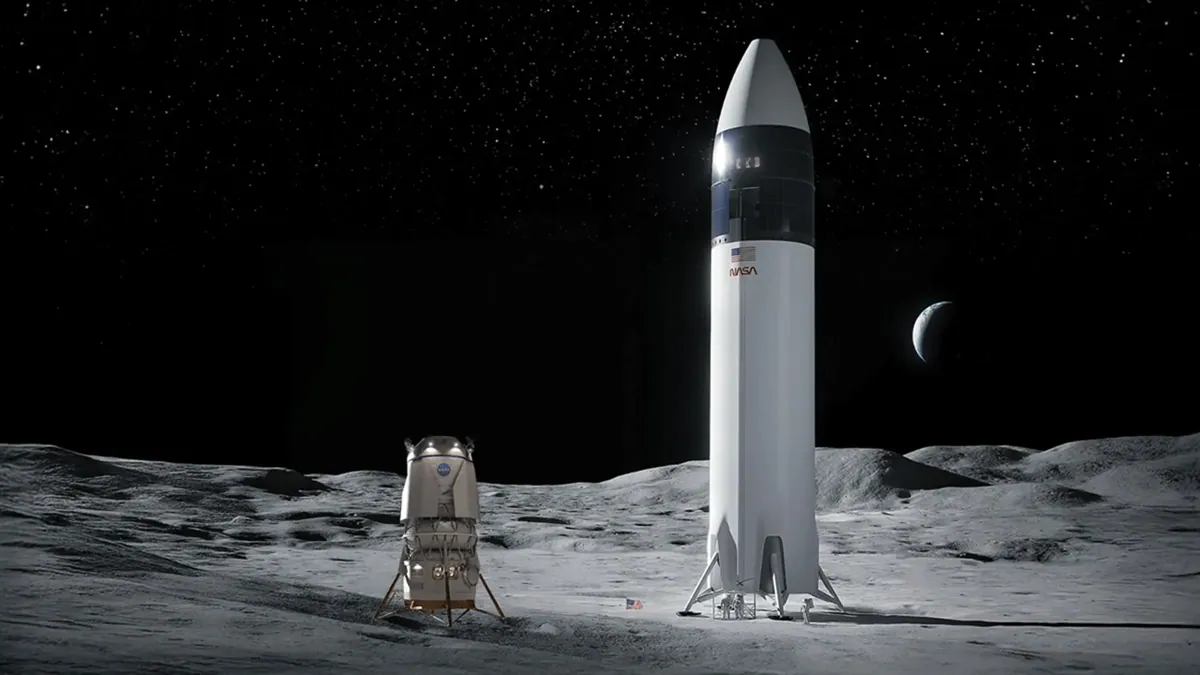
NASA just gave the clearest picture yet of how close SpaceX and Blue Origin are to actually landing humans on the moon, and the short answer is: not yet, but there's a lot happening between now and then.
At the International Astronautical Congress in Antalya, Türkiye on Oct. 5, Steve Creech, acting manager of NASA's Human Landing System Program, walked through development schedules for both companies' lunar landers, SpaceX's Starship and Blue Origin's Blue Moon. The timelines run through early 2028 and are packed with orbital refueling tests, uncrewed landing attempts, and the kind of hardware milestones that determine whether a spacecraft is actually ready to carry astronauts anywhere.
The nearer-term deadline is Artemis III, targeted for the third quarter of 2027. That mission will send four astronauts aboard NASA's Orion capsule to low Earth orbit, where they'll dock with test versions of both the Starship and Blue Moon landers to check how well the vehicles work together with Orion. Those checkouts will help NASA decide which lander flies the agency's first actual moon landing since Apollo, on Artemis IV, currently penciled in for early 2028.
This is a different Artemis III than the one originally planned. NASA restructured the program's architecture back in February after both SpaceX and Blue Origin ran into repeated delays developing their landers. The agency moved Artemis III up by a year and turned it into a vehicle-testing mission rather than the first crewed landing, pushing that milestone to Artemis IV instead. The goal, according to NASA, is still landing astronauts on the moon by the end of 2028, but with a steadier drumbeat of uncrewed test flights leading up to it.
What SpaceX still has to prove
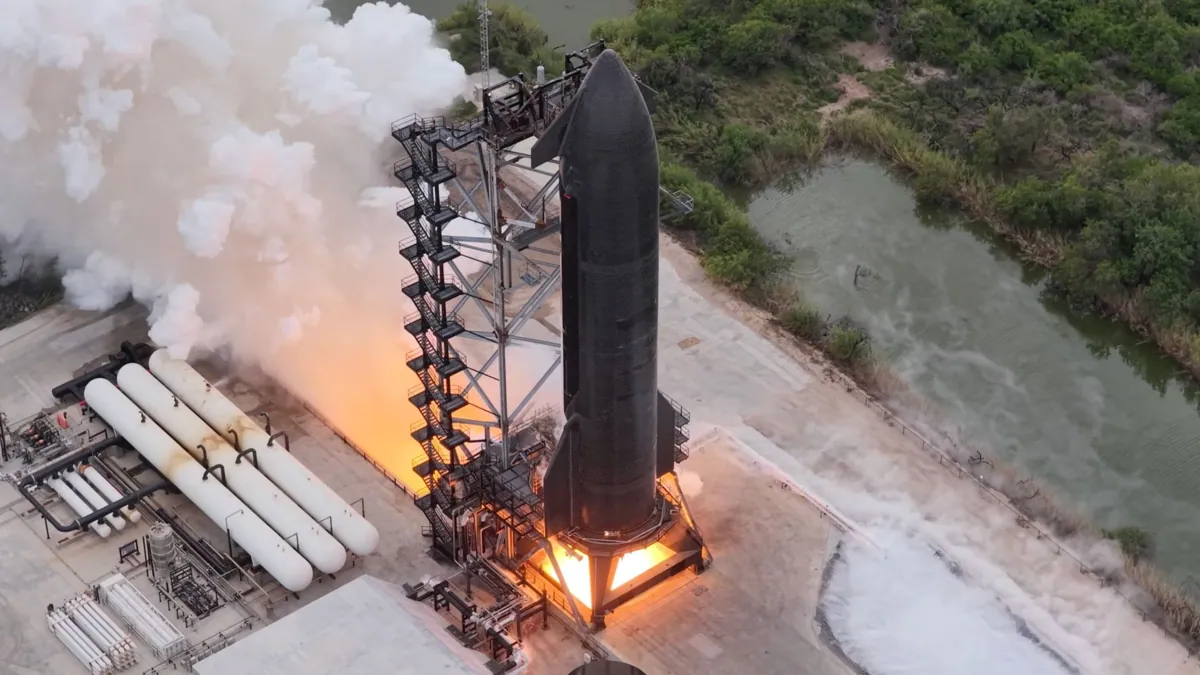
Starship's most recent test flight launched Sept. 28 from Starbase in South Texas. Ahead of Artemis III, SpaceX has a long list of hardware to validate: the first catch of its upgraded Version 3 booster, the first catch of a Ship upper stage, the first Starship launch from SpaceX's still-under-construction pad on Florida's Space Coast, and potentially the first reflight of a V3 booster — all expected sometime in 2026.
NASA also wants to see SpaceX finish the initial build of Starship's crew cabin by year's end. SpaceX has shown renders of the cabin's interior and footage of a test elevator astronauts are using to practice exiting the lander on the lunar surface, but the company hasn't said much publicly about how far along the actual hardware is. If that build wraps on schedule, SpaceX would spend the first quarter of 2027 finishing the communication systems Starship needs to talk to Orion and delivering a cabin simulator for crew training.
For Artemis III itself, SpaceX plans to fly an existing V3 Starship upper stage with modest tweaks — a docking system and nosecone cover — rather than a vehicle with a full crew cabin, since astronauts won't be entering the Starship on that mission. NASA documents indicate the mechanical fit checks for that configuration are already done.
The bigger technical hurdle is orbital refueling. Because Starship is designed to be fully reusable, it needs its tanks topped off in orbit to go anywhere beyond low Earth orbit. For an actual moon landing, that could mean as many as a dozen tanker launches feeding an orbiting depot that the lunar-bound Starship would visit before heading to the moon. SpaceX hasn't needed to prove that capability for Artemis III, but the company is expected to fly its first Starship tanker within months of that mission to prepare for Artemis IV. An uncrewed Starship lunar lander is targeted to launch around the end of the third quarter or start of the fourth quarter of 2027, with a full uncrewed landing attempt before the year is out.
Blue Origin's parallel push
Blue Origin is working toward its own set of deadlines for the Blue Moon Mark 2 lander, a 52-foot-tall spacecraft powered by three BE-7 engines. Unlike SpaceX's stripped-down Artemis III vehicle, Blue Origin intends to fly a more complete test article, including the crew cabin, partial life-support systems, and flight software, so astronauts can actually climb aboard from Orion while docked in orbit and get a feel for the lander in zero gravity.
Blue Origin's late-2026 milestones include continued testing of the BE-7 engine and qualification of the BT-7 maneuvering thrusters, plus an interim design review for Artemis III and a critical design review tied to a 2028 landing demonstration.
The company is also racing to repair its launch pad at Cape Canaveral's Launch Complex-36 after a New Glenn rocket exploded there in May, causing significant damage. NASA's presentation puts that repair on track for the fourth quarter of 2026, which matches what Blue Origin has publicly said, though a recent Reuters report suggested the real timeline might slip into early 2027.
By early next year, Blue Origin expects to finish the lander's communications systems and lock in flight software, with assembly and testing stretching into the second quarter. That same first quarter of 2027 is when Blue Origin's smaller, uncrewed Blue Moon MK1 lander is set to launch to the lunar surface under NASA's separate Commercial Lunar Payload Services program. As Artemis III approaches in the second quarter, the company plans to finish integrating its test lander with New Glenn and complete BE-7 qualification.
Blue Origin is also building a new pad through next year to support an upgraded, more powerful New Glenn variant called the 9x4, aiming to have it ready by the third quarter of 2027. That rocket's first flight, alongside a second MK1 lunar mission and an uncrewed MK2 demonstration lander, is slated for the fourth quarter of 2027. The MK2 demonstrator would then attempt its own uncrewed moon landing in the first quarter of 2028, around the same time as a third MK1 flight. Like SpaceX, Blue Origin has to show its lander can reach the surface, operate there, and get back to lunar orbit before NASA will sign off on putting astronauts on it.
The decision still to come
NASA's broader schedule hasn't changed since February's overhaul: Artemis III in mid-2027, a crewed landing on Artemis IV in 2028, and possibly another on Artemis V the same year. But both companies are working with little margin. SpaceX is aiming for its uncrewed landing demonstration in the fourth quarter of 2027; Blue Origin is targeting the first quarter of 2028. Either timeline leaves tight room against NASA's goal of getting astronauts back on the lunar surface before 2028 ends.
There's a chance some of this could shift again soon. NASA has scheduled a press conference for Friday, Oct. 23, with Administrator Jared Isaacman, Associate Administrator Amit Kshatriya, and Artemis program director Jeremy Parsons, where they're expected to discuss the status of the moon missions and something NASA is calling an "Artemis acceleration." Which company ultimately gets picked to fly the first crewed landing will come down to how much progress each makes on this packed checklist over the next two years — and whether either lander can prove it's actually ready when the time comes.