SpaceX Adds 21 More Satellites to the Pentagon's Encrypted Space Network
A Falcon 9 launch from Vandenberg is building out the Space Force's low-orbit "Transport Layer," part of a bigger plan to blanket the sky with hundreds of military relay satellites.
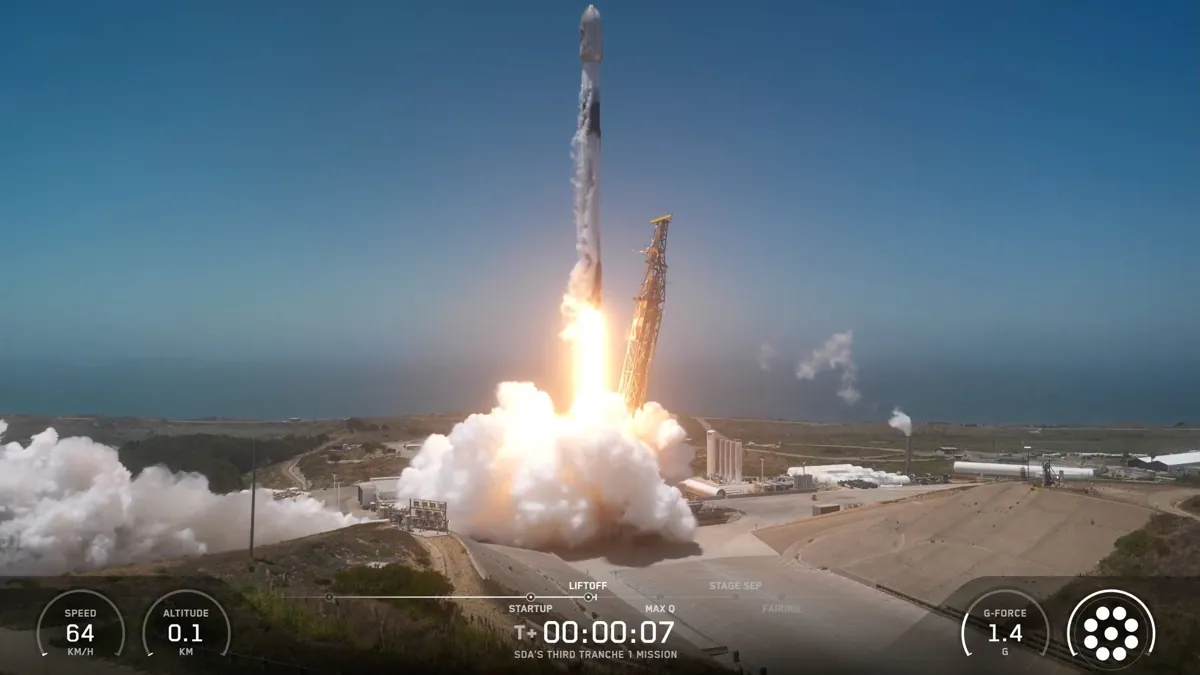
SpaceX had a busy Wednesday planned, and the military payload came first. A Falcon 9 rocket was set to lift off from Vandenberg Space Force Base in California during a 22-minute window opening at 4:22 p.m. EDT, carrying 21 satellites for the U.S. Space Force's Tranche 1 Transport Layer constellation. A few hours later, SpaceX's Starship was scheduled to attempt its 13th test flight from Starbase in South Texas, giving the company two major launches on the same day from opposite coasts.
The Falcon 9 mission matters less for its spectacle than for what it's quietly assembling in orbit. The Tranche 1 Transport Layer, or T1TL, is a network of small satellites in low Earth orbit run by the Space Development Agency, a part of the Space Force. According to the SDA's own description, the system is designed to give the military global communications reach and steady, encrypted regional connectivity for troops operating anywhere on the planet.
Wednesday's launch is the third batch of T1TL satellites to reach orbit. Forty-two satellites from this constellation are already up there, delivered on two earlier Falcon 9 flights out of Vandenberg last September and October. Once complete, the T1TL will total 126 satellites, built by three different contractors: York Space Systems, Lockheed Martin, and Northrop Grumman. Spreading construction across multiple companies is typical of how the SDA builds these networks, and it means the constellation is being assembled in pieces, launch by launch, rather than all at once.
Part of a much bigger architecture
The Transport Layer isn't a standalone project. It's one piece of what the SDA calls the Proliferated Warfighter Space Architecture, or PWSA, a sprawling plan for hundreds of small satellites in low Earth orbit, all linked together optically, working as a single system to feed data and capability to military users on the ground. The SDA describes the PWSA as a way to deliver space-based capability "at speed" by relying on large numbers of relatively cheap, replaceable satellites rather than a handful of exquisite, expensive ones — a philosophy that has become increasingly common in military space planning as launch costs have fallen and rocket cadence has climbed.
The SDA builds out this architecture in stages it calls "tranches," with a new generation added roughly every two years. That cadence, which the agency refers to as spiral development, is meant to let the constellation keep absorbing new technology and expanding capacity rather than locking in on one satellite design for a decade or more. Tranche 1 is the current build; more will follow.
What happens after launch
The mission profile for Wednesday's flight followed the pattern SpaceX has refined over hundreds of launches. About 8.5 minutes after liftoff, the Falcon 9's first stage was expected to land on the drone ship "Of Course I Still Love You," stationed in the Pacific Ocean. Per SpaceX's mission description, this would be the fourth flight for that particular booster, tail number 1103 — routine reuse at this point, but still the economic engine that makes frequent national-security launches like this one affordable.
The rocket's upper stage carried the 21 satellites the rest of the way into low Earth orbit. SpaceX's mission materials didn't specify exactly when or where in orbit the satellites would be released, a gap that's almost certainly intentional. Details like precise deployment orbits and timing are the kind of information the SDA tends to keep close, given the military nature of the payload.
Two launches, one day
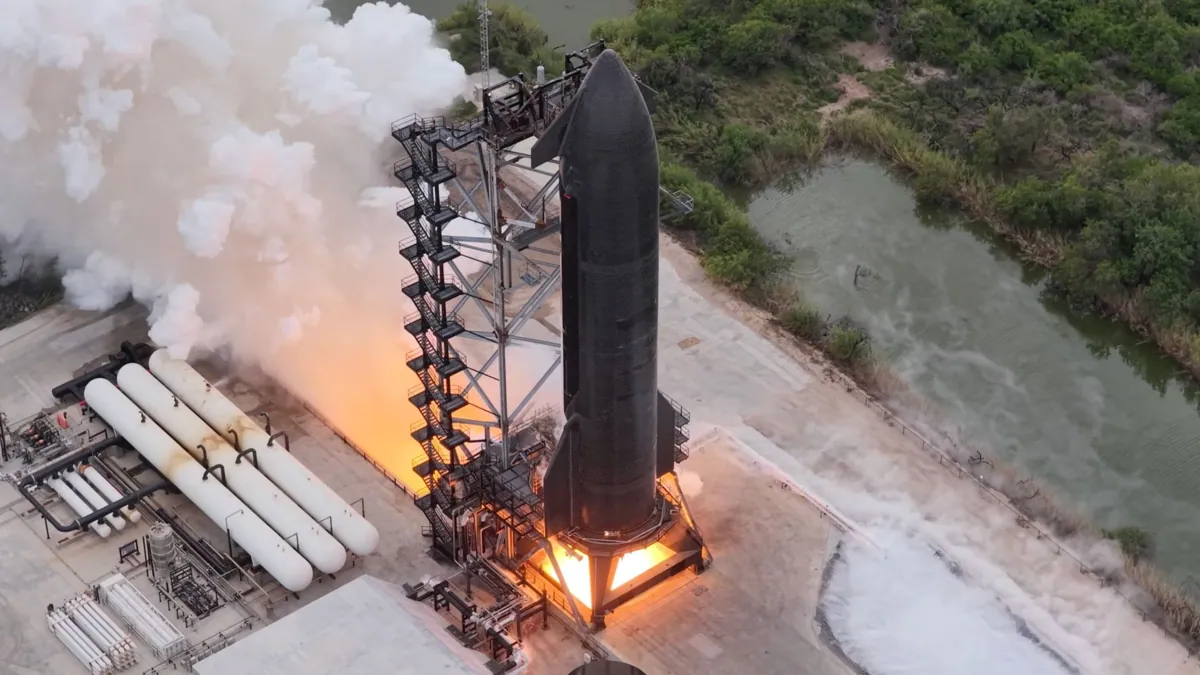
The timing lined up so that SpaceX's national-security work and its experimental megarocket program shared the spotlight within hours of each other. Starship, the largest and most powerful launch vehicle ever built, was scheduled for its 13th test flight from Starbase later that evening, with liftoff targeted for a 90-minute window opening at 6:45 p.m. EDT. That's a separate program entirely, aimed at eventually enabling deep-space missions and Starship-based launches, but the split-screen scheduling underscores how much orbital traffic SpaceX now generates in a single day: a hardened military constellation going up on a workhorse rocket in California, and a next-generation prototype pushing the edges of rocketry in Texas.
For the Space Force, the more consequential event was the one in California. Each Falcon 9 flight like this one adds another slice to a constellation the Pentagon is counting on to keep communications flowing for military operations worldwide, built deliberately as a distributed, hard-to-disrupt network rather than a small number of vulnerable satellites. With 42 satellites already in orbit and 21 more headed there, the Transport Layer is inching toward its eventual total of 126 — one launch, and one tranche, at a time.