Voters Just Delivered a Verdict on the Data Center Boom, and It Wasn't a Good One
Of 41 local ballot measures across 10 states targeting data center construction, only one actually sided with the industry.
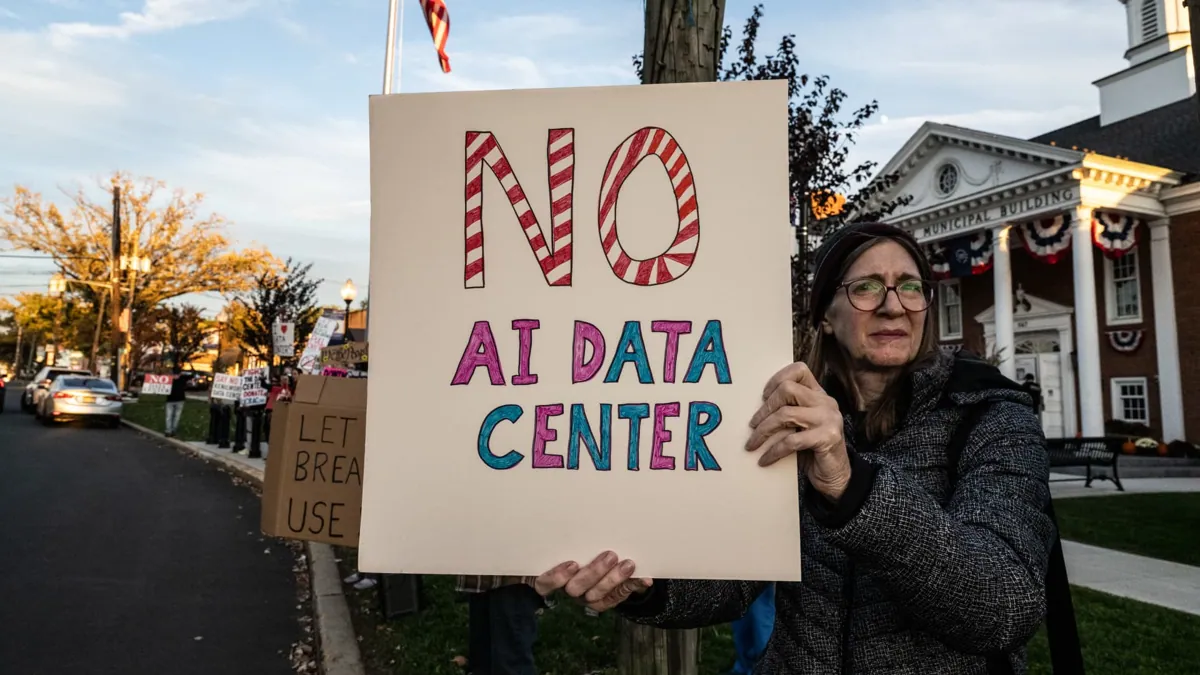
Election night didn't go well for the data center industry. Of 41 local ballot measures across 10 states aimed at restricting data center construction, voters rejected the industry's position in all but one, according to an analysis by Ballotpedia and additional results gathered by CNBC.
The lone exception was in Harwood, North Dakota, where voters struck down a charter amendment that would have added extra review before the city could approve industrial developments, including data centers. Everywhere else, from California to Wisconsin, communities voted to make it harder to build the massive server farms powering the AI boom.
Ohio was ground zero. Twenty-one of the 41 measures were on ballots there, according to Ballotpedia, and the state's politics are now deeply entangled with the data center question. Democrat Sherrod Brown unseated Republican Sen. Jon Husted after running against him as, in Brown's framing, "the face of data centers." Ohio's governor's race flipped too: physician Amy Acton, a Democrat, beat businessman Vivek Ramaswamy. Acton has backed a "conditional moratorium" on new data centers until they cover 100% of utility costs and build exclusively with union labor.
The stakes in Ohio are enormous. OpenAI announced in August that it had locked down 8 gigawatts of computing capacity at the PORTS-Pike Technology Campus, which it's calling the largest planned AI data center campus in the world. Construction's first phase is set to begin this year, with capacity expected online in stages starting 2028. SoftBank and SB Energy are building it alongside the U.S. Department of Energy, with Nvidia backstopping a project that could ultimately cost more than $500 billion. SoftBank, notably, is also a major OpenAI investor — the two companies announced a $1 billion joint investment in SB Energy earlier this year.
A pattern, not a fluke
Ohio wasn't alone. Voters in California, Florida, Illinois, Kansas, Maine, New Jersey, Nevada and Wisconsin also weighed in on data center measures, per Ballotpedia, and the issue shaped races well beyond the ballot initiatives themselves. In a CNBC Voter Poll, 56% of voters said data centers were a crucial or major factor in how they voted, with Democrats weighting the issue more heavily than Republicans.
Candidates who ran on pausing or regulating new data center projects won key races in Ohio, Wisconsin, Georgia and Texas. Texas may be the most striking result of the night: Gina Hinojosa unseated Gov. Greg Abbott after blaming him for the breakneck pace of data center construction across the state and arguing he'd prioritized the tech industry over local communities. Texas is on track to become the world's largest data center market by 2030, which makes that result a notable warning sign for an industry that has treated the state as a growth engine.
The political backlash lands at an already shaky moment for the AI trade on Wall Street. Chipmakers, neoclouds and other data center-adjacent stocks sold off in October amid concerns about rising interest rates and overspending. The four hyperscalers — Alphabet, Amazon, Microsoft and Meta — are each pouring hundreds of billions of dollars a year into AI infrastructure to keep up with what they describe as insatiable demand. All of them except Microsoft have gone cash flow negative doing it.
Money didn't buy the outcome tech wanted, either. Silicon Valley spent record amounts trying to shape the 2026 midterms, and Republicans held a clear edge among the biggest donors — a CNBC analysis of Federal Election Commission records found 14 of the top 20 donor groups backed Republicans almost exclusively, with crypto, AI and online gambling interests contributing more than $377 million combined. Elon Musk, who spent hundreds of millions this cycle, came away with little to show for it. His reaction on X: "Data centers in space looking pretty appealing right now."
Democrats signal this is just the start
The political fallout began almost immediately. Within hours of polls closing, Democrats were already calling for AI executives to testify under oath. Rep. Greg Casar, the Texas Democrat who chairs the Congressional Progressive Caucus, was among the first to respond once Democrats were projected to retake the House.
"The House Democratic majority must make it a top priority to protect Americans' jobs, freedom, and lives from AI billionaires," Casar said in a statement. "AI company CEOs should be called to testify under oath." He also accused Republicans of being "bought and paid for by AI billionaires," saying voters had rejected that influence and urging his own party to "hold them accountable instead of cashing their checks."
Casar framed Tuesday's results as an opening skirmish rather than a resolution. "The revolt against data centers was one of the top issues of the 2026 election," he said. "And in a few years we will look back on it as just the early tremor of a much bigger AI earthquake upending American politics."
For an industry that has treated local approval as a formality on the way to massive buildouts, Tuesday's results suggest that era is ending. The money and the demand for compute aren't going anywhere, but the political path to building it just got considerably rockier.