AMD Is On Track to Out-Earn Intel for the First Time Ever
A record third quarter and an even bigger fourth-quarter forecast would put AMD's total revenue ahead of its longtime rival by the end of 2026.
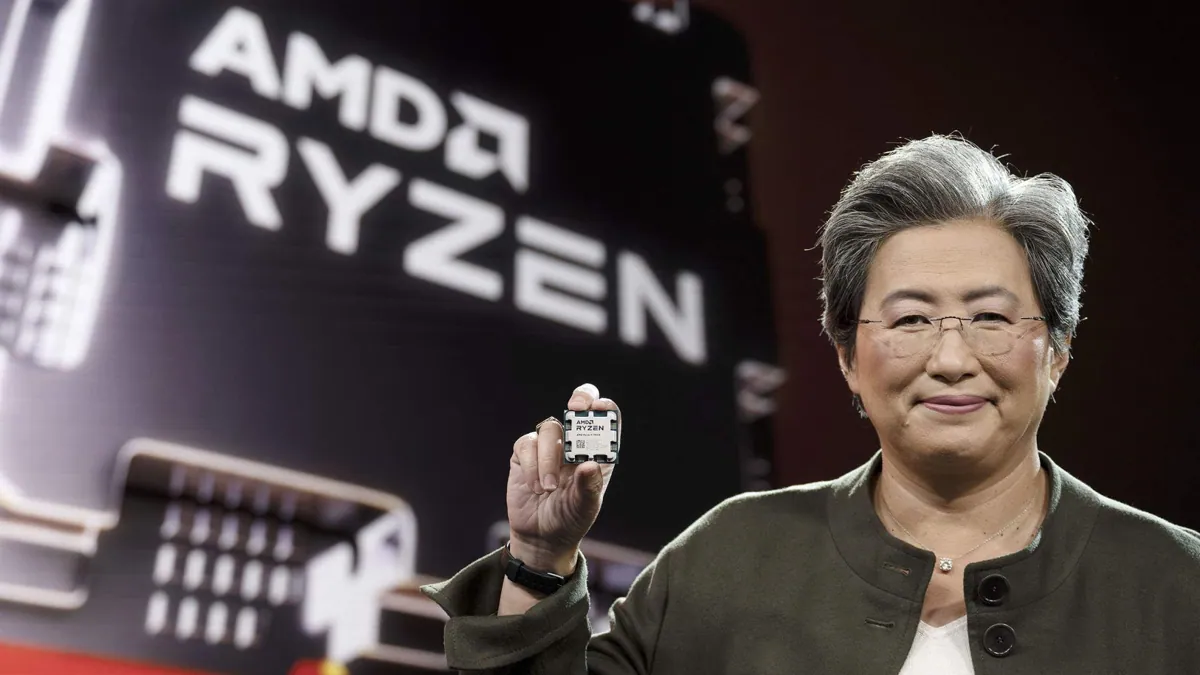
AMD just posted the best quarter in its history, and if its own forecast holds up, the next one will be even more significant: the company expects to generate more total revenue than Intel for the first time ever.
AMD reported revenue of more than $13 billion for the quarter, with net income of $2.4 billion. CFO and treasurer Jean Hu told investors she expects that momentum to carry into the fourth quarter, with revenue projected at around $17 billion. Intel, by contrast, is guiding toward $15 to $16 billion for the same period, continuing a pattern of flat to slightly declining revenue.
If AMD hits that number, it would mark the first time in the company's existence that its total revenue has topped Intel's, at least as far back as records are available, according to PC Gamer's reporting.
That's a notable milestone on its own, but it's worth being precise about what it does and doesn't mean. Revenue isn't profit. AMD has beaten Intel on net income before, including in 2024, when Intel posted an $18.7 billion loss for the year while AMD turned a $1.6 billion profit, and again last year. Whether AMD's projected revenue jump actually pushes its net income past Intel's, which currently sits around $3 billion, isn't clear from the numbers AMD has shared. It would be close either way. But total revenue has always been a different story: it's the scoreboard for overall business scale, not just the bottom line, and on that measure Intel has historically been the much bigger company, even in years when it was losing money.
What's changed is the trajectory. Intel's revenue has stayed roughly flat for years. AMD's hasn't. According to the company's recent earnings call, AMD's current revenue run rate is roughly double what it was reporting just two years ago. That's an unusually steep climb for a company competing directly against a semiconductor giant with its own manufacturing fabs, while AMD designs chips and outsources production.
Intel, for its part, isn't collapsing. The company returned to profitability last quarter even as its stock took a beating. But "not losing money" and "growing" are two very different positions to be in, and right now AMD is doing the latter while Intel is mostly holding steady.
The contrast says a lot about how far AMD has come. This is a company that was, by its own long-term stock chart, in genuine trouble in the mid-2010s, scraping by while Intel dominated both the data center and PC markets. The turnaround since then, under CEO Lisa Su, has been one of the more dramatic comebacks in tech, and crossing Intel in total revenue would be the clearest marker yet of how much the two companies' fortunes have reversed.
None of this is locked in. AMD's $17 billion figure for Q4 is a projection, not a result, and Intel's $15 to $16 billion guidance leaves itself some room too. But if AMD lands anywhere close to its target, the headline won't be about a single good quarter. It'll be about which company is actually bigger now, and that's a question that would have sounded absurd a decade ago.