SpaceX's First Starship to Survive a Space Launch Is Finally Home
Ship 40's improbable survival in the Indian Ocean set off a monthslong recovery saga that could help SpaceX engineers figure out how to catch, not just launch, its biggest rocket.
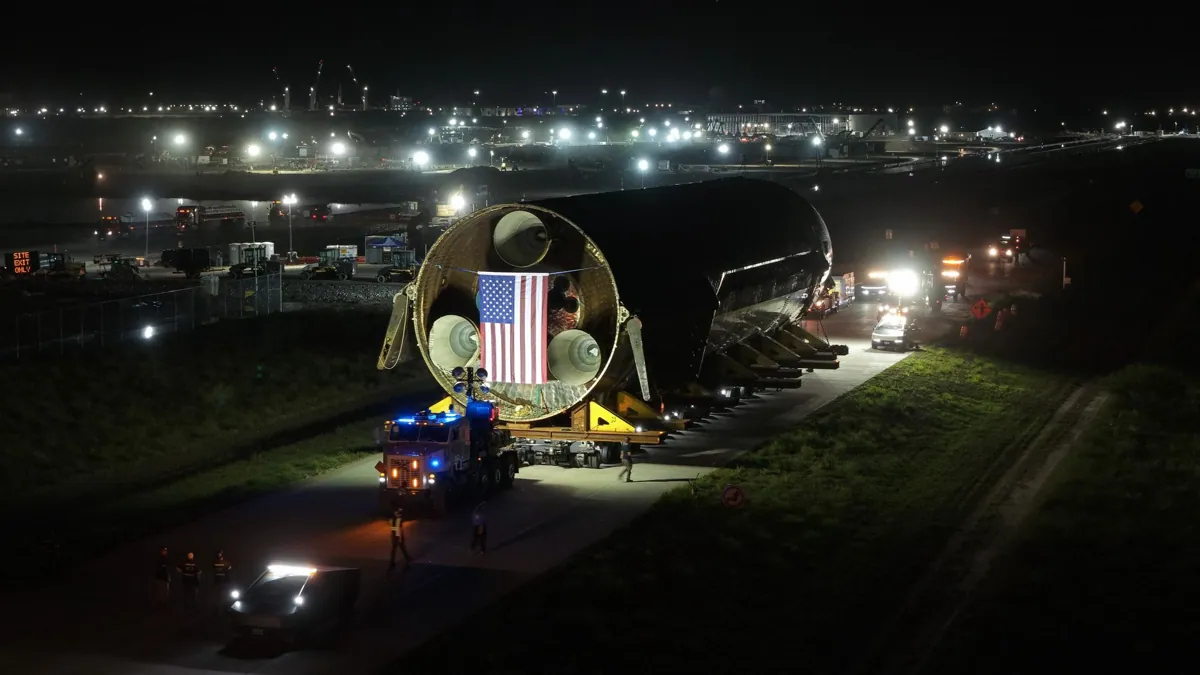
It took nearly three months, a 24-day tow through rough ocean water, and a ride on a specialized transport ship, but Ship 40 is finally back where it started. SpaceX's Starship upper stage, the first version of the vehicle to survive both a launch to space and its subsequent ocean splashdown, has returned to Starbase, the company's launch site in South Texas, according to Space.com.
SpaceX shared photos and video of the spacecraft completing the final leg of its journey home, and Ship 40 is now standing upright inside Starbase's Megabay hangar, parked next to three other Ship upper stages still being assembled for future flights. Before any of those newer vehicles fly, though, engineers want to pick apart what's left of Ship 40.
That's because nothing like it has ever come home before. Every prior Starship upper stage that splashed down in the ocean eventually tipped over and exploded. Ship 40 didn't. After launching on July 24 atop Super Heavy Booster 20 for Starship's 13th flight test, it completed a suborbital trip and came down in the Indian Ocean largely intact and still floating. SpaceX said in a post on X on Oct. 13 that studying the recovered vehicle "will provide first-of-first-kind data on a flown Starship heatshield, Raptor engines, avionics, and more."
A long way home
Getting Ship 40 back to Texas was its own ordeal. The 171-foot stage's unplanned survival forced SpaceX into an improvised recovery operation, towing the spacecraft across 24 days of rough seas. Elon Musk reportedly had doubts the effort would even pay off. It did: Ship 40 made it to calmer waters off Australia's Christmas Island in August, where SpaceX engineers got their first close look at the vehicle, inspecting it and pulling heat shield samples from its underside.
From there, the spacecraft was loaded onto Forte, a massive semi-submersible transport vessel, for the long haul back across the ocean. Forte reached the Port of Brownsville on Oct. 7, closing out the longest stretch of the journey nearly two months after Ship 40 first launched. SpaceX then moved the vehicle overland to Starbase, where it was reoriented, lifted vertical, and wheeled into the Megabay alongside the next generation of Ships.
Why a battered spacecraft matters
SpaceX has already pulled off recoveries with the Super Heavy booster, catching three of them using the mechanical arms built into the Starbase launch tower. What the company hasn't managed yet is bringing a Starship upper stage back to its launch site under its own power. Ship 40's return, battered as it is, gives engineers something they've never had: a Starship that actually survived reentry, which they can now study top to bottom.
That inspection could directly shape how SpaceX designs future Ships and plans their recovery, since the whole point of Starship is to be rapidly and fully reusable, with both stages flying again and again rather than being discarded after one use.
Ship 40's data is arriving at a useful moment. Its immediate successor, Ship 41, had already launched on Flight 14 before Ship 40 even made it back to port. Ship 41 didn't survive its own splashdown in the Pacific, but that flight still marked a milestone: Starship's first orbital mission, which included successfully deploying 26 next-generation Starlink V3 satellites, according to Space.com.
What's next
Musk has said the next flight, designated Flight 15, could include SpaceX's first attempt to catch a Ship upper stage using the launch tower's chopstick-style arms, assuming the vehicle meets the conditions needed for a safe return. SpaceX hasn't announced an official date for that launch, but based on how testing is progressing on the Ship and Super Heavy slated for the mission, it's expected to fly within the next month or so.
Whether that attempt succeeds may hinge, at least in part, on what engineers learn from pulling apart Ship 40 in the Megabay right now. A spacecraft that was never supposed to come home in one piece just handed SpaceX a working example of exactly what survives reentry, and what doesn't.