SpaceX Aims to Catch Starship's Booster Again — And Deliver Its First Next-Gen Starlinks
Flight 13 will test upgraded hardware after last mission's booster splashdown mishap, while deploying 20 heavier V3 Starlink satellites designed to boost the network's speed and capacity.
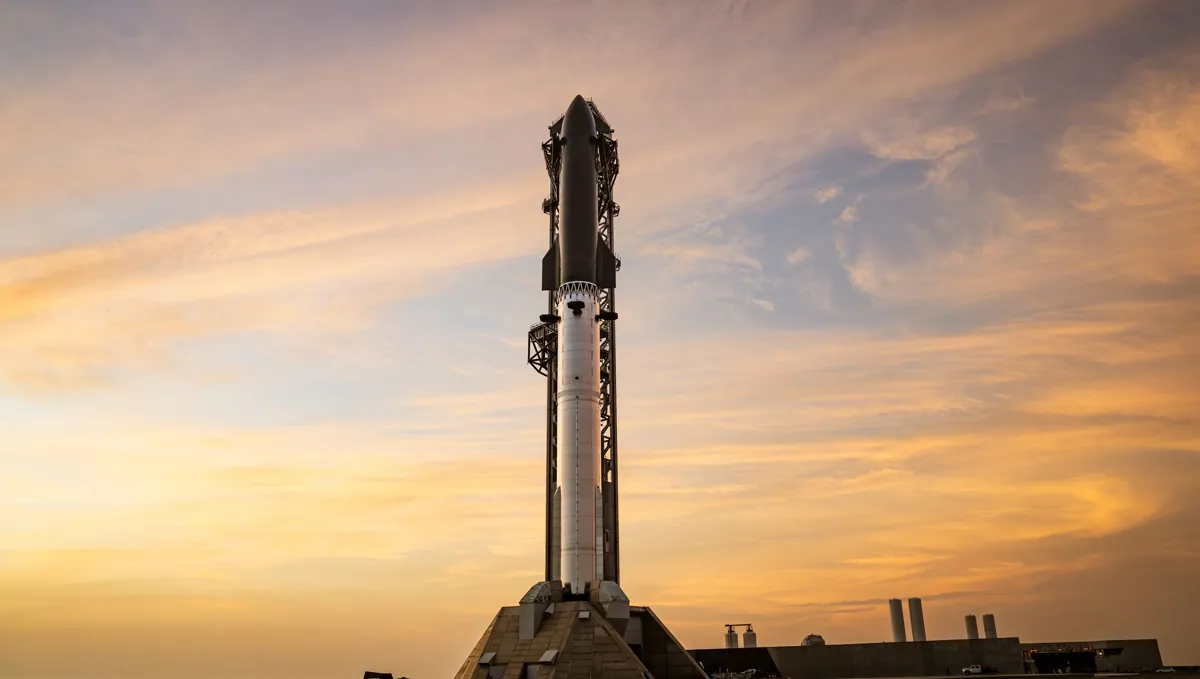
SpaceX is sending Starship back up today, and this flight carries more riding on it than the usual spectacle of watching the world's biggest rocket claw its way off the pad.
Flight 13 lifts off from Starbase in South Texas during a 90-minute window opening at 6:45 p.m. EDT (2245 GMT), marking the 13th test flight of Starship overall and the second of 2026. Space.com is carrying the launch live, with coverage starting about 30 minutes before liftoff.
The timing is a small bit of trivia: the launch falls on the 57th anniversary of Apollo 11's liftoff. But the real story is what SpaceX is trying to prove with this particular flight, and what it's carrying to do it.
A rocket built to be reused, still working out the kinks
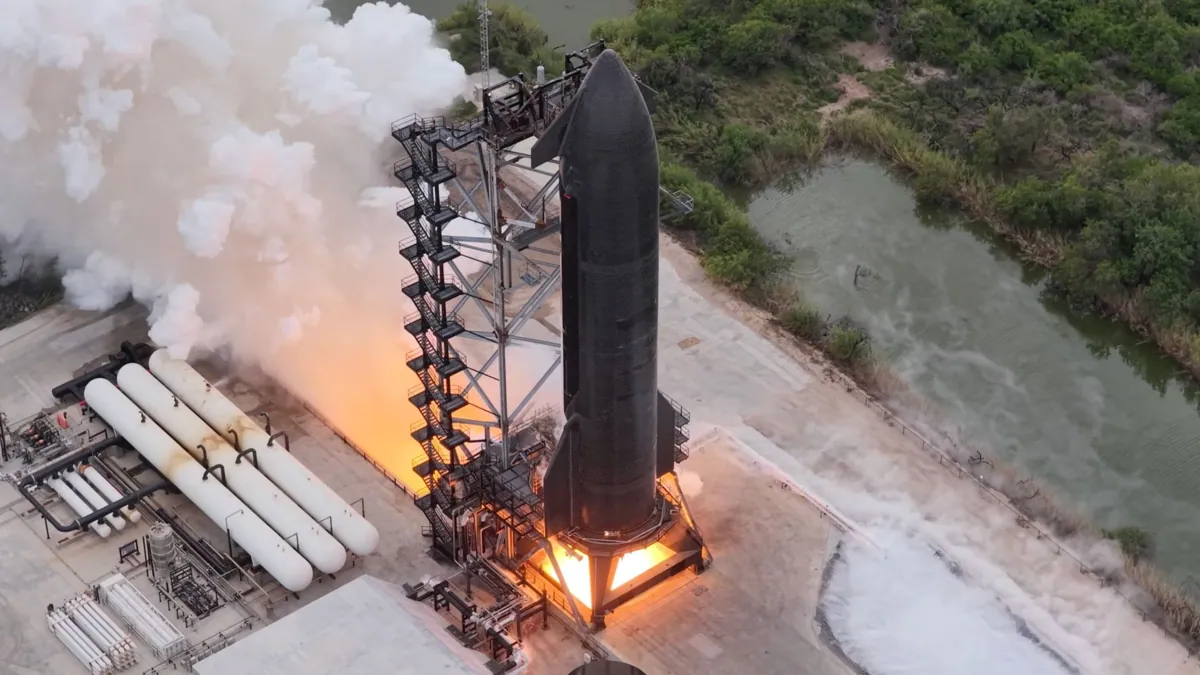
Starship is actually two vehicles stacked together — the Super Heavy booster on the bottom, and the upper-stage vehicle SpaceX calls Ship (yes, the whole rocket is Starship and the top part is also, confusingly, Ship). Both are stainless steel, both are meant to fly again and again, and together they stand more than 400 feet tall while capable of hauling over 110 tons to orbit. SpaceX's pitch has always been that this combination of raw power and rapid reusability is what finally makes ambitions like settling the moon and Mars financially and logistically realistic.
Flight 13 flies the same Starship Version 3 that debuted on Flight 12 back in May — the first outing for this more advanced iteration of the rocket, and the version SpaceX has committed to flying on NASA's Artemis missions. Under current plans, V3 is slated to carry Artemis III to Earth orbit in 2027 and land Artemis IV astronauts on the moon the following year.
Flight 12 gave SpaceX plenty to work with. Ship successfully released 22 payloads through what the company calls its "PEZ dispenser" — a slit-style deployment mechanism — including 20 dummy Starlink satellites and two real ones fitted with imaging sensors, before splashing down as planned off Western Australia. Super Heavy, though, ran into engine trouble during its return and ended up crashing into the Gulf of Mexico instead of achieving the controlled splashdown SpaceX wanted.
Flight 13 is largely a rerun of that mission's goals, with fixes aimed at that booster problem and a couple of genuinely new elements layered on top.
The booster's second chance
SpaceX's long-term plan is to catch both Super Heavy and Ship out of the air using the giant mechanical "chopstick" arms mounted on Starbase's launch towers, letting each vehicle fly multiple times a day without ever touching down elsewhere. That vision is still a ways off. SpaceX has caught Super Heavy three times so far, but not since Flight 8 back in March 2025, and it has never attempted a chopsticks catch with Ship at all.
For Flight 13, neither vehicle is attempting a tower catch. Super Heavy is instead targeting a controlled splashdown in the Gulf of Mexico (which the Trump administration has renamed the Gulf of America) about seven minutes after launch — the same outcome Flight 12 was supposed to deliver before the engine issues intervened.
"The booster's primary test objective will be executing a successful launch, ascent, stage separation, boostback burn and landing burn at an offshore landing point in the Gulf of America," SpaceX said in its Flight 13 mission description, adding that "several modifications to hardware and software" address problems seen on the prior flight.
Ship, meanwhile, is once again aiming for a splashdown in the Indian Ocean off Western Australia, roughly 65 minutes after liftoff.
Real satellites this time, and a heat-shield science experiment
Here's where Flight 13 departs from its predecessor. Instead of mostly dummy payloads, Ship will deploy 20 actual next-generation Starlink V3 satellites — spacecraft SpaceX says will "greatly expand the network's capacity and user speeds," according to the mission description.
That's a meaningful jump in ambition. SpaceX currently operates around 10,800 Starlink satellites, already the largest satellite constellation ever built, and the company wants to eventually grow that to as many as 100,000 V3 satellites in low Earth orbit. Getting there will take thousands of launches, more than SpaceX's Falcon 9 — which flew 165 missions in 2025 — could realistically handle alone. Complicating matters further, the V3 satellites are considerably heavier than earlier models, with each one weighing around 4,400 pounds (2,000 kilograms).
The 20 satellites launching today won't stay in orbit. According to SpaceX, they'll extend their solar arrays and antennas and attempt to link up with the broader Starlink constellation using high-capacity laser links, all while riding the same suborbital trajectory as Starship itself. They're expected to burn up on reentry roughly 20 minutes after deployment.
Six of them are carrying cameras with a specific job: photographing Ship's heat-shield tiles during the flight. SpaceX wants more data on how that shield performs before it risks bringing Ship back for a chopsticks catch at the tower — a maneuver that demands the vehicle survive reentry in excellent condition.
The heat shield itself is getting a stress test, too. It's outfitted with load-sensing tiles designed to measure the added pressure the vehicle experiences during ascent, since Flight 13 pushes into higher dynamic pressure than previous missions in exchange for greater payload capacity. In plain terms, SpaceX is deliberately putting more strain on the tile attachments to see how much punishment they can take.
What today's flight is really testing
None of this is as visually dramatic as a tower catch, but it's arguably more important to Starship's near-term future. Fixing whatever went wrong with Super Heavy's engines determines whether SpaceX can trust the booster's landing sequence again. And the Starlink V3 deployment is a live rehearsal for the exact mission profile SpaceX needs to repeat, at scale, thousands of times over, if it's going to build out the constellation it has planned.
The heat-shield data collection matters just as much for the long game. Ship can't come home to a chopsticks catch until SpaceX trusts that shield to survive reentry intact, and today's flight is built to gather the evidence that gets it there.
Watch the launch live, and expect the headline moments to be less about spectacle this time and more about whether the fixes actually worked.