SpaceX Aims to Catch Both Halves of Starship for the First Time Ever
Elon Musk says the next test flight, targeted for next month, will attempt to recover the Super Heavy booster and Ship spacecraft simultaneously — a feat no orbital rocket has ever pulled off.
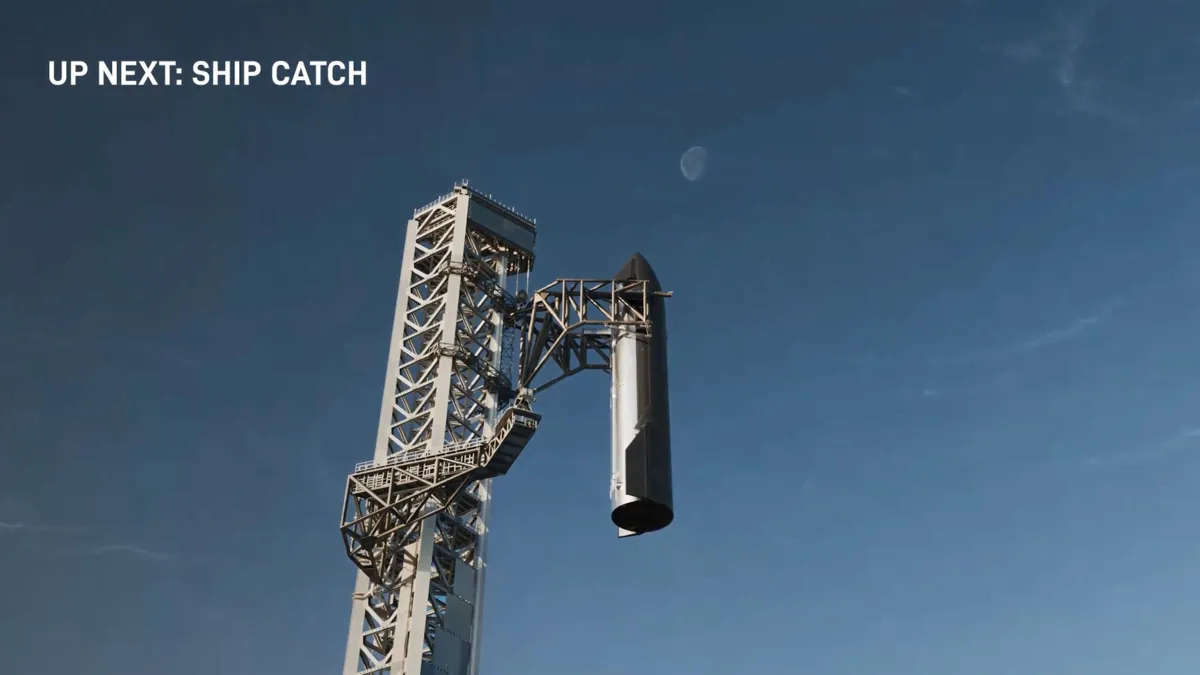
SpaceX wants to do something no rocket has ever done: catch an entire orbital launch vehicle, both stages, on the same flight. Elon Musk announced the plan during SpaceX's Q3 earnings call on Monday, saying the company will attempt to catch both the Super Heavy booster and the Ship upper stage on Starship's next test flight, targeted for next month.
If it works, Musk said, "this will be the first time that an orbital launch vehicle has been fully recovered." He framed the attempt in characteristically grand terms, calling it "a profound technology milestone in the history of civilization and consciousness" and arguing that a fully reusable orbital rocket is the only way to sustainably extend human presence beyond Earth.
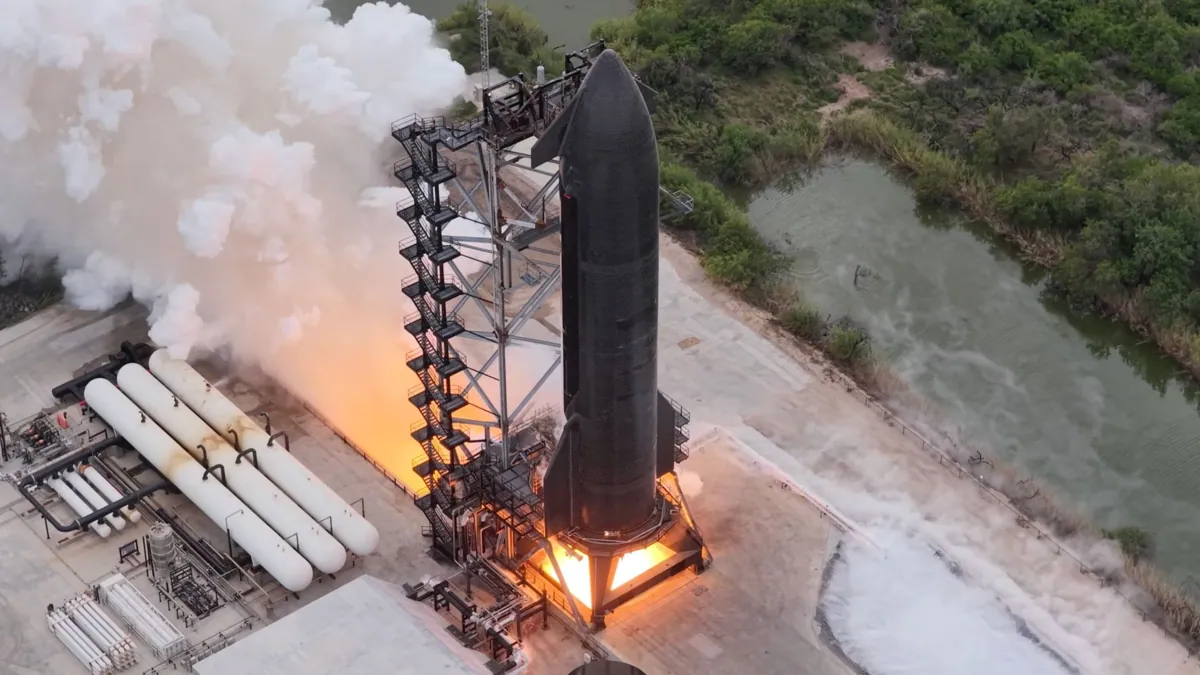
Starship is the largest rocket ever built, standing more than 400 feet tall when fully stacked, and both of its halves are designed for full, rapid reuse. That's a different approach than SpaceX's Falcon 9 and Falcon Heavy, which recover only their boosters — landing them on pads or droneships — while their upper stages are thrown away. Starship's Super Heavy booster and Ship spacecraft instead fly themselves back to the launch tower, where mechanical arms known as "chopsticks" catch them directly out of the air.
SpaceX has already caught Super Heavy three times across Starship's 14 test flights to date. Catching Ship is the harder problem: the upper stage flies higher, faster and farther than the booster, making a clean return to the tower a tougher engineering challenge. No attempt to catch Ship has been made yet. Even so, Musk sounded confident SpaceX would nail it on the first try. "I'd say it's more likely than not that this succeeds next flight," he said, adding that even a failure wouldn't derail the program, since more Starship flights are planned through the rest of the year and into an accelerating 2026 cadence. He didn't give a specific launch date for the mission, known as Flight 15, beyond saying it's expected next month.
A successful double catch would follow directly on the heels of another milestone. Flight 14, which flew Sept. 28, marked the first time Ship reached orbit. That flight also deployed 26 next-generation Starlink V3 satellites, the first members of a broadband constellation SpaceX eventually wants to grow to roughly 100,000 spacecraft.
Why the rapid reuse push matters
The push to recover and refly Starship quickly isn't just about proving a point. Musk has said he envisions SpaceX launching Starship more than 10,000 times per year by 2030, a cadence that only works if the rocket can be inspected, refurbished and relaunched fast rather than rebuilt from scratch. Catching both stages at the tower, rather than fishing boosters out of the ocean or landing them elsewhere, is central to hitting that kind of turnaround speed.
The business case behind the rocket
The Starship update came almost as a footnote to the main purpose of the call: reporting SpaceX's financial results for the quarter that ended Sept. 30. Those numbers were strong. SpaceX posted $14.6 billion in revenue for Q3, up 161% from the $5.6 billion it reported in the same quarter last year. Net income came in at $4.4 billion, a $5.5 billion swing from the $1.1 billion loss SpaceX recorded a year earlier.
Notably, launches made up only a sliver of that haul. Just $1.8 billion of the quarter's revenue came from SpaceX's launch division — the rest came almost entirely from two other business lines: connectivity, meaning Starlink subscription and service revenue, and artificial intelligence, which the Trump administration has recently taken to calling "superintelligence."
That revenue mix explains why SpaceX is racing to build out mass Starship launch capacity in the first place. More flights mean more Starlink satellites in orbit and more capacity to loft AI data center hardware into space, and SpaceX is betting those two segments, not launch services themselves, will drive its growth. Musk said the company expects that bet to pay off fast: by his estimate, SpaceX's annual recurring revenue could land somewhere between $500 billion and $1 trillion by the end of 2027.
Whether that forecast holds will depend on a lot of things going right, starting with next month's flight. A clean double catch would be the clearest proof yet that SpaceX's reusability math works at the scale the company is now building its entire business around.