SpaceX Files to Launch 100,000 More Starlink Satellites, Each One Roughly Triple Today's Size
The FCC filing for a "Gen3" constellation would dwarf SpaceX's current fleet and likely requires the still-untested Starship rocket to loft it.
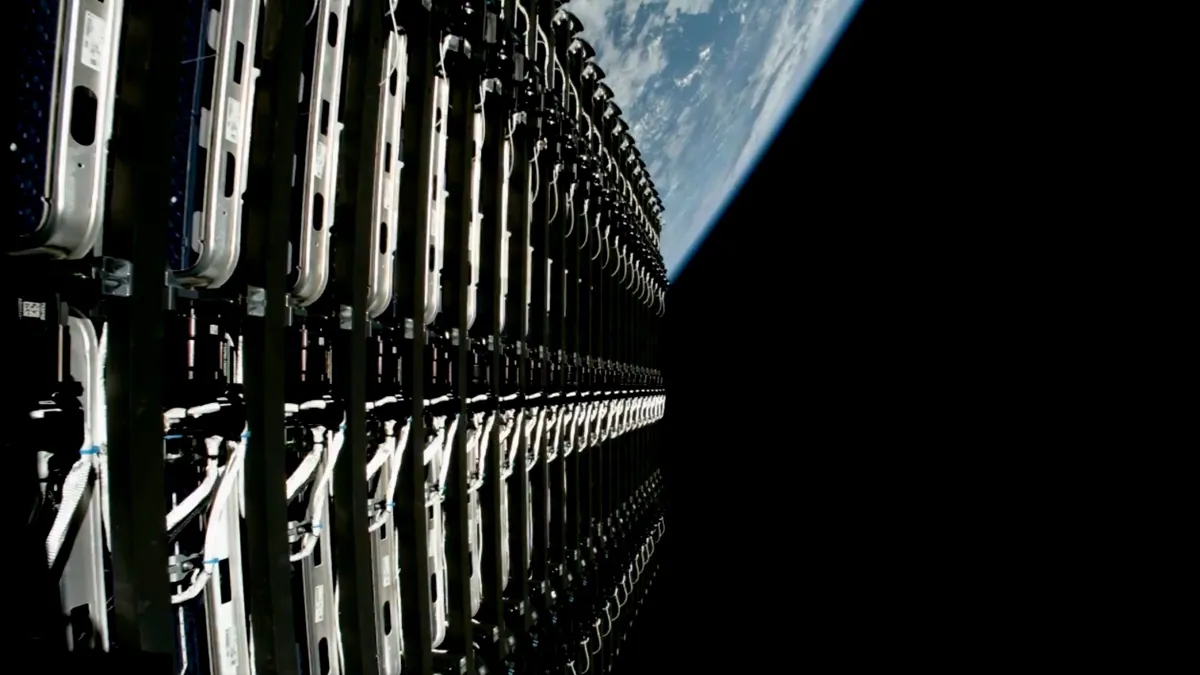
SpaceX has asked federal regulators for permission to put 100,000 new satellites into low Earth orbit, a filing that would massively expand a Starlink network that's already the largest thing humans have ever put in space.
The application, submitted to the Federal Communications Commission, covers what SpaceX is calling its "Gen3" constellation. Astronomer and satellite tracker Jonathan McDowell first flagged the filing on X on July 9, noting it's presumably an upgraded version of the Starlink broadband service SpaceX already runs.
To put the number in context: SpaceX currently flies nearly 10,800 Starlink satellites, with FCC approval already in hand for roughly 4,000 more. A 100,000-satellite Gen3 fleet would be an order of magnitude beyond anything the company, or anyone else, currently operates in orbit.
What makes the filing especially notable isn't just the count, it's the size. According to McDowell's read of the application, each Gen3 satellite would weigh between 4,400 and 5,500 pounds (2,000 to 2,500 kilograms) and unfurl solar arrays covering 3,230 to 4,300 square feet (300 to 400 square meters). Compare that to the satellites SpaceX is launching right now, the V2 Mini, which weighs about 1,760 pounds (800 kg) and spans roughly 1,250 square feet (116 square meters) once deployed, per figures reported by SpaceflightNow. In other words, a single Gen3 satellite could weigh about three times as much as a current model and cover more than three times the area.
Why Falcon 9 probably can't do this job
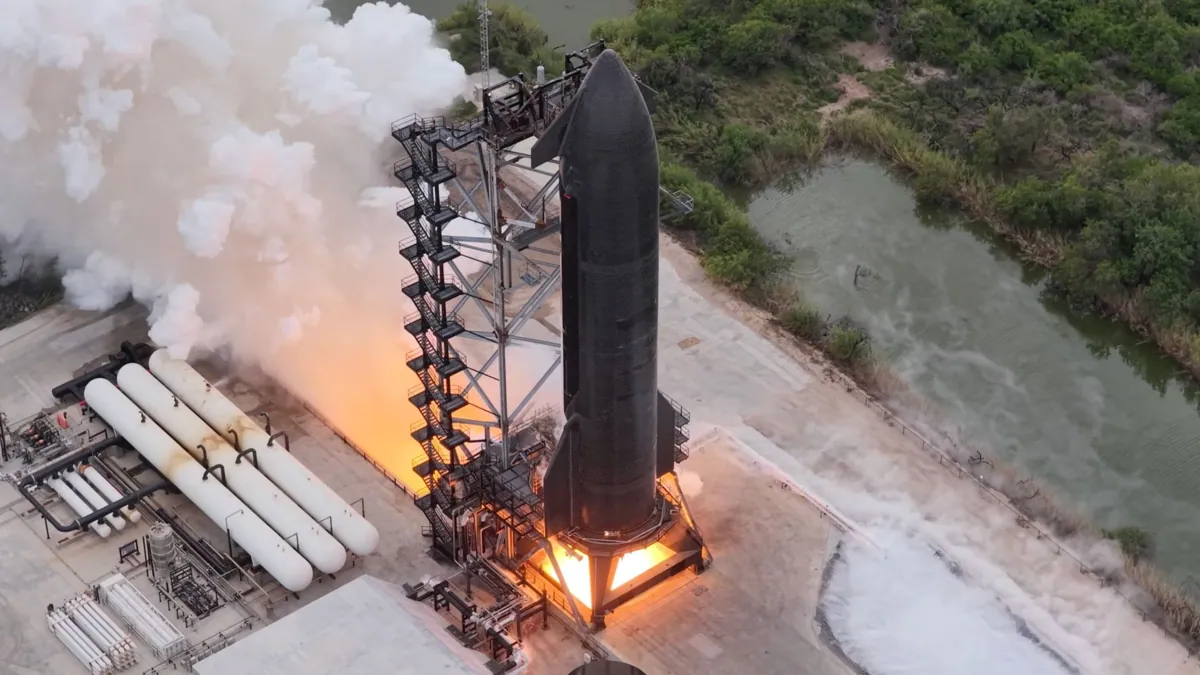
SpaceX's current satellites ride to orbit aboard the Falcon 9, typically packed in batches of 29 per launch. But satellites the size described in the Gen3 filing are unlikely to fit that model. Their bulk points toward Starship, the massive, still-in-development rocket SpaceX is building for lunar and Mars missions, as the more plausible launch vehicle. Starship has yet to prove itself as a routine, operational satellite launcher, which means Gen3's timeline is tied to a rocket program that's still working out its own kinks.
Gen3 is just one piece of a much bigger ambition
As large as a 100,000-satellite Gen3 constellation would be, it's not even the biggest thing SpaceX has on its drawing board. The company is also pursuing Starmind, a proposed constellation of a million satellites designed to function as orbital data centers powering AI applications.
Elon Musk described the concept in a February 2026 update, framing it in explicitly civilizational terms:
"Launching a constellation of a million satellites that operate as orbital data centers is a first step towards becoming a Kardashev II-level civilization, one that can harness the sun's full power, while supporting AI-driven applications for billions of people today and ensuring humanity's multi-planetary future."
A Kardashev II civilization, in the scale astrophysicist Nikolai Kardashev proposed, is one capable of harnessing the entire energy output of its home star, a benchmark far beyond current human technology. Musk's framing places Starmind as an early step toward that kind of scale, though the concept remains a stated ambition rather than a filed, funded project on the scale of the Gen3 application.
SpaceX isn't operating in a vacuum
Other companies are chasing similar territory in low Earth orbit. Amazon and Blue Origin are among those building or planning their own large satellite constellations, meaning the orbital real estate SpaceX is angling for is becoming genuinely competitive, not just crowded by SpaceX alone.
That crowding is precisely what worries critics. Astronomers, environmental groups, and other stakeholders have raised objections to how densely populated Earth orbit is becoming, pointing to potential disruption of astronomical observations, effects on wildlife, atmospheric impacts, and the simple loss of an unobstructed night sky. A jump from roughly 15,000 Starlink satellites (current plus already-approved) to 100,000 would intensify all of those concerns considerably, even before accounting for a hypothetical million-satellite Starmind fleet.
For now, Gen3 exists as a regulatory filing, not a launch schedule. The FCC will need to weigh the application, and SpaceX will need Starship to become a reliable, high-cadence launch vehicle before satellites of this size can start reaching orbit in any real numbers. But the filing itself signals where SpaceX intends to take Starlink next: bigger satellites, vastly more of them, and an infrastructure ambition that increasingly reads as a stepping stone toward something even larger.