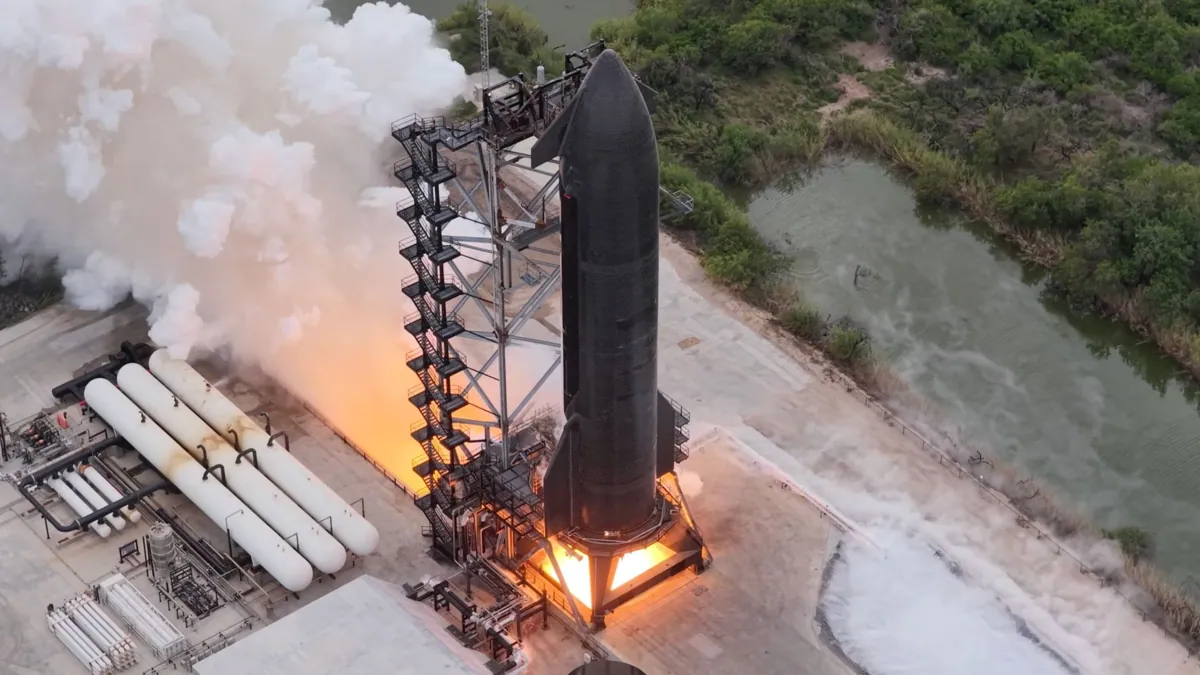
SpaceX's Dawn Launch Turned the Sky Into a Glowing "Space Jellyfish"
A Falcon 9 carrying NASA cargo to the International Space Station lit up skies from Georgia to North Carolina early Tuesday, and the optical effect even has an official name.
Most rocket launches happen in the middle of the night or behind a wall of cloud cover, visible mainly to the people who paid for a ticket to watch in person. Tuesday morning's launch wasn't one of those. SpaceX sent a Falcon 9 rocket off Pad 40 at Cape Canaveral Space Force Station at 6:35 a.m. EDT, and the timing turned an otherwise routine cargo run into a sky show that stretched across much of the East Coast.
The mission, called CRS-35, is SpaceX's 35th commercial resupply flight for NASA. It's carrying a cargo version of the company's Dragon spacecraft, loaded with about 6,300 pounds (2,860 kilograms) of supplies bound for the International Space Station. Because the rocket's path tracked the ISS's orbit at the time of launch, it flew north along the coastline rather than straight out over the ocean, putting it in view of a huge stretch of the country.
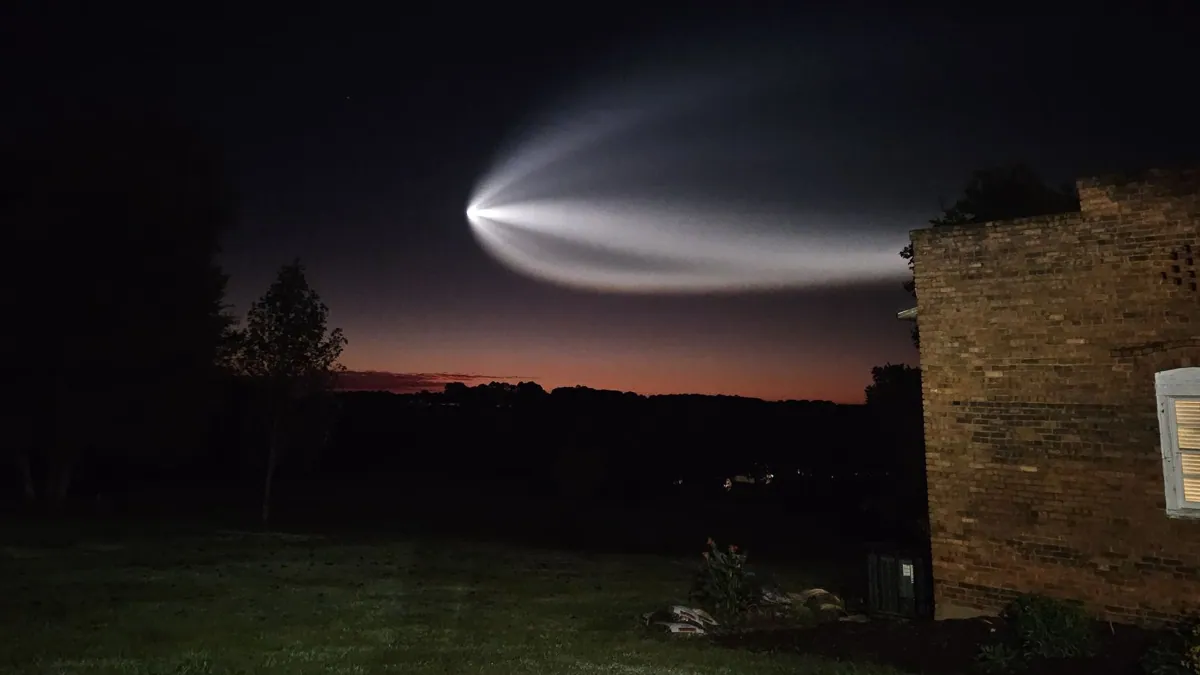
What made it striking wasn't just the geography. It was the light. As Falcon 9 climbed into thinner air, its exhaust plume expanded well beyond the width of the rocket itself, and the early dawn sun caught it at just the right angle to set it glowing. NASA's Kennedy Space Center has a name for this: the "space jellyfish." In a post on X, the center explained that the effect shows up during launches near sunrise or sunset, when sunlight illuminates the exhaust plume and gives it a luminous, bell-shaped glow that looks a lot like the real animal drifting through the sky.
People noticed. Ellen Alence, watching from her farm in Colbert, Georgia, described the moment to Space.com: "You can imagine my surprise when I opened my back door to let the dogs out this morning." She snapped a photo before the dogs even made it outside.
Further north, in Durham, North Carolina, Richard Mack Wilson-Leigh caught the same launch and had a very different first impression. "At first, I thought it was a comet," he told Space.com. "My mind jumped between two thoughts: that is just beautiful beyond belief, and it is the end of the world."
What Wilson-Leigh saw next threw him even more. About 2.5 minutes after liftoff, Falcon 9's first and second stages separated, right as the booster fired its engines again to flip around and head back toward a landing at the Cape. Seen from the ground with no context, that burn can look alarming. "I thought it blew up at first," Wilson-Leigh said, laughing it off afterward.
That sequence is actually just Falcon 9 doing what it does on nearly every flight. Once the booster separates, it reorients itself and burns its engines to steer back toward a landing zone near the launch site, while the second stage keeps pushing Dragon and its cargo the rest of the way to orbit. From the ground at dawn or dusk, that combination of plume expansion, separation, and the booster's return burn is exactly what produces the jellyfish effect and the brief bursts of light that can look like an explosion to someone who doesn't know what they're watching.
Dragon's cargo now has about two days of catching up to do before it reaches the space station. It's set to arrive Thursday morning, Oct. 15, with an autonomous docking at the space-facing port of the station's Harmony module expected around 11 a.m. EDT.
The timing lines up with a recent changeover aboard the ISS. SpaceX's Crew-13 arrived at the station on Oct. 1, and the astronauts of Crew-12 returned to Earth a few days later, on Oct. 8. CRS-35's delivery will restock the station for its newest crew.
None of this is new territory for SpaceX, which flies Falcon 9 on a near-weekly cadence at this point and has made booster landings routine enough that they rarely make headlines on their own. What made Tuesday's launch notable wasn't the rocket. It was the hour. A launch at dawn, under the right sky conditions, can turn an engineering milestone into something that looks genuinely strange and beautiful from a backyard in Georgia or a driveway in North Carolina, no livestream required.