SpaceX to Launch Classified Spy Satellite Thursday — With a Ferret as Its Mascot
The NROL-95 mission for the National Reconnaissance Office will lift off from Cape Canaveral, but as usual, almost everything about it stays under wraps.
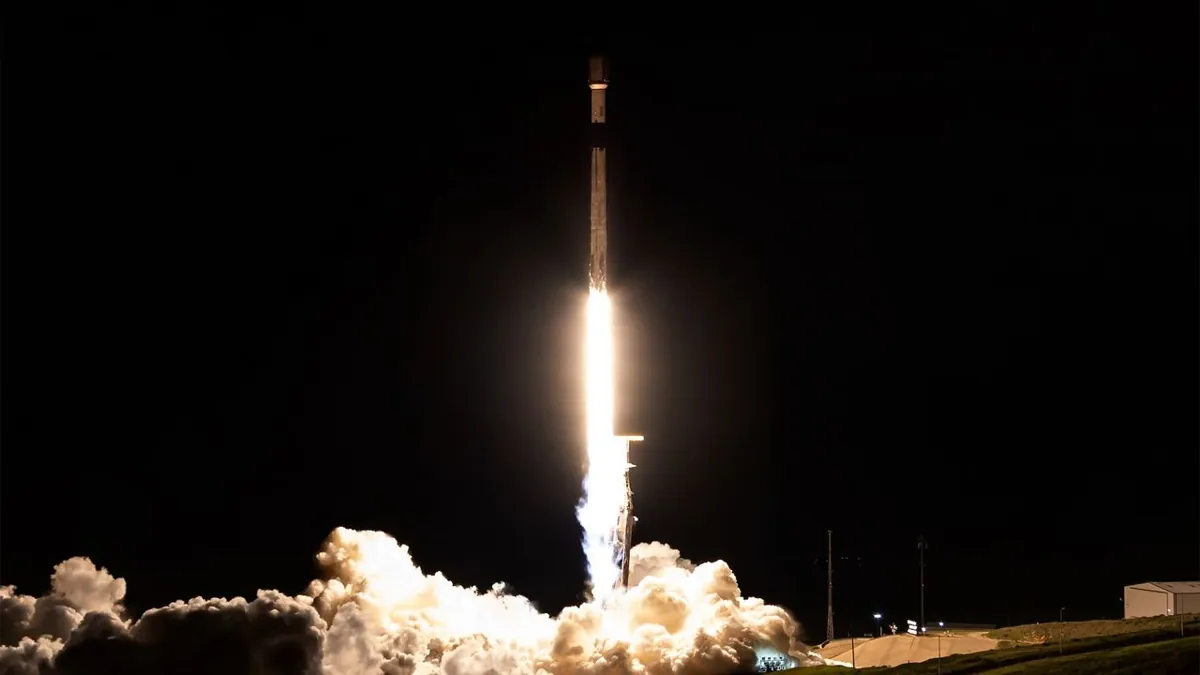
SpaceX is set to launch a classified satellite for the U.S. National Reconnaissance Office early Thursday morning, and the public will get to watch, at least until the rocket clears the pad.
A Falcon 9 rocket carrying the NROL-95 mission is scheduled to lift off from Cape Canaveral Space Force Station in Florida. The 44-minute launch window opens at 2:37 a.m. EDT (0637 GMT), though SpaceX has said it's aiming for a liftoff closer to the back end of that window, around 3:09 a.m. EDT (0709 GMT). SpaceX plans to stream the launch live, starting roughly 10 minutes before liftoff.
Beyond that, details are scarce by design. The NRO, which runs the country's constellation of spy satellites, hasn't disclosed what NROL-95 is carrying or what it will do once in orbit. That's standard practice for the agency, which treats payload specifics as classified.
What the NRO has released is the mission patch, and it's a bit of a departure from typical stoic space-agency branding. It shows a snarling ferret against a night sky, with the phrase "We are the Champions" along the bottom edge. In an official description of the emblem, NRO officials leaned into the theme: "The ferret, a clever creature, embodies agility and resilience — key traits for exploration. Its confident grin and bright eyes reflect a spirit of victory in a realm where determination meets adventure." The agency added that the tagline "encapsulates the camaraderie and pride shared among those on this purposeful mission."
Part of a busier cadence
NROL-95 is the fourth NRO launch of 2026, following NROL-105 in January, NROL-172 in May, and NROL-179 in June. All three of those missions also flew on Falcon 9 rockets, but launched from Vandenberg Space Force Base in California rather than Florida.
Those earlier launches were tied to the NRO's so-called proliferated architecture, an ongoing effort to build out a large network of smaller, cheaper reconnaissance satellites in orbit rather than relying on a handful of exquisite, expensive spacecraft. Whether NROL-95 belongs to that same program or serves a different purpose hasn't been stated.
The frequency of these launches reflects a broader shift in how the NRO approaches satellite reconnaissance. Spreading capability across many smaller satellites makes the overall system harder to disrupt and easier to replenish, and it's why Falcon 9 has become a workhorse for the agency's needs. Four missions in roughly seven months is a notably steady pace for a government satellite program.
What to expect on launch day
If the mission proceeds on schedule, the Falcon 9's first stage will return to Cape Canaveral for a landing about 8.5 minutes after liftoff. According to SpaceX's mission description, this will be the seventh flight for this particular booster, part of the company's routine practice of reusing rocket stages across multiple missions.
As for the live coverage, don't expect to see much of the actual payload deployment. Past NRO missions launched by SpaceX have followed a consistent pattern: the webcast runs through liftoff and often through the booster landing, then cuts off shortly after at the agency's request. That's the trade-off with national security launches — the public gets to watch the rocket go up, but what happens next stays classified.
For now, the ferret patch is likely to be the most memorable detail to emerge from NROL-95, at least until whatever it's carrying quietly starts doing its job in orbit.