SpaceX Deploys Next-Gen Starlink Satellites, But Booster Blows Up Again
The 13th Starship test flight hit its main target while the Super Heavy booster failed for the second straight V3 mission, adding pressure on a stock already sliding since SpaceX's IPO.
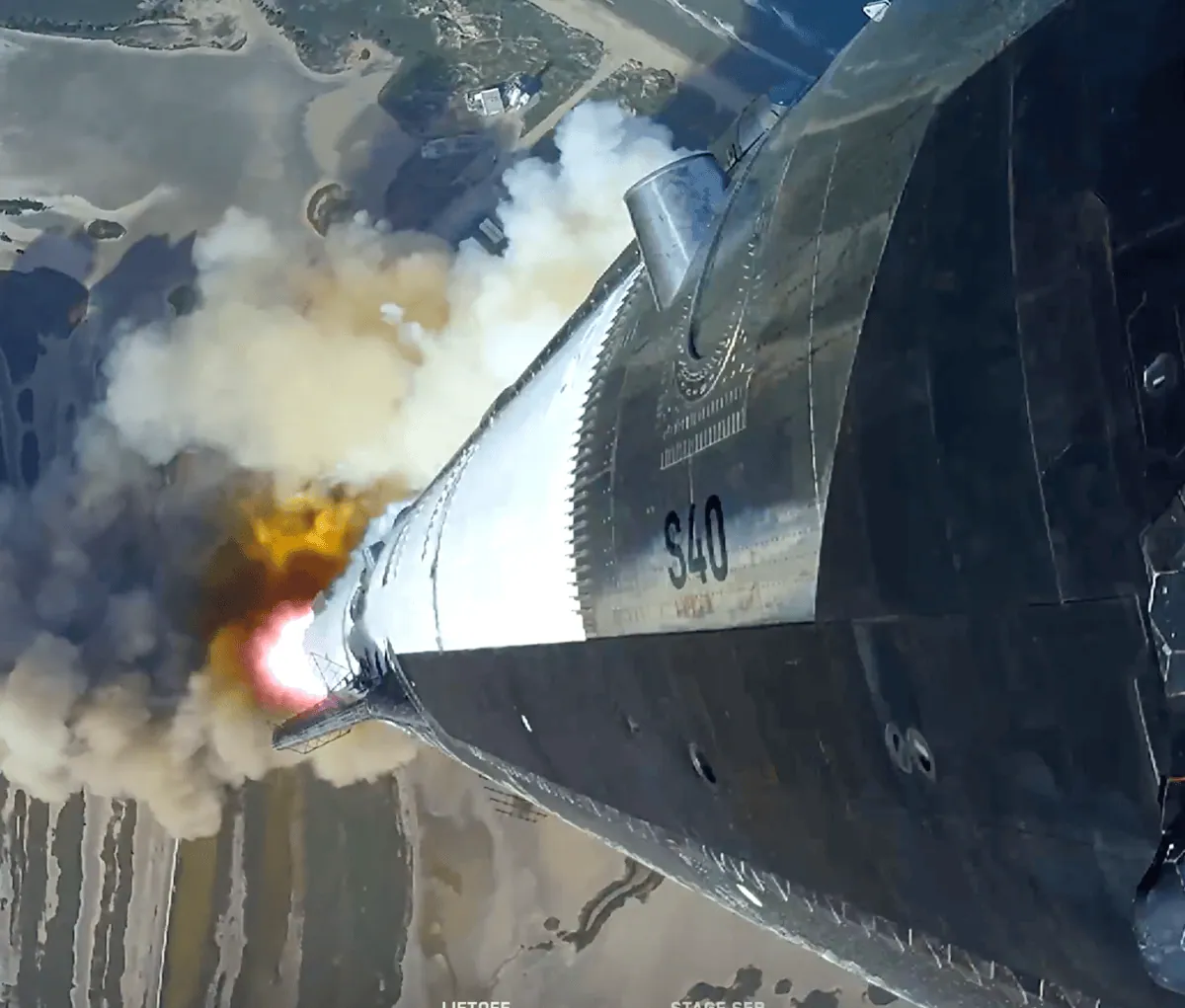
SpaceX pulled off a genuine milestone on Friday, deploying its first third-generation Starlink satellites from an upgraded Starship. But the celebration came with an asterisk: the rocket's Super Heavy booster failed yet again during a test landing, marking the second straight botched booster outcome for this new version of the vehicle.
The mission was the 13th test flight of Starship, SpaceX's massive next-generation rocket system, and the first to successfully deliver V3 Starlink satellites, an upgraded version of the company's broadband constellation hardware. That part of the flight went cleanly. The upper stage suffered none of the engine trouble that plagued the previous V3 attempt in May, when Starship lost a rocket engine en route to orbit.
The booster wasn't so lucky. During a planned simulated landing over the Gulf of Mexico, the Super Heavy booster couldn't get all the engines needed for its landing burn to fire properly. It hit the water harder and faster than expected and exploded. That's a near-repeat of what happened in May, when the same booster failed during stage separation on the first V3 flight. Two flights into the V3 era, SpaceX now has two Super Heavy failures to show for it.
A rough stretch even by Starship standards
Friday's launch also came freighted with extra baggage: it followed a failed launch attempt just over a week earlier, when SpaceX had to abort immediately after ignition because of multiple engine failures. The company said it swapped out six engines before trying again on Friday, and that fix appeared to work, at least well enough to get the rocket off the pad and through a full ascent.
Starship's development has always run on what SpaceX calls a "fly, fail, fix" philosophy, essentially treating early explosions and setbacks as expected data points rather than disasters, on the theory that rapid, iterative testing gets you to a working rocket faster than years of ground simulation. That approach has produced plenty of dramatic footage over the program's history, including this booster's fiery end in the Gulf.
What's different now is that failures carry a new kind of weight. This was the first Starship launch since SpaceX went public in June, in what was the largest IPO in history. Public markets tend to be less patient with test-flight theatrics than SpaceX's private investor base was, and the numbers already show it. Following last week's launch abort, SpaceX's stock dropped the next trading day. That was just one leg of a broader slide: shares have fallen from a peak above $200 to $115 at Friday's close. After Friday's booster failure, SpaceX shares dropped another 2% in after-hours trading before recovering some of that ground.
Progress, just not the finish line
It's worth separating what actually went right from what didn't. Getting V3 Starlink satellites deployed successfully is real progress. It shows the upper stage can now carry and release the newer, presumably more capable satellite hardware without the propulsion issues that marred the May flight. The satellites themselves won't stay up long. Because Starship still can't reach Earth orbit, they're expected to burn up in the atmosphere roughly 20 minutes after deployment. This flight was a proof of concept for deployment mechanics, not an operational delivery to the constellation.
The booster, meanwhile, remains the program's persistent problem child on this new hardware version. Nailing the landing burn is a prerequisite for the reusability that makes Starship's economics work in the first place. Two consecutive failures on V3, even in what's officially a "simulated" landing rather than a live recovery attempt, suggest SpaceX still has real engineering work ahead on the Super Heavy side of the vehicle before it can call this version stable.
SpaceX has not yet detailed what caused Friday's engine ignition problem on the landing burn, and the company's report on this flight, per TechCrunch, was still developing as of publication. Expect more specifics, and likely another test flight, as SpaceX keeps iterating toward a version of Starship that sticks both the ascent and the landing.