SpaceX Flies Its Most-Used Booster Yet on Secretive Space Force Mission
A Falcon 9 carried undisclosed military payloads to orbit Wednesday evening, powered by a rocket making its 28th flight.
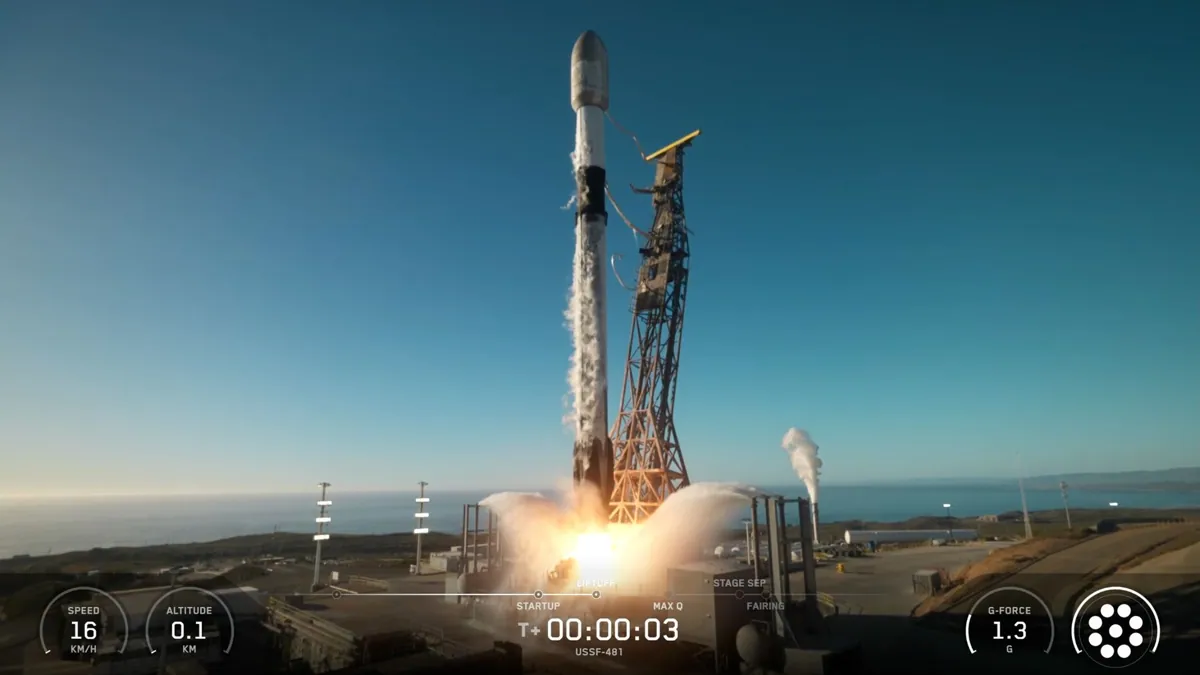
SpaceX sent a Falcon 9 rocket off the pad at Vandenberg Space Force Base in California on Wednesday evening, carrying classified cargo for the U.S. Space Force into clear skies above the state's central coast.
The rocket lifted off at 8:01 p.m. EDT (5:01 p.m. local time), kicking off a mission designated USSF-481. As with most national security launches, SpaceX offered few details about what the rocket was actually carrying or where it was headed, according to Space.com. The company's webcast wrapped up shortly after the Falcon 9's first stage landed, leaving the payload's destination and purpose undisclosed.
What made this launch a notable sight, even by Vandenberg's standards, was the weather. The base sits along a stretch of coastline that's frequently fogged in, which often turns what should be dramatic rocket launches into hazy, half-visible affairs for spectators. Wednesday's clear conditions meant the Falcon 9's climb was fully visible against blue sky, a rarer treat for anyone watching from the ground.
About 8.5 minutes after liftoff, the rocket's first stage touched down as planned on the drone ship "Of Course I Still Love You," stationed in the Pacific Ocean. That's where the mission's real record-setting footnote comes in: the booster involved, tail number 1081, was flying for the 28th time, according to SpaceX's mission description. Sixteen of its previous 27 flights were dedicated to building out Starlink, the company's satellite internet constellation in low Earth orbit. The rest of its résumé includes a mix of NASA and national-security work, among them Crew-7, CRS-29, the PACE climate satellite, Transporter-10, EarthCARE, NROL-186, Transporter-13, TRACERS, NROL-48, and COSMO-SkyMed Second Generation FM3.
That kind of reuse is no longer an anomaly for SpaceX, it's the baseline. Falcon 9 boosters routinely fly dozens of times now, and the company's push toward rapid reusability is a big part of why it can sustain the launch cadence it does.
USSF-481 marked the 114th Falcon 9 flight of 2026, underscoring just how dominant Starlink deployment has become in SpaceX's manifest. More than 70% of the rocket's flights this year have gone toward building out that broadband network, with national-security and NASA missions like this one filling in the rest.
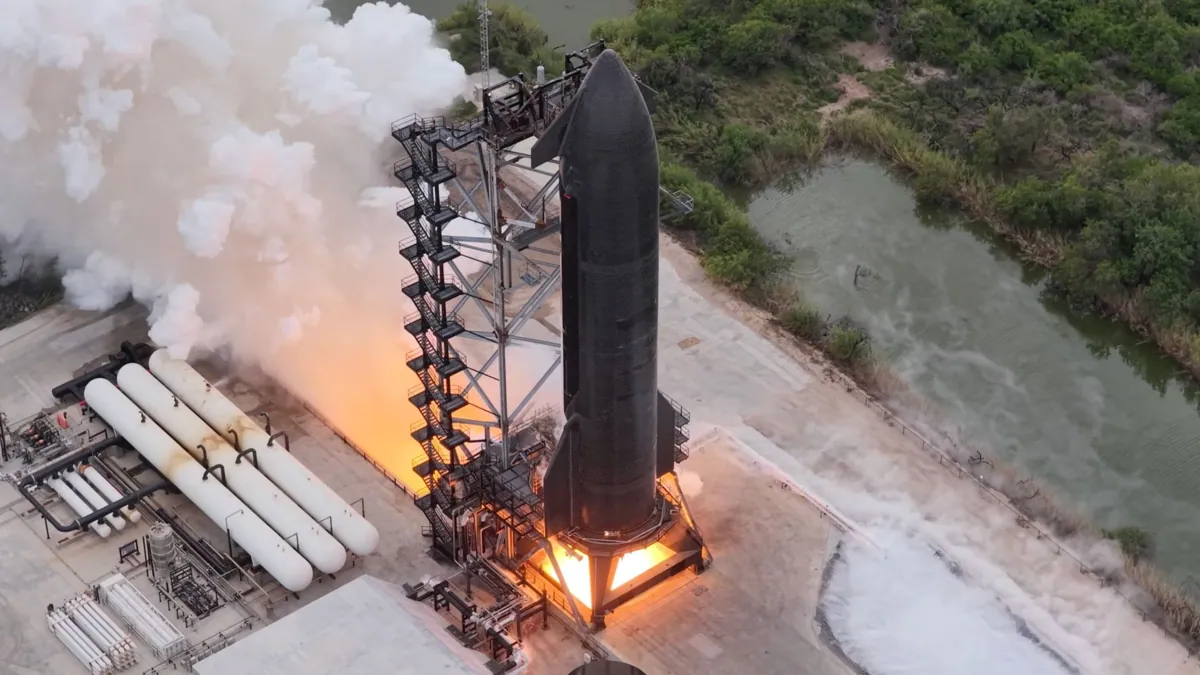
Falcon 9 isn't SpaceX's only active vehicle. The company has also launched its Falcon Heavy and Starship rockets three times apiece so far in 2026. Falcon Heavy is a fully operational part of the fleet at this point, but Starship is still working through test flights. It notched a milestone of its own on Sept. 28, reaching orbit for the first time.
For now, the specifics of USSF-481's payload and orbit remain under wraps, consistent with how the Space Force typically handles these missions. What's public is the booster's growing flight count and the successful landing, both signs that SpaceX's reuse strategy keeps paying off even as its launch pace accelerates.