A Tiny Satellite Just Tested Nuclear Power for Commercial Spacecraft
City Labs' BOHR cubesat, riding along on a SpaceX rideshare mission, is the first commercially built satellite to fly with a radioactive power source, and its maker sees it as a first step toward powering future moon bases.
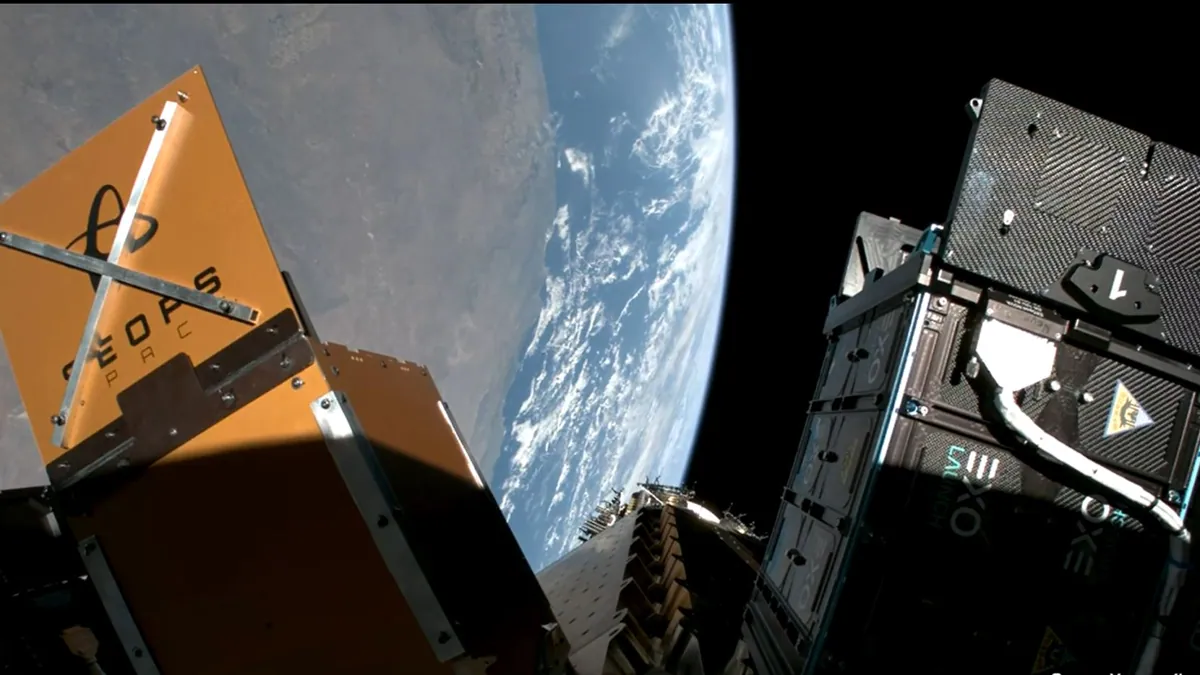
A small cubesat launched early Monday from California is quietly testing an idea that could reshape how spacecraft stay powered in places the sun can't reach.
The satellite, called BOHR (short for Betavoltaic Orbital High-Reliability), was built by Florida-based City Labs and rode to orbit aboard SpaceX's Transporter-17 mission, a rideshare flight that carried 81 payloads total. The Falcon 9 lifted off from Vandenberg Space Force Base and began releasing its cargo into various orbits about 50 minutes after launch. Buried among those 81 payloads is what City Labs is calling the first commercially built nuclear-powered satellite ever flown.
Don't picture a miniature reactor. BOHR carries City Labs' proprietary "NanoTritium" betavoltaic power source, a device that generates electricity from the radioactive decay of tritium. As tritium decays, it releases beta particles, and a semiconductor inside the device converts those particles directly into electrical current. It's a different mechanism from the radioisotope thermoelectric generators that have powered deep-space missions like NASA's Voyager probes for decades. Those systems capture heat from a decaying plutonium core and turn it into power. City Labs' approach skips the heat step entirely and pulls electricity straight from the particle emissions.
It's worth being precise about what BOHR actually proves. The tritium core isn't running the satellite. BOHR still depends on conventional solar power for its day-to-day operations. This flight is a demonstration, a chance to validate the NanoTritium hardware's performance in the actual conditions of orbit rather than in a lab. City Labs CEO Peter Cabauy called it "a historic step for commercial nuclear power in space" in a statement announcing the launch.
Why tritium, and why now
The pitch behind betavoltaic power is continuity. Solar panels are useless without sunlight, which is a real problem for any spacecraft or rover that needs to operate somewhere permanently dark. The most obvious example sits at the moon's south pole, where craters hold regions that never see direct sunlight. NASA has flagged that area as the centerpiece of its Artemis program, largely because of the water ice believed to be trapped there, ice that could eventually be mined for drinking water, breathable oxygen, or rocket fuel. Supporting any long-term human presence at the lunar south pole means solving the power problem in places where solar panels simply don't work, which is why NASA has separately been funding development of small nuclear reactors for surface use on the moon.
City Labs is positioning its tritium-based technology as a nearer-term, lower-stakes piece of that puzzle. In a statement, the company described BOHR as arriving as "the first commercial answer to that challenge." The current version of the NanoTritium device is far too small to power something on the scale of a lunar habitat, but City Labs says the underlying technology is designed to scale up toward that kind of application over time.
Tritium has a practical advantage that makes this scaling ambition more plausible than it might sound: it's a comparatively low-radiation isotope. City Labs says that quality is central to its design philosophy, stating that its tritium-based power systems are "engineered for safe handling, transportation, and integration within standard commercial launch environments." That matters enormously for anything trying to get regulatory sign-off to ride on a rocket alongside dozens of other payloads, as BOHR just did.
Clearing the regulatory bar
That regulatory sign-off is itself a notable part of this story. BOHR is the first mission approved for launch under the Federal Aviation Administration's nuclear launch approval process established through National Security Presidential Memorandum-20, a Trump administration directive issued in 2019 governing how nuclear power sources get cleared for spaceflight. Getting a nuclear payload through that process and onto a rocket is its own kind of milestone, separate from whether the technology itself works as intended in orbit.
The mission was funded through a Department of Defense contract, underscoring that the interest here isn't purely commercial or scientific. Reliable, sunlight-independent power sources have obvious appeal for national security satellites that may need to operate in unusual orbits or shadowed conditions without interruption.
Cabauy framed the launch as proof of concept for that broader ambition. "BOHR demonstrates that safe, compact, and regulatory-approved nuclear power systems are ready for routine commercial deployment," he said in the company's statement.
For now, BOHR is a cubesat in orbit, testing hardware rather than powering a mission-critical system. But City Labs is betting that this small, low-radiation demonstration is the opening move in a longer game: proving tritium-based power works in space, clearing the regulatory path for it, and then scaling the technology toward the kind of sustained, sunlight-free power that a future lunar outpost would actually need.