SpaceX Fires Up Super Heavy's 33 Engines Ahead of Starship's Boldest Flight Yet
Flight 15 is shaping up to test SpaceX's reusability ambitions directly, with a tower catch of the ship upper stage on the table for the first time.
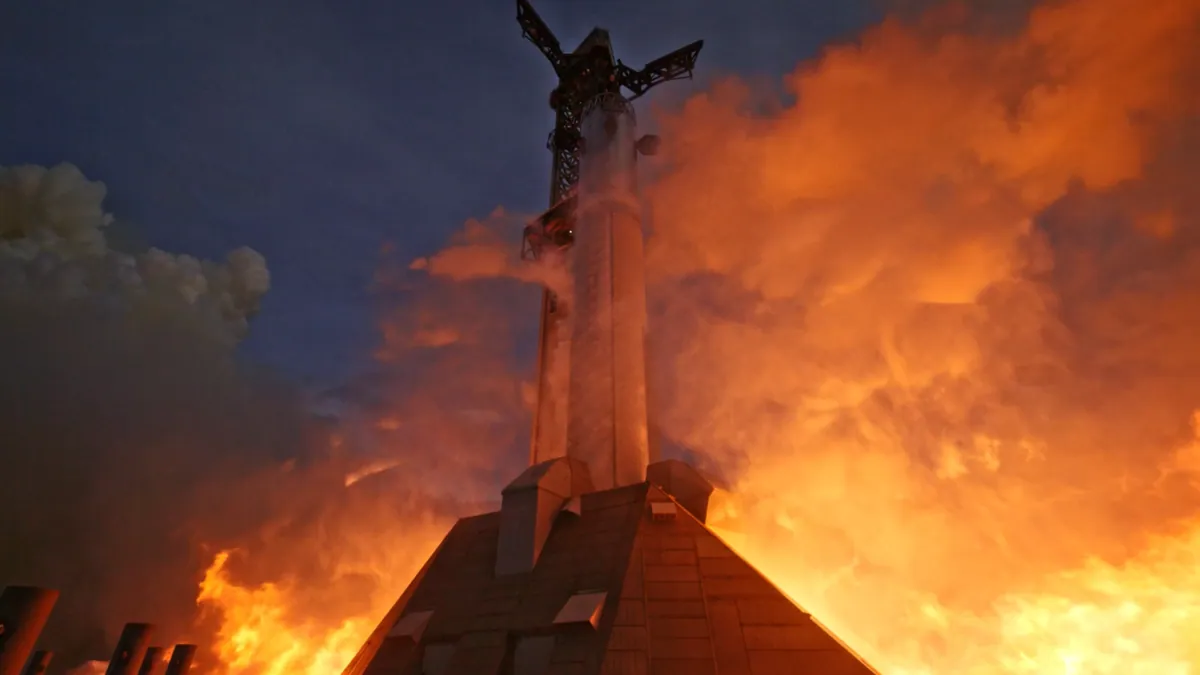
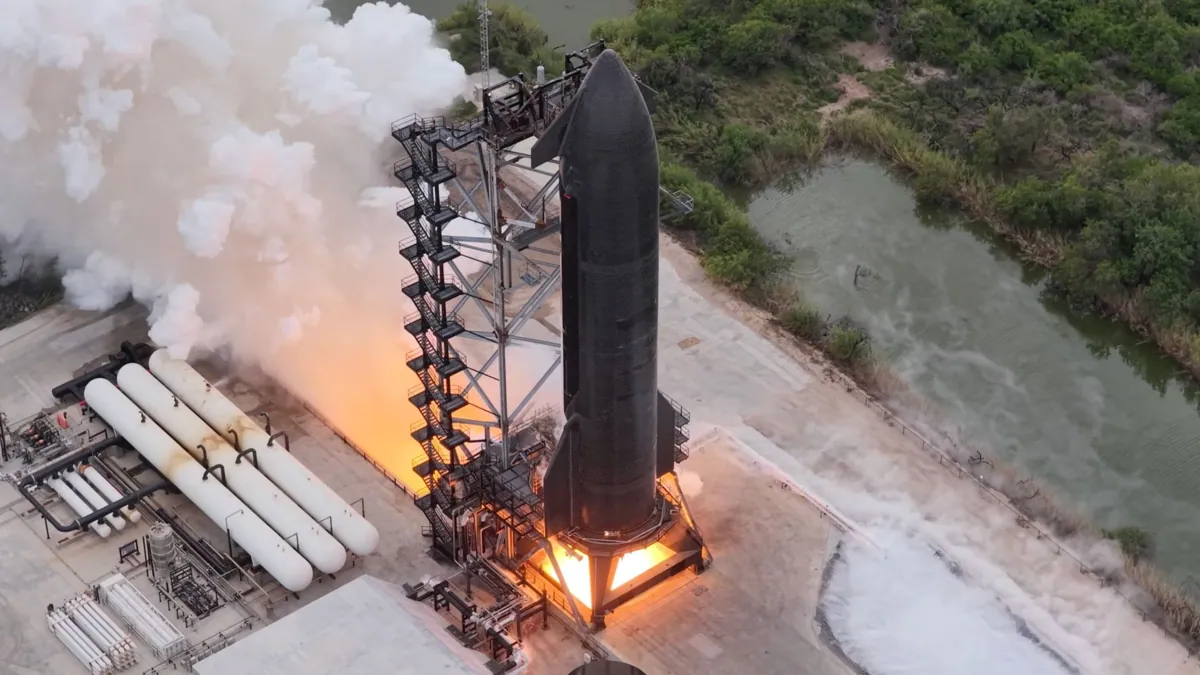
SpaceX lit all 33 Raptor 3 engines on its Super Heavy booster Sunday, a roughly 15-second static fire that marks the opening move in preparations for Starship's next test flight. The booster, designated Booster 22, is assigned to Flight Test 15, and SpaceX confirmed the full-duration burn in a post on X.
It's a routine-sounding milestone that sets up a potentially non-routine mission. Flight 15 is where SpaceX intends to attempt its first catch of a Starship upper stage at the launch tower, according to statements from CEO Elon Musk. Up to now, the company has focused its tower-catch ambitions on the Super Heavy booster. Catching the ship stage as well would be a meaningful step toward Musk's long-stated goal of making both halves of Starship fully and rapidly reusable, cutting out the expendable-hardware costs that have defined rocketry since its beginning.
Booster 22's engine test is just the first box to check. The upper stage for this flight, Ship 42, still has its own static fire and systems checks ahead before it's mated to the booster for launch. Only after both vehicles clear those tests will SpaceX stack them for flight.
A campaign building momentum
This test comes on the heels of real progress. SpaceX has flown three Starship missions so far in 2026, and the most recent, Flight 14 on September 28, reached orbit for the first time. That flight also delivered 26 next-generation Starlink V3 satellites, the first operational payloads Starship has ever put into orbit. The V3 satellites are notable because they're too large to launch on SpaceX's Falcon 9, which has carried the bulk of the Starlink constellation to date. Getting Starship into regular service is, in large part, about unlocking the ability to loft this bigger, more capable generation of satellites.
Flight 14 wasn't clean, though. An upper-stage Raptor engine cut out early during ascent, forcing SpaceX to shorten what was meant to be a 10-hour mission. Ship still managed a controlled reentry and splashdown in the Pacific roughly three hours after liftoff. SpaceX hasn't said whether Flight 15 will carry another batch of V3 Starlinks, but given the company's push to scale up that satellite generation, it wouldn't be a surprising follow-up.
Why NASA is watching closely
Starship's progress carries weight well beyond SpaceX's own satellite business. NASA has contracted the company to build a modified version of the Ship upper stage to land astronauts on the moon under the Artemis program, and the agency recently updated its milestone timeline for what SpaceX needs to demonstrate before that lunar lander is cleared to fly crews. A major test of that plan is slated for next summer on Artemis III, when NASA's Orion spacecraft will carry astronauts to Earth orbit and dock with both lunar lander candidates, SpaceX's Starship and Blue Origin's Blue Moon, over roughly two weeks.
SpaceX is also working toward an uncrewed lunar landing demo ahead of Artemis IV, NASA's planned 2028 return to the lunar surface. NASA hasn't yet decided which company's lander will fly that crewed mission, and SpaceX and Blue Origin remain in competition for it. Every successful Starship test, in other words, feeds directly into a NASA decision with real stakes attached.
What's next
Flight 15 isn't the only thing SpaceX has queued up. The company is aiming to hit additional milestones before the end of 2026, including Starship's first launch from Florida and, potentially, the first re-flight of an upgraded V3 Super Heavy booster, a move toward the kind of rapid-reuse cadence SpaceX has already achieved with Falcon 9.
For now, the near-term timeline hinges on Ship 42 clearing its own test sequence. If SpaceX's recent launch cadence holds, Flight 15 could lift off sometime in mid-to-late November. Whether the ship-catch attempt succeeds will say a lot about how close SpaceX actually is to the reusable system it's been promising, and about how smoothly NASA's moon plans can move forward behind it.