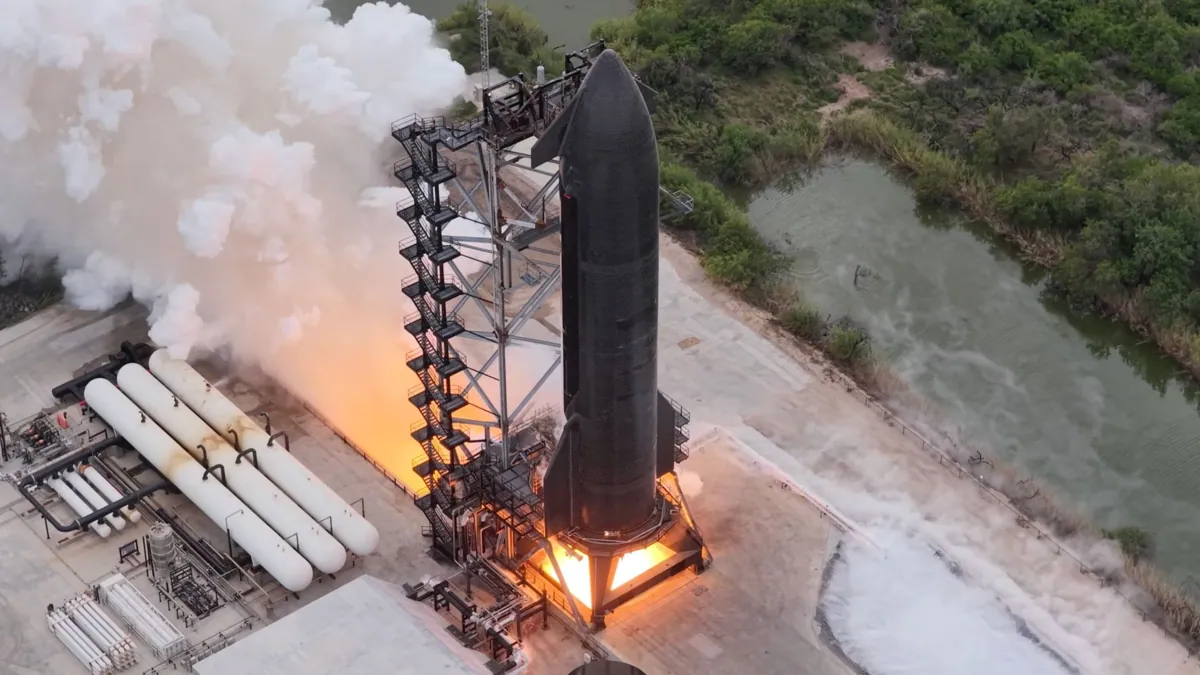
An Artemis Astronaut Just Publicly Questioned NASA's Moon Landing Plan
Victor Glover says racing to the lunar south pole first is riskier than it looks, and NASA may already be listening.
Victor Glover flew around the moon on Artemis II this past April. Now he's telling NASA it might be aiming at the wrong spot.
Speaking at the NASA Exploration Science Forum at Ames Research Center on July 21, Glover argued that the agency's long-standing plan to put astronauts down near the lunar south pole first may not be the smartest way to get boots back on the moon, according to a report from Space News. His suggestion: land near the equator instead, at least to start.
"I think we need to be realistic and work our way to the south pole, and maybe not try to go there first," Glover said.
It's a notable thing for a sitting Artemis astronaut to say out loud, given how central the south pole has been to NASA's entire pitch for returning to the moon.
Why the south pole in the first place
NASA picked the south pole for a reason. Permanently shadowed craters there are believed to hold substantial deposits of water ice, a resource that could be converted into drinking water, radiation shielding, and rocket fuel. That's the foundation of Artemis' bigger ambition: build a sustained human presence on the moon and use what's learned there to eventually get astronauts to Mars.
There's also a geopolitical layer to the urgency. China has its own lunar ambitions and has already pulled off robotic landings and sample-return missions on both the near and far side of the moon, with hardware in development for a crewed landing by 2030. Last year, during a Senate Commerce Committee hearing, space industry figures including former NASA Administrator Jim Bridenstine warned lawmakers about the stakes of China getting to the south pole first. Mike Gold, president of civil and international space at Redwire, told senators that losing that race could trigger, in his words, "a global realignment that will impact our economy, our tax base, our ability to innovate and our national security."
That's the tension Glover's comments run into. If the goal is simply beating China back to the moon, an equatorial landing might work fine. If the goal is specifically to be first at the south pole, going somewhere else first doesn't help.
The case for the equator
Glover's argument isn't just about symbolism, though. It's about safety and logistics.
NASA's original architecture for south pole landings relied on something called a near-rectilinear halo orbit, or NRHO — a highly elliptical, high-altitude polar orbit where the Orion capsule would dock with the now-sidelined Gateway space station before crews transferred to a lander for descent. NASA has since dropped Gateway from the plan in favor of pushing straight toward a surface base, but NRHO's geometry still creates a problem: because the orbit is so elongated and takes so long to complete, a launch window from the south pole to rendezvous with Orion only opens up about once a week.
Glover framed the risk in blunt terms, describing a hypothetical medical emergency right after a south pole landing. "You're stuck for a week," he said. "That's a big deal to me, and I don't like that plan … The equator gives me opportunity to save that person."
His pitch, essentially: if the immediate priority is just getting Artemis astronauts back on the lunar surface, choose the option that's familiar, sits in daylight, and offers a fast route home. "If you want to go fast, go familiar," Glover said. "If we want to land soon, familiar, daylight, equator."
NASA's timeline, and the landers it depends on
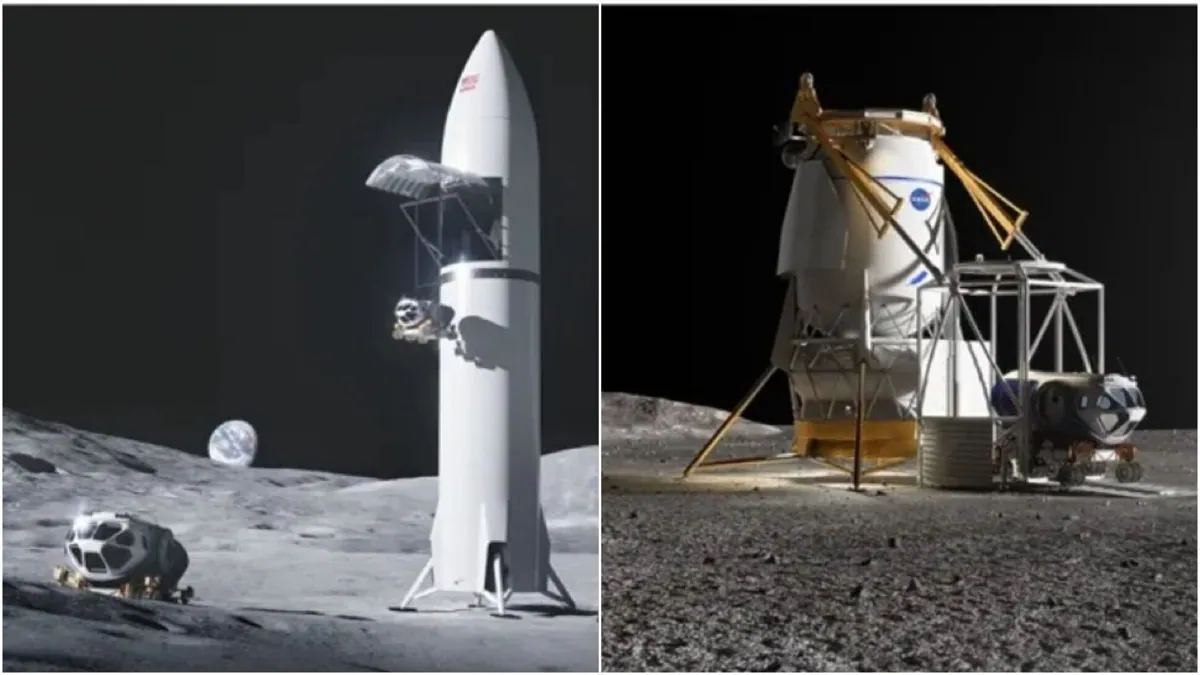
The next flight, Artemis III, is set for next year and will send four astronauts aboard Orion to practice rendezvous and docking with the program's two commercial lunar landers, SpaceX's Starship and Blue Origin's Blue Moon. Assuming that mission goes well, NASA is targeting late 2028 for Artemis IV, which would mark the program's first actual moon landing. Getting there depends on at least one of those two landers being flight-ready, and both have faced delays that have raised doubts about whether they'll be ready on schedule.
There are early signs NASA may already be shifting course on where that first landing happens. During a June 9 event unveiling Artemis III details, SpaceX's Vice President of Customer Operations and Integration, Jessica Jensen, described an updated Artemis IV mission profile that skips NRHO entirely.
"We have an updated plan with NASA that includes docking Starship with Orion in Earth orbit instead of NRHO, and then we use Starship to actually do the translunar injection with Orion attached," Jensen said.
She echoed Glover's safety concerns directly. "The crew can also abort off the lunar surface nearly any time, versus waiting up to days from NRHO," Jensen said, adding that the revised plan also cuts down on the amount of propellant Starship needs to gather in space, since the route to the moon becomes more direct and carries less schedule risk overall.
Nothing here is finalized, and NASA hasn't formally announced a change in the Artemis IV landing site. But between Glover's public remarks and SpaceX's own description of an equator-friendly mission architecture, the pressure to rethink the south pole as the very first stop is coming from more than one direction at once. Whether NASA agrees will likely come down to a simple question: is the mission about getting to the moon fast, or getting to a specific piece of it first.