Russia Wants Telegram's Founder Arrested, Alleges App Aided Ukrainian Sabotage Recruitment
Moscow's FSB says a Telegram dating bot was used to lure young Russians into attacks, escalating a years-long standoff between the Kremlin and Pavel Durov.
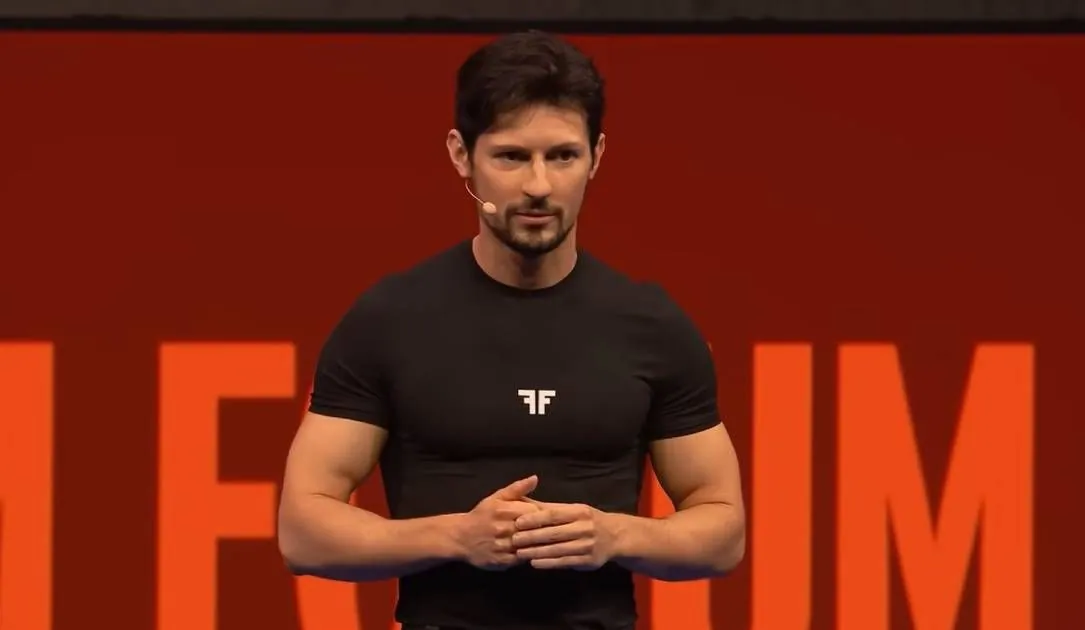
Russia's Federal Security Service says it wants Telegram founder Pavel Durov placed on an international wanted list, accusing him of aiding terrorism by letting Ukrainian intelligence use his app to recruit Russians for sabotage missions and espionage.
The FSB announced the charges Wednesday, claiming Telegram failed to take down channels and bots that Ukrainian intelligence, along with what Russia calls terrorist and extremist groups, allegedly used to operate inside the country. Central to the agency's case is Daivinchik, a Tinder-style dating bot that runs inside Telegram and reportedly draws up to 16 million monthly users. According to the FSB, Ukrainian operatives used the bot to pose as young women online, build relationships with Russian men, and then persuade or coerce them into carrying out attacks such as arson.
Russian authorities said they've detained 46 people, ranging in age from 12 to 22, since last summer in connection with the alleged scheme. The FSB also released video it says shows several young people confessing to setting fire to gas stations after being contacted by anonymous handlers on Telegram. Recorded Future News, which first reported the story, said it could not independently verify either the agency's claims or the authenticity of the footage. Ukraine's intelligence services have not commented.
Notably, Daivinchik was already on Russia's banned-websites registry as of December, over content officials classified as child sexual abuse material and what the government labels "LGBT propaganda." The new terrorism allegations against Durov build on that existing friction.
Telegram hasn't issued a formal response to the charges. But the company's press account on X posted a photo shortly after the FSB's announcement showing Durov raising his middle finger — an image originally published back in 2011 during his fight with Mail.ru over control of VKontakte, the Russian social network he founded before Telegram. The gesture, resurfaced now, reads as the company's answer for the moment.
This isn't the first time Durov has faced this specific accusation. He said in February that Russian authorities had already opened a criminal case against him alleging he aided terrorism. At the time, he pushed back hard: "Each day, the authorities fabricate new pretexts to restrict Russians' access to Telegram as they seek to suppress the right to privacy and free speech," he said, calling it "a sad spectacle of a state afraid of its own people."
A long-running standoff
Telegram has close to 90 million users in Russia, and the app has been a persistent irritant for the Kremlin. Officials have repeatedly accused the platform of refusing to remove content they deem extremist and of declining to localize Russian user data on servers inside the country. Durov, for his part, has framed the pressure as an attempt to push Russians toward state-controlled alternatives.
The app is now reportedly blocked in Russia without a VPN or similar workaround, yet the irony is hard to miss: Russian government institutions, including the Kremlin itself, keep posting daily updates on Telegram. Earlier this month, Kremlin spokesman Dmitry Peskov said talks with Telegram about restoring wider access were ongoing, though he suggested the company hasn't shown much appetite for negotiating.
Andrei Svintsov, deputy chairman of the State Duma's Committee on Information Policy, told the state outlet TASS that Telegram could keep operating legally in Russia if it opened a local representative office, stored Russian user data domestically, and cooperated with Russian security services on terrorism investigations. Those are essentially the same demands Moscow has made for years.
Legal trouble on multiple fronts
The Russian case lands on top of an already tangled legal situation for Durov abroad. French authorities detained him in August 2024 when he landed at an airport near Paris, later charging him over claims that Telegram failed to adequately fight criminal activity on the platform or cooperate with law enforcement. That investigation centered on allegations that Telegram was being used to spread child sexual abuse material and to facilitate drug trafficking, fraud, and other organized crime.
Durov has denied any wrongdoing, insisting Telegram follows applicable laws and responds to legitimate requests from authorities. After months tied up in the French investigation, he returned to Dubai in March, calling his arrest "absurd" and arguing it had mainly damaged France's reputation as a free country in his view.
Durov, who was born in Russia, launched Telegram with his brother in 2013 after leaving VKontakte, the social network he'd built earlier. Telegram eventually moved its headquarters to Dubai, and Durov became a UAE citizen in 2021 while also holding French citizenship. His exact location now isn't confirmed, though he said last week he was in Georgia.
Between the French charges and now Russia's push for an international arrest warrant, Durov finds himself squeezed from two directions at once, each government accusing his platform of the same underlying sin from opposite political angles: letting dangerous activity flourish unchecked. How Telegram, and Durov personally, navigate that pressure will shape whether the app can keep operating as the loosely moderated space that made it popular in the first place.