NASA Taps Sierra Lobo to Build Power System for Its First Nuclear-Powered Deep Space Mission
The contract covers a key piece of hardware for SR-1 Freedom, the fission-powered spacecraft set to carry a trio of Mars helicopters beyond Earth orbit in 2028.
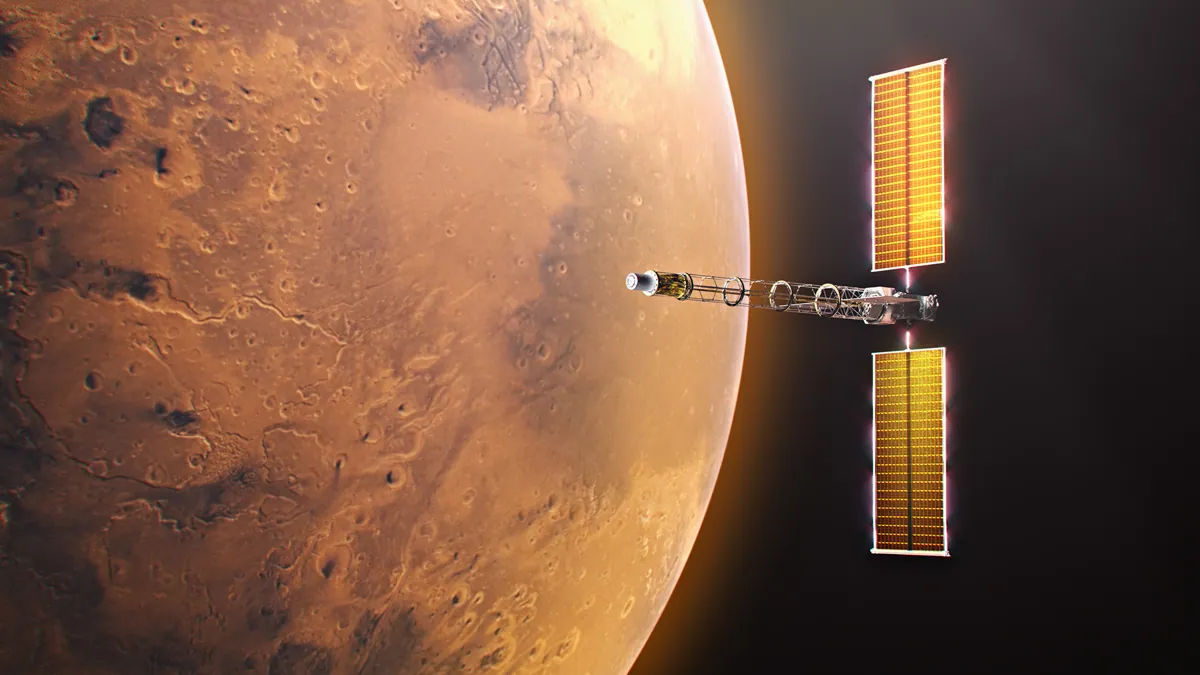
NASA has signed off on a new contract that moves its first nuclear-powered deep space mission a step closer to reality. Sierra Lobo Inc. will build the power conversion system for SR-1 Freedom, a spacecraft designed to become humanity's first fission-powered vehicle to travel outside Earth's orbit, according to NASA.
The mission, unveiled at NASA's "Ignition" event, is meant to prove out nuclear electric propulsion in deep space — technology that converts the heat from a nuclear reactor into electricity to drive a spacecraft's engines, rather than relying on solar panels or chemical fuel. NASA is targeting a launch in late 2028.
Sierra Lobo's piece of the puzzle is a closed Brayton cycle power conversion system, which takes the thermal energy generated by SR-1 Freedom's fission reactor and turns it into usable electrical power for the spacecraft's propulsion demonstration. That work falls under NASA's Space Flight Systems Development and Operations Contract III, a deal awarded in 2024 to handle spaceflight hardware design, development, testing, and operations at the agency's Glenn Research Center in Cleveland.
The power conversion hardware is only half of the equation. The Department of Energy's Idaho National Laboratory is designing and building the actual fission reactor, which will eventually be paired with Sierra Lobo's system to form the spacecraft's complete nuclear power module. NASA framed the latest contract actions as a way to cut technical risk and keep the 2028 timeline intact while tightening coordination between the agencies and companies involved.
"These contract actions not only reduce technical risk and help us maintain momentum toward our 2028 launch, but they also strengthen collaboration across our partners," said Steve Sinacore, SR-1 Freedom's program director, per NASA. He added that the moves are meant to build "the strongest possible foundation" for the agency's first fission-powered trip beyond Earth orbit, while also laying groundwork for future space nuclear technology.
Safety built in from the start
Putting a nuclear reactor on a spacecraft invites obvious questions about safety, and NASA says it's addressing that head-on. The agency and the Department of Energy are running interagency safety reviews throughout the design process, with continuous oversight from a NASA chief safety officer and compliance with existing nuclear regulations. The design process itself is centered on identifying hazards, tolerating failures, and meeting nuclear safety standards.
One operational detail stands out: the reactor portion of SR-1 Freedom won't actually be switched on until the spacecraft has already left Earth orbit. That's a deliberate choice to keep the nuclear power source dormant during the launch and near-Earth phases of the mission, when risk to people and infrastructure on the ground would be highest.
A ride for Mars helicopters
SR-1 Freedom isn't just a propulsion test. It's also the ride for SkyFall, a science mission that will send three Mars helicopters — descendants of the Ingenuity helicopter design that first flew on Mars in 2021 — to the Red Planet. According to NASA, the helicopters will gather scientific data, demonstrate what the agency calls exploration zones, and search for potential sources of water on Mars.
That combination — a nuclear-electric propulsion demonstrator doubling as the delivery vehicle for a multi-helicopter Mars science payload — makes SR-1 Freedom a dense piece of NASA's long-term strategy. The agency is positioning the mission as a proving ground not just for getting to Mars more efficiently, but for a broader shift toward fission power in deep space. NASA has also tied the underlying reactor technology to its plans for a lunar base, where nuclear power would keep operations running through long stretches of darkness and in craters or shadowed regions where solar panels don't get enough sunlight to work.
With the power conversion contract now in place alongside Idaho National Laboratory's reactor development, the two biggest technical pieces of SR-1 Freedom's nuclear power module are moving in parallel. Whether that keeps the 2028 launch date on track will depend on how smoothly those two systems come together, along with the usual gauntlet of safety reviews a nuclear spacecraft has to clear before it's allowed anywhere near a launch pad.