NASA Opens Media Credentialing for Roman Space Telescope Launch
The Nancy Grace Roman Space Telescope is set to launch on a SpaceX Falcon Heavy no earlier than August 30, and NASA wants journalists there to see it happen.
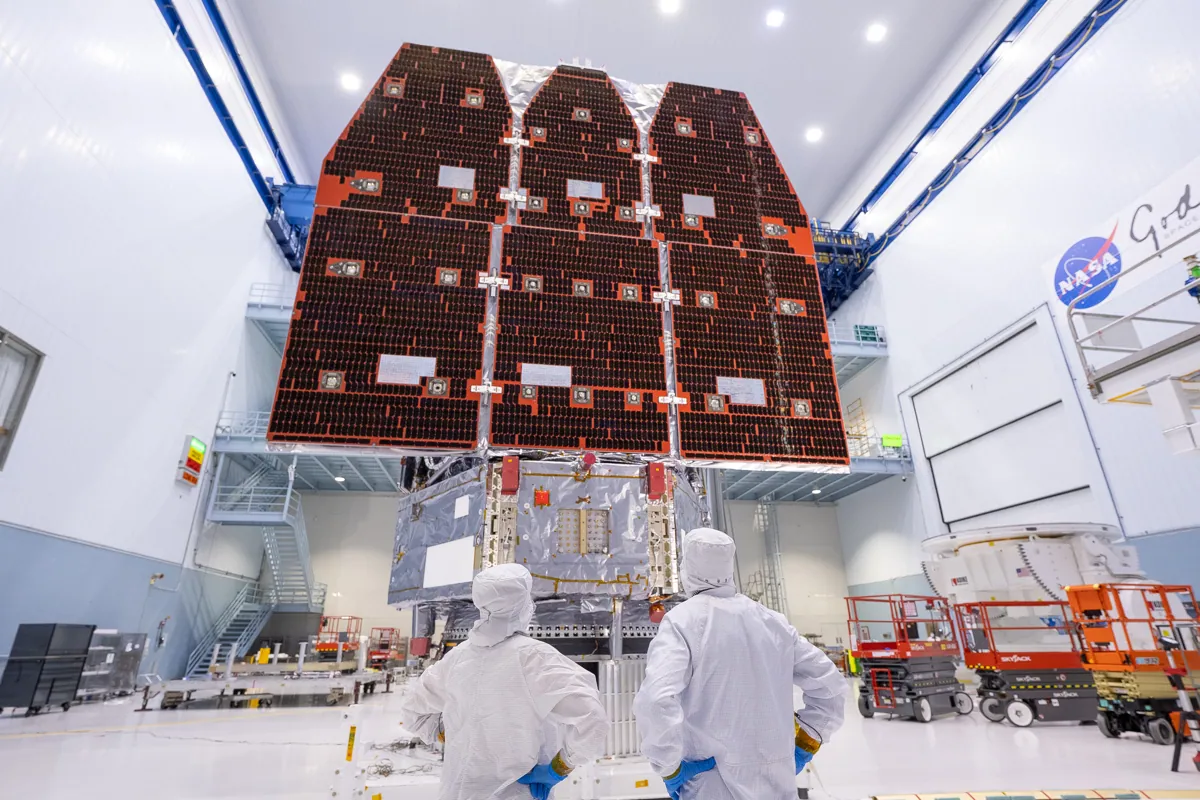
NASA has opened the application window for journalists who want to cover the launch of the Nancy Grace Roman Space Telescope, one of the agency's most anticipated astrophysics missions in years. The telescope is scheduled to lift off no earlier than 7:20 a.m. Eastern time on Sunday, August 30, riding a SpaceX Falcon Heavy rocket from Launch Complex 39A at NASA's Kennedy Space Center in Florida.
The mission is named for Nancy Grace Roman, NASA's first chief astronomer, and it carries expectations to match her legacy. According to NASA, the observatory is designed to capture a wide, deep view of the cosmos, producing imagery unlike anything captured before and reshaping how scientists understand the universe. That framing isn't just ceremonial: Roman's instrument package is built to survey huge swaths of sky in far less time than telescopes like Hubble, giving astronomers a tool for wide-field surveys that complement the narrower, more zoomed-in work of missions such as Hubble and James Webb.
Launching such an instrument on a Falcon Heavy, one of the most powerful rockets currently in operation, underscores the scale of the payload and the ambitions riding on it. Kennedy Space Center's Launch Complex 39A carries its own history, having hosted Apollo and shuttle launches over the decades, and now regularly serves as a staging ground for SpaceX's heavy-lift missions.
How to apply for credentials
NASA has laid out a two-tier deadline system for media accreditation, split by nationality and location.
International media representatives who are not U.S. citizens need to submit their applications by 11:59 p.m. on Sunday, July 26. U.S.-based media outlets, along with U.S. citizens reporting for international media organizations, have a bit more runway: their deadline is 11:59 p.m. on Thursday, July 30.
All applications must be filed online, and NASA has published its full media accreditation policy for reference. Journalists with questions about credentialing or special logistical requests can reach out directly to NASA's Kennedy media accreditation team by email. General inquiries can go through the Kennedy Space Center newsroom by phone.
Why this launch matters
Roman has been in development for years as NASA's answer to a specific scientific gap: telescopes like Hubble and Webb excel at detailed, close-up observations, but they can only look at a sliver of sky at a time. Roman's wide field of view is meant to let scientists survey enormous stretches of the universe in single observations, opening the door to large-scale studies of dark energy, dark matter, and the search for exoplanets that would be impractical with existing instruments.
Getting media on-site for the launch matters for a mission like this because so much of the public understanding of space science happens in these moments, the rocket lighting up on the pad, the countdown, the first confirmation that a multi-year, multi-billion-dollar instrument made it safely off the ground. NASA routinely opens credentialing well in advance of high-profile launches specifically to make sure outlets have time to plan travel and coverage around Florida's Space Coast.
For now, the agency has emphasized that the August 30 date is a target, not a guarantee, standard language for a mission of this complexity where weather, rocket readiness, or last-minute technical checks can shift the schedule. Reporters and outlets interested in being at Kennedy for the moment it does fly have a firm window to get their paperwork in, with the earliest deadline arriving in just about a week for international press.
More details on the mission itself are available through NASA's science site dedicated to Roman, where the agency has been publishing background on the telescope's design and objectives ahead of launch.
What happens next is straightforward: credentialing closes, NASA finalizes its list of accredited press, and the countdown clock at Kennedy starts ticking toward what the agency is billing as a genuine leap forward in how humanity sees the universe.