Google Will Now Let You Log Back Into Your Account With a Selfie Video
The new recovery option compares a live face scan against a stored reference video, joining passwords and 2FA apps as a way back into a locked account.
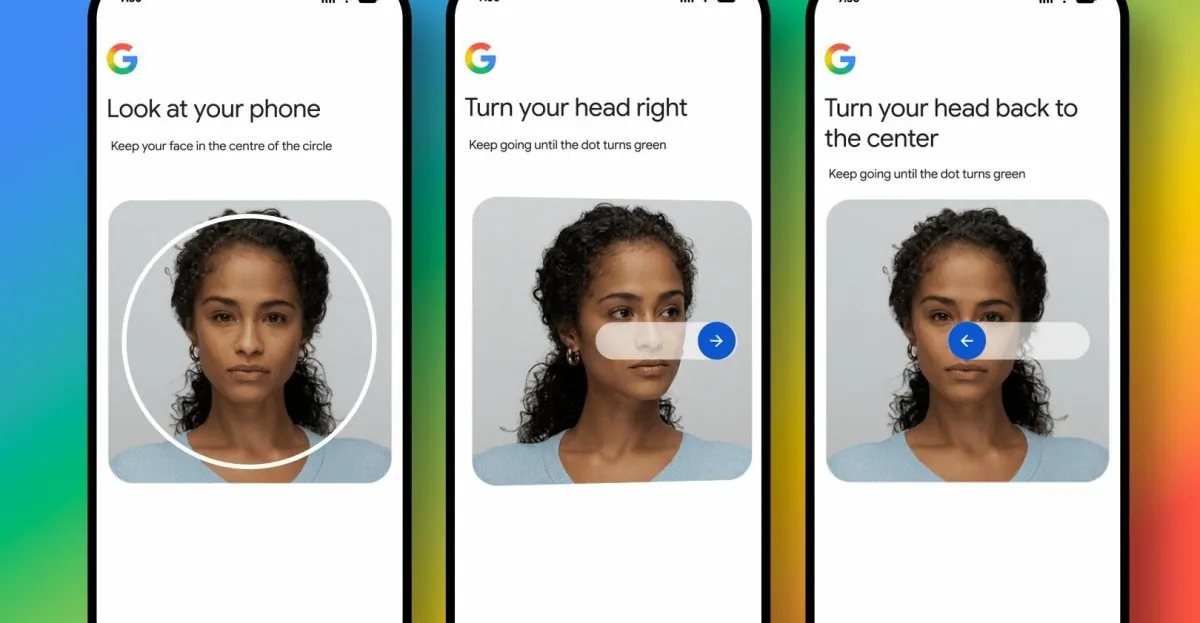
Google is rolling out a new way to prove you're really you: a selfie video that can get you back into your account when passwords, phones, or authentication apps aren't available.
The feature works by asking you to record a short video of your face during setup, following on-screen prompts that walk you through basic head movements so Google captures your face from multiple angles. That clip becomes your reference video. Later, if you're locked out or need to verify your identity, you record a second video doing similar movements, and Google checks it against the one on file.
If that setup process sounds familiar, it's because it echoes how Apple's Face ID gets configured, minus the infrared sensors Apple's hardware relies on. Google's version works on both mobile devices and PCs using a standard camera.
According to Google, the reference video is encrypted and stored in the cloud rather than kept locally on a single device, which means it can be used for verification no matter what hardware you're signing in from. Users can delete the stored video at any time from their account settings. By default, Google says the video is used only for sign-in purposes, though the company notes users can choose to share it for what it describes as "additional purposes," without spelling out exactly what those are.
The live-verification video required at sign-in serves two purposes: confirming that a genuine, in-the-moment recording is being made rather than a replayed clip, and giving Google's systems a fresh sample to match against the stored reference. The company says it layers in multiple security checks specifically aimed at blocking impersonation attempts that use static photos or deepfake video, on top of what it calls its "standard security practices" for catching suspicious login attempts generally.
Why Google is adding this now
Account recovery has long been one of the messier parts of using any online service. Lose your phone, forget which email you used for two-factor authentication, or get locked out of the device tied to your account, and you can end up stuck outside your own inbox, photos, or documents with few good options. Selfie video gives Google another lever to pull in that scenario, one that doesn't depend on having a specific device in hand or remembering a backup code you wrote down years ago.
The timing also lines up with a broader industry concern: deepfakes and AI-generated video have gotten good enough that any face-based verification system now has to account for someone trying to fake it. Google's emphasis on blocking photo and deepfake impersonation attempts signals that this was designed with that threat already in mind, rather than bolted on afterward.
It's also part of a longer shift away from passwords entirely. Google has been pushing passkeys and biometric options for a while now, aiming for authentication methods that are harder to phish and easier to use than a string of characters you have to remember. A selfie video fits that pattern, biometric, tied to something only you have (your face and live movement), and usable across devices since it lives in the cloud rather than a single phone's secure enclave.
What to know if you want to try it
The feature isn't available to everyone yet. Google says it's doing a phased global rollout, so eligibility will expand gradually rather than all at once. You can check whether your account qualifies and set up the selfie video option at g.co/signin-selfie.
For users who do get access, it's worth understanding what you're opting into: a video of your face stored on Google's servers, encrypted, but persistent until you choose to delete it. Google frames the deletion control and the "sign-in only by default" setting as safeguards, and for most people, the appeal will come down to convenience during exactly the moment when convenience matters most, when you're locked out and need back in fast.
Whether selfie video sees wide adoption will likely depend less on the technology itself and more on how comfortable users are with Google holding a biometric video reference in the cloud, especially as the option to "share it for additional purposes" remains a bit vague. For now, it's another tool in the recovery kit, not a replacement for passwords or two-factor authentication, and one more sign that biometric verification is becoming the default answer to "prove it's really you."