Google Stops Fighting the Court Order That Forces Rival App Stores Into Google Play
Starting July 22nd, third-party app stores can live directly inside Google Play in the US, ending nearly a year of legal maneuvering between Google and Epic Games.
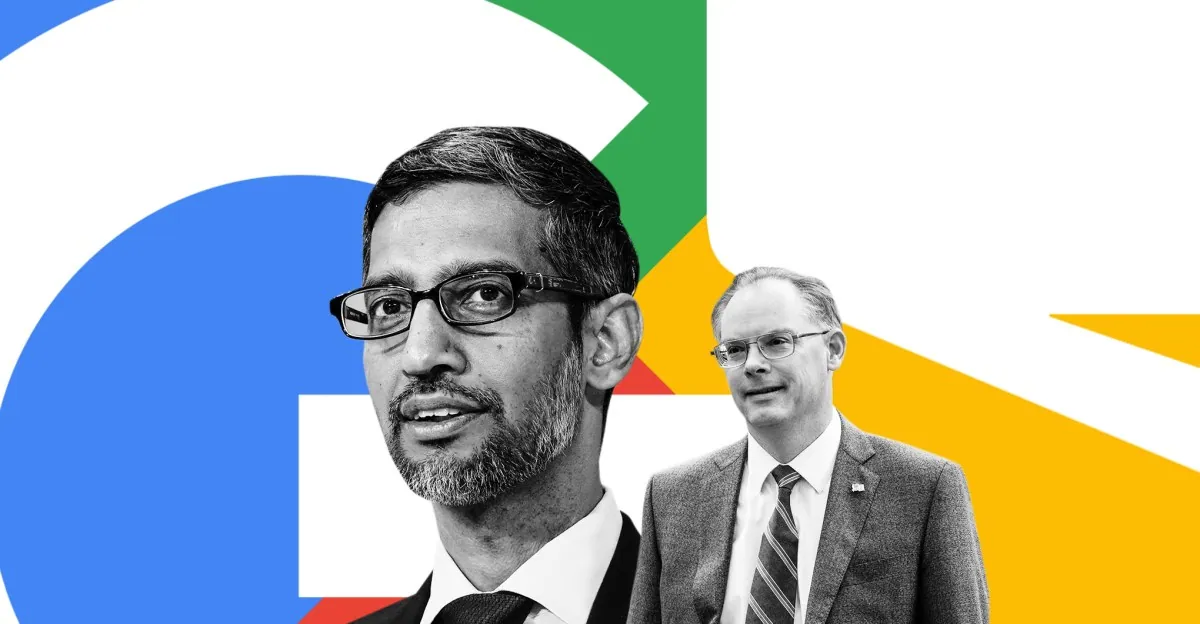
Google is done fighting. The company and Epic Games have jointly withdrawn their bid to soften a court order that requires Google to let rival app stores operate inside Google Play itself, and Google now says it's ready to start complying on Wednesday, July 22nd. That's a significant reversal after months of trying to build an alternative that would have kept competing stores at arm's length.
Some background, because this saga has a lot of moving parts. Back in October 2024, Judge James Donato ruled that Google had run an illegal monopoly over how apps get distributed on Android, and ordered a fix: Google would have to open up Google Play so that competing app stores could sit inside it, sharing Google's entire app catalog rather than forcing users to hunt down and sideload each store separately. Google didn't like that outcome and spent months trying to get out of it, eventually striking a deal with Epic that settled their global legal disputes and reportedly included an $800 million payment, according to previous reporting cited by The Verge. As part of that truce, Google pitched the judge on an alternative: a "Registered App Stores" model, where users would sideload third-party stores rather than get them natively through Google Play.
Judge Donato wasn't buying it. He remained skeptical that Google's sideloading proposal actually satisfied his original injunction, and both sides were scheduled to head back to court on July 16th to fight it out again. Instead, they've thrown in the towel — jointly asking to withdraw the motion rather than keep litigating an issue that was creating uncertainty across the Android ecosystem.
Google spokesperson Dan Jackson laid out the company's reasoning in a statement: "We've agreed with Epic to withdraw our motion to modify the US Court's injunction rather than prolonging this process which creates uncertainty for the ecosystem. This allows us to focus on executing our recently announced global business model evolution to deliver greater app store choice, lower prices, and more opportunities for developers and users. We remain committed to maintaining Android's industry-leading security and fostering a competitive ecosystem where every app store and developer has the freedom to compete. In parallel, we continue to comply with the US Court's injunction."
Two different rulebooks, two different regions
Here's where it gets a little more complicated: Google isn't scrapping its Registered App Store concept entirely, it's just confining it to markets outside the US. Google had already said it planned to roll out that sideloading-based model globally, starting with a new version of Android later this year. So going forward, Android looks set to run on two separate tracks — direct, store-within-a-store integration in the United States, where Judge Donato's injunction applies, and the more restrictive Registered App Store approach everywhere else.
For US developers, the change is already in motion. Google is notifying them that their apps and game listings will automatically be shared with third-party app stores starting July 22nd, unless developers explicitly opt out. The company has also stood up a dedicated page for what it calls the Play Catalog Access Program, which lets third-party stores enroll to plug into Google's catalog.
That access isn't free, and it isn't unconditional. Google will charge participating stores an annual fee of $5,000, which it frames as covering security and policy reviews. Beyond the fee, Google has set a list of requirements for any store that wants in: it can't distribute apps outside the US, it has to remain open to any eligible third-party developer, it needs "clear, non-discriminatory" trust and safety policies, and no more than 1 percent of its install attempts can turn out to be malware.
What's still murky is how the broader financial picture shakes out, things like billing arrangements and the fee structures that have defined Google's control over Android app distribution for years. Google and Epic's underlying settlement had already pointed toward lower fees and a Play Store that allows outside payment systems, but the finer print on how that plays out alongside this new store-sharing mandate hasn't been spelled out yet.
Practically, this means the next version of Google Play in the US could look meaningfully different almost immediately, with competing storefronts appearing inside an app users already trust, rather than requiring a separate download and setup process. It also raises an obvious question about who shows up to take advantage of it. Whether major players use this opening to launch their own storefronts inside Google Play remains to be seen, but the door Judge Donato ordered open a year ago is now, finally, actually opening.