A Discarded SpaceX Rocket Is About to Slam Into the Moon, and Nobody's Quite Sure What the Impact Will Look Like
Scientists say the crash could produce a plume visible from Earth, and they're treating it as a rare live experiment for future lunar missions.
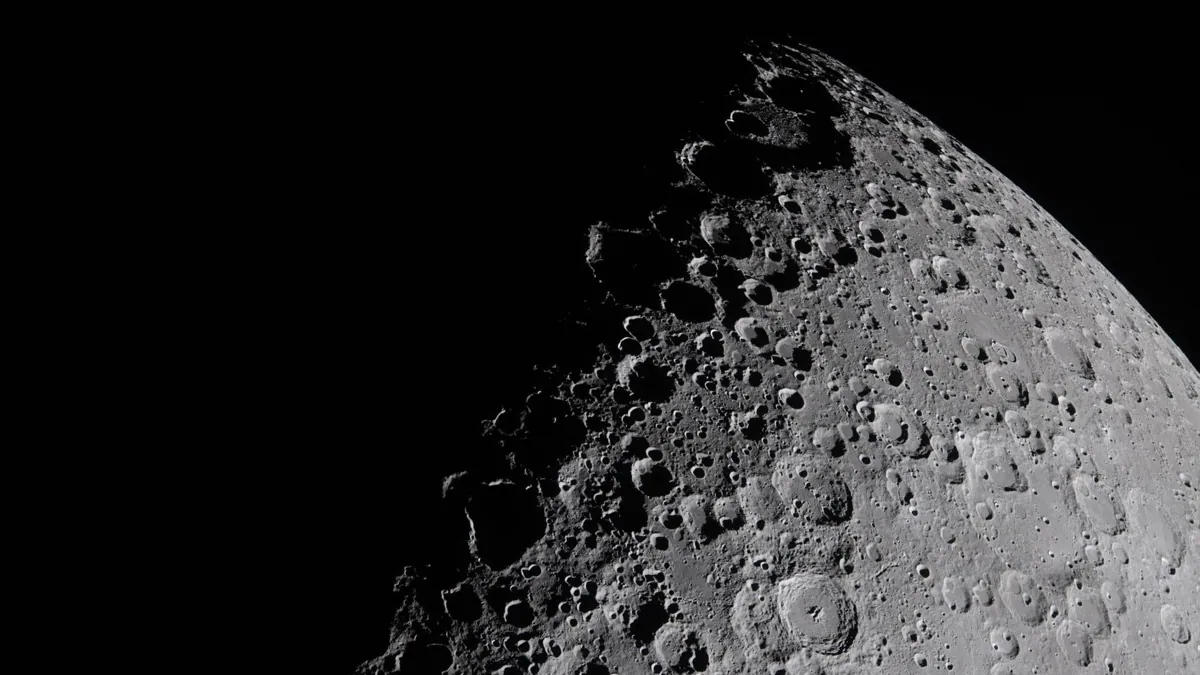
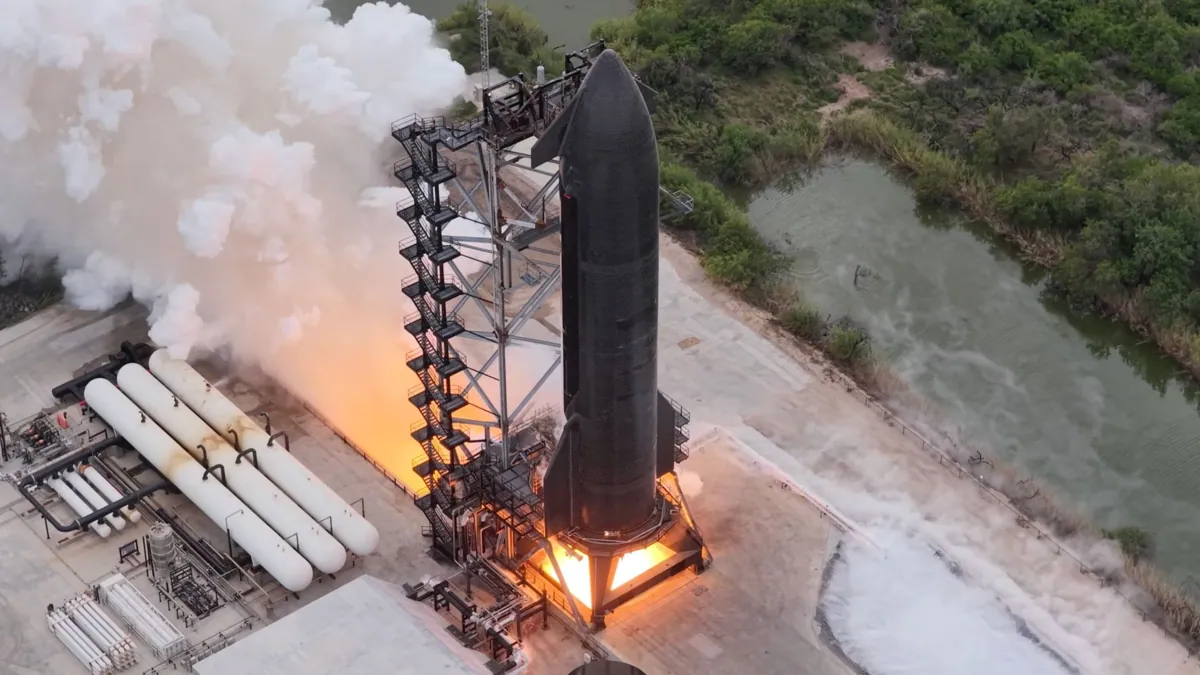
On August 5, a piece of space hardware nobody's flown in months is going to end its life by punching a crater into the moon. The object is the spent upper stage of a SpaceX Falcon 9, left drifting in space after it launched Firefly's Blue Ghost-1 lunar lander back on January 15, 2025. That same rocket also carried Resilience, a lander built by the Japanese company ispace. Now the empty stage is on a collision course with the lunar surface near the Einstein and Bell craters, close to the moon's western edge as seen from Earth.
What makes this more than space junk finally coming down is that researchers actually want to watch it happen. A new study posted to the open-access server arXiv, led by William Jo, a graduate research assistant at the University of Texas at Austin, models what the impact should look like, and the answer is: potentially bright enough to spot from the ground, if you've got the right equipment pointed at the right patch of dark sky.
A plume that might outshine the darkness
Jo and his colleagues ran physics simulations of the crash and predict the resulting debris plume, specifically its central ejecta spike, could shoot somewhere between 47 and over 60 miles high (75 to 100 kilometers). For a few minutes after impact, the researchers calculate that plume could be dramatically brighter than the surrounding dark sky near the lunar limb.
"Our calculations suggest the plume should be several orders of magnitude brighter than the dark-sky background for the first few minutes after impact," Jo told Space.com. He was careful to hedge that forecast, calling it a single nominal scenario built on optimistic assumptions. The real event, he said, will almost certainly look different.
But Jo argues the flash of light isn't really what matters here. What matters is everything that happens after it.
"Watching this one gives us a rare chance to open up ejecta-plume science and calibrate those models against a real event, which matters for every future thing we deliver to the moon," Jo said.
Why scientists care about a piece of space junk
Separately, a team led by Benjamin Fernando of Los Alamos National Laboratory has also studied the coming impact and reached a similar conclusion: both the initial flash and the ejecta plume are potentially observable from telescopes on Earth and in space, even though key details like how bright it will actually appear remain hard to pin down in advance.
The value of the event, according to Fernando and his co-authors, goes well beyond a photogenic dust cloud. It's a chance to test methods for pinpointing where an impact struck the lunar surface, information that matters for planning seismic experiments on future missions. It's also a live case study in how dust and debris behave after a high-speed impact, and a real-world data point for assessing how dangerous artificial debris could be for astronauts working on the moon down the road.
That last concern isn't abstract. The study estimates that resolved particles from the impact could travel a ballistic range of just under 1,000 kilometers, far enough, the researchers note, to pose a genuine hazard to future lunar infrastructure or crews across a large swath of the moon's surface.
Part of what makes this crash scientifically interesting is what's doing the crashing. Unlike a natural impactor such as an asteroid or comet, a spent rocket stage is a hollow, spacecraft-shaped object. Jo points out that there are very few existing models for how man-made bodies like this behave when they hit a planetary surface, and early indications suggest the plumes they produce differ meaningfully from those created by natural objects.
Eyes already on the target
NASA's Lunar Reconnaissance Orbiter, or LRO, happens to be well-positioned to help. Brent Garry, a project scientist for the LRO mission at NASA's Goddard Space Flight Center, said the spacecraft will pass over the projected impact site roughly a week before the crash and again about a week afterward. That before-and-after imaging should let scientists narrow down exactly where the stage came down and refine future observation targeting once the crater's location is better understood.
For now, though, the researchers' biggest worry isn't a lack of interest, it's the opposite problem: that ground-based observers watching the event might catch only the brief flash of impact and stop looking. Jo's concern is that the science lies in what unfolds in the following moments and minutes, as the ejecta plume rises and disperses, not in that first instant of light.
"My concern is that most observers will stop at the sub-second flash and never track down the ejecta, which is the part that should actually be visible, and where the science is," Jo said.
There's no changing the outcome now. The stage is going to hit the moon whether or not anyone is watching. But between LRO's orbital passes and whatever ground-based telescopes manage to catch the plume, this accidental collision is shaping up to be one of the more closely studied pieces of space debris in recent memory, precisely because nobody's entirely sure what it's going to do.