The Space Force Just Practiced Chasing Down an Enemy Satellite in Orbit
The Victus Haze mission used two privately built spacecraft to rehearse hunting, tracking, and imaging a "threat" in space — and finished 11 hours early.
The U.S. Space Force just wrapped up an orbital exercise that looked less like a routine satellite launch and more like a dress rehearsal for a space chase. Two privately built spacecraft, one hunting and one playing the target, completed what the service calls its first tactical intercept of an object in orbit, closing out a mission called Victus Haze that officials are describing as a success.
The premise was straightforward: put one spacecraft in orbit, then launch a second one on short notice and have it track down, approach, and photograph the first. It's a rehearsal for a scenario the Space Force takes seriously — identifying and responding to what it calls "non-compliant satellites," a polite term for spacecraft, potentially belonging to an adversary, that might be doing something they shouldn't be doing on orbit.
Two companies, two spacecraft, one target
The setup involved two commercial space companies working with the Space Force's Space Systems Command. True Anomaly launched its JACKAL-0004 spacecraft aboard a SpaceX Falcon 9 in May. Jackal then sat in orbit, waiting for its counterpart to show up.
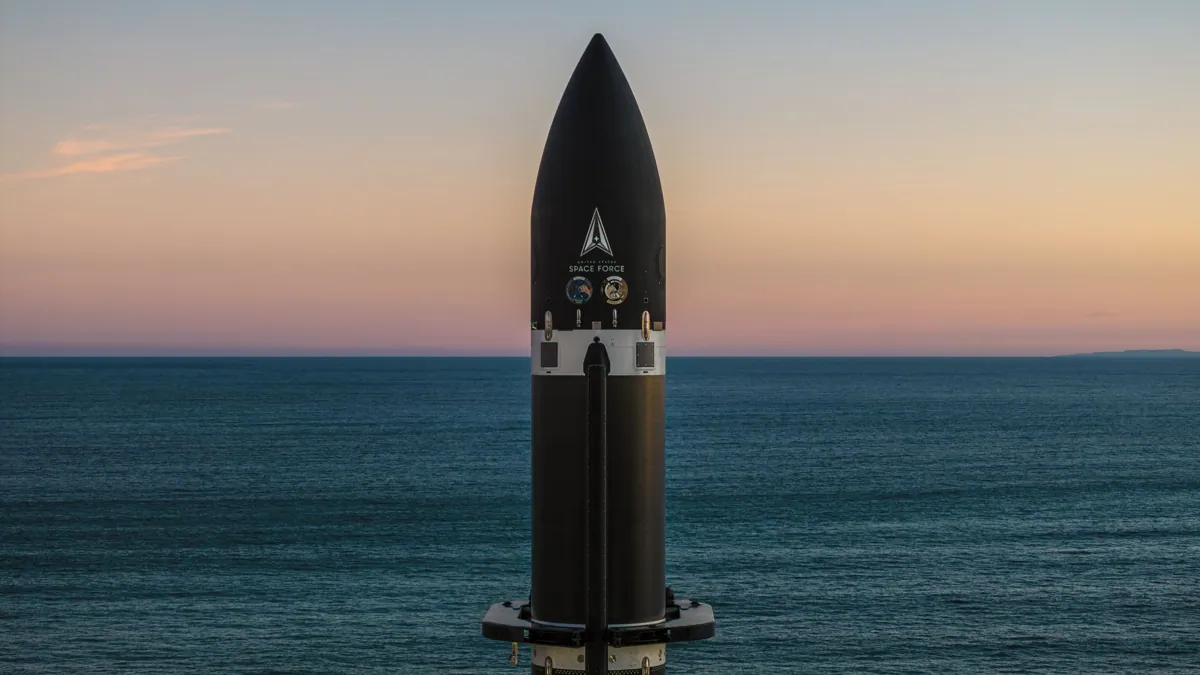
That counterpart came from Rocket Lab, which launched a Pioneer-class satellite named Puma aboard an Electron rocket on June 19. The launch itself set a record: Rocket Lab got Puma into orbit just 16 hours and 42 minutes after receiving the go-ahead, according to the company. That kind of turnaround is the point of what the Space Force calls Tactically Responsive Space, or TacRS — the idea that the military needs to be able to get a spacecraft up fast, not on the years-long timelines typical of traditional satellite programs.
Once Puma reached orbit, the real test began. Space Systems Command gave the mission a 72-hour window to complete a full "orbital sortie" — Jackal acquiring Puma, closing the distance, characterizing it, and pulling back out. According to a statement from True Anomaly, the mission finished 11 hours ahead of that deadline.
What Jackal actually did up there
During the exercise, Jackal ran through a set of maneuvers meant to simulate finding and inspecting a hostile spacecraft. True Anomaly said the satellite executed precise propulsion burns, tracked Puma with closed-loop guidance, pointed and imaged its target, characterized it, and then returned to its original orbit — all functioning, in the company's words, "exactly as designed."
Control of Jackal during the operation was handed to Mosaic, True Anomaly's autonomous "space superiority software," which planned and ran the rendezvous. Puma, meanwhile, was built, launched, and operated entirely by Rocket Lab under its Pioneer spacecraft line.
Per the Space Force's own statement, the two vehicles ran through multiple space domain awareness scenarios together, including what it described as "dynamic engagements" between the spacecraft — essentially live practice for tracking and reacting to another object's movements in real time.
Col. Bryon McClain, the Space Force's acting portfolio acquisition executive, framed the mission as evidence the service can lean on commercial partners for this kind of work. "Victus Haze is primed to further demonstrate our readiness to lean on our commercial partners to deny, disrupt, and counter any adversarial advantage — no matter where they try to operate in space," he said in the Space Force's statement.
The second act of a bigger plan
Victus Haze is the Space Force's second TacRS mission. The first, Victus Nox, flew in September 2023 with Firefly Aerospace and focused purely on space domain awareness — essentially, watching and identifying objects in orbit rather than actively pursuing one. Victus Haze goes a step further by putting two spacecraft into an active pursuit-and-inspection scenario, which the Space Force is treating as a genuinely new capability.
True Anomaly's own summary of the mission was blunt about what it proves and what comes next: that responsive launch and responsive space-object characterization aren't separate skills anymore, but a single, combined capability. The company's release put it this way: "Acquire a new object within hours, close the geometry, and deliver the imagery. The next step is cadence: faster, more often, and across more orbits."
That last line is worth sitting with. Victus Haze wasn't built to be a one-off demonstration. It's a proof of concept for a repeatable playbook — get a spacecraft to orbit fast, find whatever's up there that concerns you, get close enough to actually see what it is, and do it again, faster, on more targets, across different orbital regimes. The article's framing suggests a physical engagement between spacecraft could be the next logical step beyond imaging and tracking, though nothing in the Space Force's statements confirms that's currently planned.
For now, the achievement is narrower but still notable: two commercially built, commercially operated spacecraft, working under military direction, pulled off an on-orbit intercept faster than the Pentagon's own deadline required. In an era where orbit is increasingly crowded and contested, that's the kind of speed the Space Force says it's betting its future on.