Apple's Next Smart Home Bet Has a Name: HomeView
Bloomberg's Mark Gurman reports Apple will unveil a Siri-powered display hub Tuesday alongside new Apple TV and HomePod mini hardware, with an LG smart-lock partnership also in the pipeline.
Apple is about to find out whether the third time is the charm in the smart home. According to Bloomberg's Mark Gurman, the company will announce a new hub called the HomeView on Tuesday, giving a name and a launch date to a project that's been rumored for a couple of years now.
Gurman describes the HomeView as a Siri-powered device built around an A18 chip, with a display that lets users control other smart home gear from lights to thermostats to cameras. It's reportedly coming in two versions: one meant to sit on a countertop, the other designed to mount on a wall. That dual form factor suggests Apple is trying to cover both the kitchen-counter-assistant use case and the wall-panel-as-home-control-center use case in one product line, rather than picking a lane.
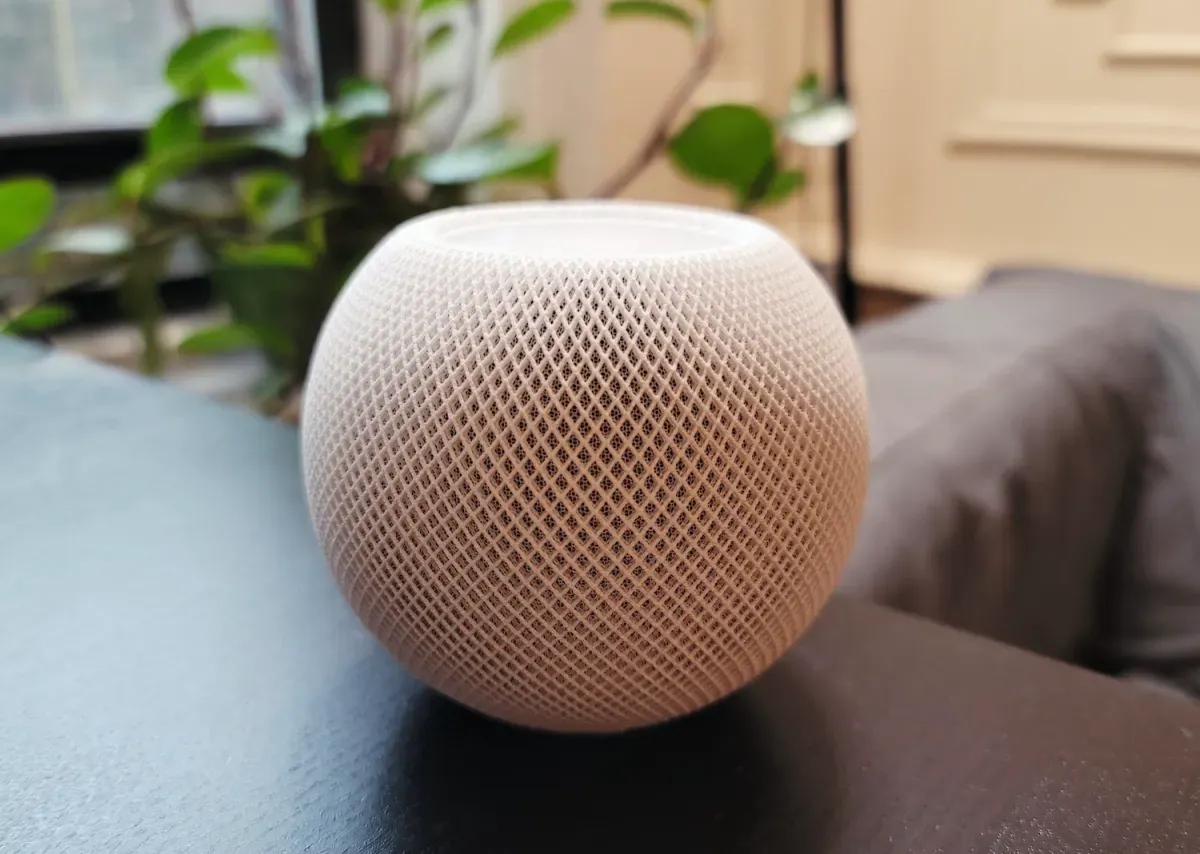
The timing matters as much as the hardware. Gurman reports that Apple will also use Tuesday's event to roll out updated versions of the Apple TV set-top box and the HomePod mini — meaning the HomeView won't be a standalone launch so much as the centerpiece of a broader home-hardware refresh. And earlier in the week, Gurman reported separately that Apple is lining up a partnership with LG to build a smart lock, a thermostat, and a doorbell. Taken together, the moves point to a coordinated push to finally give Apple a real foothold in connected-home hardware, an area where it has largely watched from the sidelines while Amazon and Google built out their own ecosystems.
A history of false starts
That context is what makes HomeView worth paying attention to. Apple has tried this before and come up short. HomeKit, the software framework meant to let iPhone and iPad owners control smart devices from Apple's own apps, never became the default way people manage their homes the way Alexa or Google Home did. The HomePod smart speaker, despite Apple's audio pedigree, never caught on as a serious rival to Amazon's Echo or Google's Nest speakers either. Gurman's reporting frames the HomeView as Apple's most serious attempt yet to change that track record — a dedicated, display-equipped hub rather than a software layer bolted onto other products or a speaker competing on sound quality alone.
The addition of an A18 chip is notable in that context too. That's real processing power for a home hub, the kind of silicon Apple uses in iPhones rather than a stripped-down chip meant to just relay commands. It suggests Apple wants the HomeView to run Siri and handle on-device tasks with the kind of responsiveness and capability that budget smart displays from other companies can't match, rather than simply being a cheap screen bolted to a speaker.
Why the LG deal matters
The reported LG partnership rounds out the picture. A smart lock, thermostat, and doorbell are exactly the categories where Amazon (through Ring and its own smart lock and thermostat lines) and Google (through Nest) have long had a head start, both in product and in brand recognition. If Apple is bringing in LG to build hardware in those categories rather than relying solely on third-party HomeKit accessories as it has for years, that's a shift in strategy. It signals Apple sees owning more of the hardware stack, not just the software glue connecting other companies' devices, as necessary to actually compete.
None of this guarantees success. Apple's past smart home efforts weren't short on polish or integration with its own devices; they simply didn't win over enough customers to matter against entrenched competitors. A hub with a display and a fast chip, paired with locks and thermostats built alongside a partner, addresses some of the gaps that sank HomeKit and HomePod. But the smart home market has had years to calcify around Amazon and Google's ecosystems, and Apple is arriving later than it once hoped to.
What happens Tuesday will say a lot about how seriously Apple is taking this attempt. A hub, a refreshed set-top box, and a refreshed mini speaker landing together is a bigger coordinated push than anything Apple has done in this space before. Whether it's enough to finally make Apple a real presence in the smart home, rather than a company that keeps trying and quietly moving on, is the question the rest of this year will start to answer.