Apple Finally Builds Its Own Smart Home Gadgets — Just Not Alone
The new Apple Home Collection, codeveloped with LG and Schneider Electric, bets that easier setup and tighter privacy can win over a market Amazon and Google already dominate.
Apple spent twelve years telling other companies how to build smart home gadgets for its platform. This week, it started building some itself.
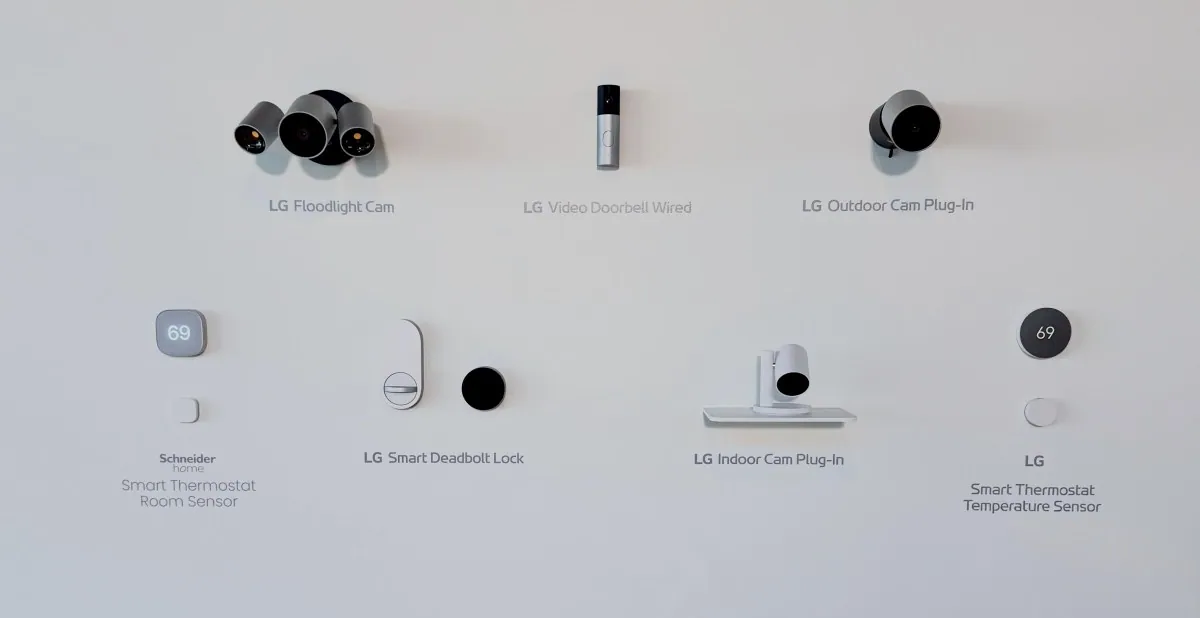
The new Apple Home Collection includes cameras, thermostats, sensors, a smart lock, and a video doorbell, unveiled at Apple's "Welcome home" event in New York. None of it is purely Apple-made. The hardware was codeveloped with LG Electronics and Schneider Electric, two companies Apple picked for their existing footprint in home products and home installations, respectively. Alongside the new devices, Apple also introduced HomeView, its first dedicated smart home display.
It's a notable shift for a company that has mostly stayed out of the hardware business in this category, leaving it to HomeKit partners while rivals built their own flagship brands. Amazon has Ring. Google has Nest. Apple, until now, had nothing to point to as a signature product in the category — just a long list of third-party accessories that may or may not work well together.
Kaiann Drance, Apple's vice president of product marketing for home, told The Verge the timing came down to two technologies finally being ready. The first is Matter, the interoperable smart home standard Apple helped create, which gave the company an ecosystem to build on. The second is AI, specifically the more conversational version of Siri that makes a dedicated home device like HomeView actually useful. "With the magic of Siri AI, it comes together in a way that we haven't been able to deliver before," Drance said. "That's been a really critical piece of bringing this all together."
HomeView as the on-ramp
The real strategy isn't any single camera or lock. It's HomeView serving as a gateway into the rest of the ecosystem. Someone buys the display for music, cooking guidance, or checking a calendar, and Apple is betting they'll later want a camera or smart lock to go with it. Drance said Apple has seen that once people try one smart device and find it simpler than expected, it "unlocks this delightful understanding of what's possible once you bring these products into the home." Her read is that most people simply don't know what a smart home can do for them yet.
That tracks with outside research. According to Parks Associates, the top reason people don't buy smart home products is that they don't see the value. Privacy concerns, complexity, and cost round out the list of barriers. Apple isn't solving the cost problem — Home Collection devices start at $200 — but it's leaning hard into the rest: one-tap setup, end-to-end encryption, data that stays on-device, and a single app to manage everything.
Elizabeth Parks, president and CMO of Parks Associates, said Apple's built-in advantage is its customer base. "People who own Apple products are very, very loyal, and there is a large user base," she said.
From buffet to chef's choice
Apple Home has long worked like a buffet: pick any HomeKit- or Matter-compatible product from any brand and hope it all plays nicely together. The Home Collection flips that into a curated set Apple is vouching for directly. Drance said that's a response to actual customer confusion. "There is a lot of choice with Matter, and there's a lot of great products out there," she said. "But sometimes we do get asked, 'Hey, what product should I put in the home?'"
Rather than manufacture the devices in-house, Apple brought in partners with relevant expertise — LG on consumer products, Schneider Electric on home installations — and says the collaboration was built from the ground up, with Apple contributing design language meant to match its broader product family. Apple is also partnering with ADT through its retail stores to help customers with installation.
Setup was a deliberate focus. "The one-tap setup was really important to make it so easy, having no need for a separate account, no need for a separate app," Drance said. Everything routes through Apple Home: no LG or Schneider account required, and all data is end-to-end encrypted.
Importantly, Drance was clear this doesn't replace the existing third-party ecosystem. "We still have this incredible ecosystem with Matter, and with Works with Apple Home, that is going to remain," she said. "We know that homes are not a one-size-fits-all solution, so our customers will continue to have that choice."
The hardware mostly backs up that commitment. The lock, thermostats, and sensors are Matter-compatible, and every device includes a Thread radio, the low-power wireless protocol used for smart home connectivity. The lock also supports Aliro, a credential standard for lock access, and works entirely locally without needing the cloud. The cameras are the exception: they run on Apple's own HomeKit Secure Video rather than Matter, which is currently the biggest point of lock-in in the lineup. It's a bit of a surprise that Apple didn't announce Matter camera support outright, though the inclusion of Thread radios suggests the hardware could be Matter-ready once the Matter camera standard adds encrypted uploads, a feature HomeKit Secure Video already has.
What's actually new
Functionally, there's little in the Home Collection that other Apple Home-compatible devices couldn't theoretically do. What Apple is selling is consistency. "What we've done with Apple Home Collection is we've added another layer on top of that, that deeper integration," Drance said. It's less about exclusive features and more about guaranteeing that every capability the platform offers actually shows up and works as advertised, the same logic behind Google making its own Pixel phones to showcase Android.
On paper, the pitch is straightforward: tap your iPhone to a device to pair it, similar to setting up AirPods, with no app, no account, and no scanning step. Thread keeps devices connected if Wi-Fi drops, and Apple says each device can automatically update its network credentials when you change routers, a feature aimed at the dropped-connection issues that have dogged Apple Home for years. The cameras keep recording to onboard storage during outages, though full camera history requires an iCloud Plus subscription.
Some features go further than what most third-party hardware supports. The LG-made lock is only the third product to offer hands-free Home Key unlocking over ultra-wideband. Both new thermostats work with Apple's Clean Energy Guidance and Adaptive Temperature features, the latter adjusting settings based on your location and sleep schedule, support that other manufacturers have been slow to roll out.
A late and pricey entry
Taken together, the lineup reads as a polished, deliberately narrow starter kit, not a mass-market play. Cameras, locks, and thermostats run $200 to $400, putting this squarely at existing Apple customers who haven't yet bought a doorbell or smart lock, rather than at people already invested in Ring or Nest.
That's a real limitation, because Apple is arriving well behind the competition. The smart display category is mature, with millions of Echo and Google Home devices already installed. Millions more households already have Ring or Nest doorbells, and neither will work with HomeView at launch.
By Parks Associates' numbers, Apple Home currently ranks third in smart home platform adoption, behind Google, with Amazon holding a sizable lead. But the field isn't locked in. Parks says four in five smart home households would consider switching platforms, particularly for one that lets them control everything from a single place. "Interoperability will be critical, but the bigger prize is owning the consumer relationship," she said.
Apple isn't trying to reinvent the smart home with this launch. It's trying to make its version of one easier to walk into, for the customers it already has.