Sony's Own Words Suggest the PS6 Is Really a Handheld
A close read of Sony's June investor Q&A, filtered through its recent decision to kill PlayStation discs, points toward a console that's built to leave the living room.
Sony held a routine investor Q&A back on June 5th, the kind of business meeting that usually generates a few dry paragraphs of corporate language and not much else. But a month later, Sony announced it's ending PlayStation discs. Read against that backdrop, the Q&A looks less like boilerplate and more like a roadmap, according to a new analysis from The Verge.
The throughline across dozens of answers: Sony keeps talking about PlayStation existing "beyond the living room." Repeatedly, deliberately, and in response to questions that weren't even about hardware form factor.
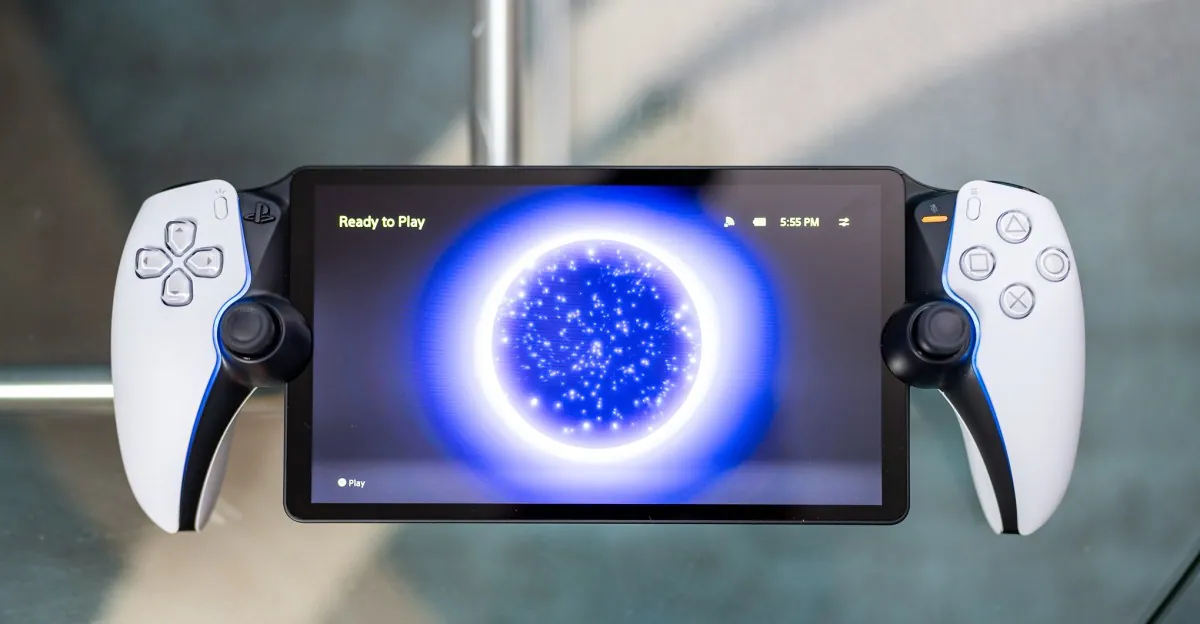
It starts with PlayStation Interactive Entertainment CEO Hideaki Nishino, who told investors that Sony's next-generation platform needs to "anticipate changes in how players play and their evolving needs, while making the PlayStation ecosystem more accessible and approachable to a broader range of players." Vague on its own. But when an investor later asked about next-gen console pricing, Sony didn't just answer the pricing question. It pivoted to the PlayStation Portal, the company's existing streaming handheld, saying it wants to "provide experiences tailored to users' play styles beyond the living room, which has traditionally been considered the primary usage environment."
That phrase, "beyond the living room," shows up again when Sony was asked how it might win back players who defected to gaming PCs during the pandemic. Sony's answer: PlayStation has long been tied to the living room, and the company wants "to break away from the fixed perception that 'PlayStation equals the living room,'" aiming instead for "a seamless experience that can be enjoyed naturally beyond the living room."
Sony went further, framing its next platform not as a PC competitor but as something distinct: "rather than simply serving as an alternative to PCs, we aim to deliver value that is unique to PlayStation." That leaves a narrow set of possibilities for what a non-living-room, non-PC PlayStation experience actually looks like. A handheld is the obvious candidate.
Ruling out cloud gaming
One alternative would be cloud streaming, PlayStation games beamed to whatever screen you happen to be holding. Sony's answers suggest that's not the plan, at least not broadly. The company described the PlayStation Portal as "a dedicated device to reliably deliver the PlayStation gaming experience, which is predicated on controller-based gameplay and a large screen," and argued that touchscreens and keyboard-and-mouse setups can't match that experience. Sony said its cloud strategy is "not to rapidly expand to smartphones and PCs, but rather to focus on environments where quality can be assured."
There's also a hardware economics angle buried in there. Sony noted that cloud streaming "requires minimal memory, making it an increasingly attractive low-cost thin client device in the current market environment where memory prices are rising." That reads as a hint that Sony intends to keep building Portal-style devices with dedicated PlayStation controls, rather than turning phones and PCs into makeshift PlayStations the way Microsoft has pushed Xbox cloud gaming across screens.
The current PlayStation Portal is limited, though. No big screen, no ability to dock to a TV the way a Nintendo Switch can. Whether a future Sony handheld solves that is left unanswered here, but the direction of travel is clear enough.
Pricing and the razor-and-blades question
Sony didn't dodge the elephant in the room: cost. Asked directly about pricing for next-gen hardware, the company acknowledged it can't fully absorb rising component costs and has "already implemented some price increases outside Japan." It said sales haven't shown signs of demand cooling, and reiterated a longstanding principle: Sony doesn't want to sell hardware at a significant loss.
Investors also pushed Sony to define its future business model. Would PlayStation remain a "hardware gatekeeper" profiting mainly off console sales and games, or shift toward being an IP-driven platform where hardware is just one distribution channel among several? Sony's answer leaned toward the latter, describing "the value of our proprietary device" as sitting in the experience rather than the box itself, and pointing to third-party publishers as the biggest driver of value in the PlayStation ecosystem, thanks to Sony's large install base and monetization tools. The company said this points toward "a shift toward a true digital platform business," while insisting it wants to expand carefully so it isn't "constrained by our own hardware ecosystem."
Sony also emphasized that first-party exclusives, even though they're a minority of total sales, matter because they define the brand and pull players into the ecosystem in the first place.
Taken together with the death of the disc, that "true digital platform" language reads differently now than it might have in June. A fully digital PlayStation Store means every sale runs through Sony directly, no retailers, no secondhand market taking a cut.
The backward-compatibility clue
One investor question stands out in hindsight: whether changes to the next-gen gaming experience would translate into revenue growth, phrased in a way that assumes real changes are coming. Sony's answer didn't address the "changes" framing directly, but it did note that backward compatibility and digitization have already expanded how much content people can access, citing the ease of jumping from a new PS5 title back into older PS4 games in the same series. That suggests the PS6, whatever it turns out to be, will likely keep supporting older PS4 and PS5 titles, even if it's unclear whether that will work through a Microsoft-style disc-to-digital conversion or require repurchasing games.
Sony also used the meeting to confirm, in effect, what recent reporting has already suggested: its biggest single-player exclusives aren't headed to PC in a major way going forward. The company allowed that "creators may push to expand titles to other platforms such as PC to maximize reach," but drew a distinction for live-service games, where "broader platform expansion can make sense." Tentpole single-player exclusives, in other words, are staying closer to home.
What it adds up to
None of this is an official announcement. Sony hasn't confirmed a PS6 handheld, and the Q&A never uses the word explicitly. But the pattern is hard to ignore: repeated emphasis on life beyond the living room, a cloud strategy built around dedicated controllers rather than universal streaming, a push toward an all-digital revenue model, and a pointed effort to keep PlayStation's biggest games off PC.
Rumors of a handheld PS6 have circulated for a while. What this meeting adds is a sense of priority. The living-room console likely isn't going away, Sony will still need something to compete with Xbox and high-end PCs, but rising memory prices and component costs could push its price into territory that's hard to justify for casual buyers. A handheld capable of running full PS5-caliber games, sold as the only legitimate way to play Sony's exclusives on the go, would fit neatly into everything Sony told its investors in June.
It would also make Sony's disc decision look less like a standalone cost-cutting move and more like groundwork. A handheld has no disc drive to begin with, and a digital-only ecosystem means every purchase, new or replayed, flows straight through Sony's own storefront.