Microsoft's Next Xbox May Cost Up to $1,800, According to New Report
Fresh reporting on pricing for the console codenamed Helix collides head-on with two years of Microsoft executives insisting the next generation has to be affordable.
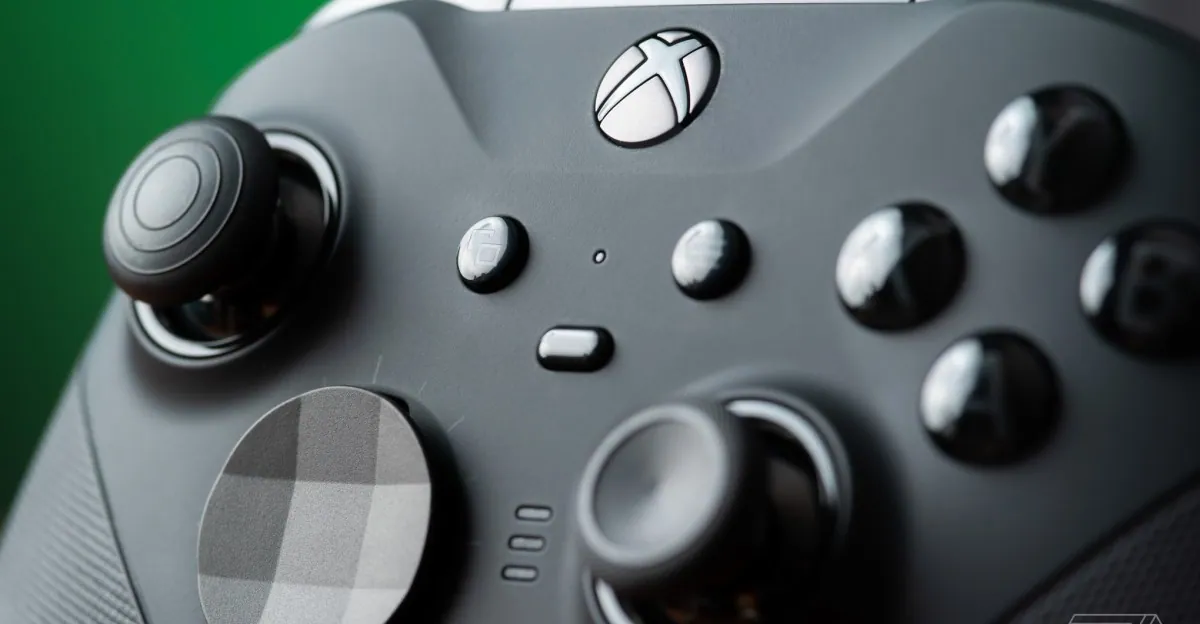
Microsoft has spent the better part of two years telling anyone who'd listen that the next Xbox needs to be affordable. According to a new Fortune report citing people familiar with the company's internal projections, that console, codenamed Helix, could cost consumers somewhere between $1,200 and $1,800 when it launches in 2028.
That's not a console price. That's a gaming PC price, a premium-laptop price, in some cases a down-payment-on-a-car price. And it directly contradicts a long list of public statements from Microsoft's own leadership about what the next generation is supposed to look like.
Former Xbox chief Phil Spencer once said plainly that "we're not going to grow the market with $1,000 consoles." Current Xbox boss Asha Sharma has said the industry has "reached a point where it will be hard to imagine that mass audiences can afford thousands of dollars to spend" on a console. Xbox chief strategy officer Matthew Ball has said the whole company would change how it operates to keep the next Xbox affordable. Sharma has gone further, telling reporters Xbox would need "radically different business models" to avoid pricing itself out of reach. Former Xbox exec Mike Ybarra put it more bluntly, telling reporters that if Helix actually launched at that price, "I wouldn't release it at all."
So either Fortune's sourcing is wrong, or something doesn't add up. The more likely answer, based on everything Microsoft has said and done over the past year, is that both things can be true at once. The number could be real, and the company's affordability promises could still mean something, just not in the way most people are picturing.
Why the number might actually be real
Start with the obvious: components are expensive right now. RAM and storage prices have climbed sharply, and former Xbox president Sarah Bond described Helix back in 2024 as "the largest technical leap you will have ever seen in a hardware generation." A genuine generational leap, built during a memory shortage, is not a cheap thing to manufacture.
It also wouldn't be the first time Microsoft ate the cost of making Xbox hardware. The company has historically sold consoles at a loss and made its money back on games and Game Pass subscriptions, a model it confirmed directly to The Verge in 2021. Reporting from 2023 suggested Microsoft may have spent as much as $1.5 billion subsidizing the Xbox Series X and S to hit their $499 and $299 price points.
But Sharma has signaled that era is over. In her "Xbox reset" memo, she wrote that the roughly $20 billion in content, platform, and hardware subsidies Microsoft poured into the business over the past five years "cannot continue" going forward. Satya Nadella echoed the sentiment on the Hard Fork podcast, saying, "No one can accuse Microsoft of not having invested for the last 25 years, and now we have to turn this into a sustainable business." Bond herself described Helix late last year as "a very premium, very high-end curated experience," comparing it to the $1,000 Xbox Ally X handheld rather than to a mass-market console.
Put those pieces together and a straightforward subsidy looks unlikely this time, especially since Helix is expected to run PC games as well as Xbox titles. Valve's Steam still dominates PC gaming, so anyone who buys a Helix and plays mostly through Steam wouldn't help Microsoft recoup the cost the way a traditional console buyer would.
The phone-plan model: pay for it slowly through Game Pass
If Microsoft won't eat the cost upfront, it could spread it out instead, the way wireless carriers do with phones. AT&T, for example, will hand over a $1,200 iPhone for effectively nothing if a customer commits to a long-term service plan and trades in an old device. There's nothing stopping Microsoft from building a similar structure around a pricier Game Pass tier, bundling console and subscription into one long-term payment instead of a single upfront purchase.
It's a plausible model, but it cuts against Microsoft's recent moves. Sharma actually lowered the price of Game Pass Ultimate to $22.99 a month in April, writing that "Game Pass has become too expensive for players," while stripping out Call of Duty access and unlimited cloud gaming in the process. Launching a new premium tier expensive enough to subsidize an $1,800 console would be a sharp reversal, and subscription fatigue is a real risk if it asks people to commit to years of payments for a box they haven't held yet.
Or you just don't own one at all
There's a less flattering possibility: Microsoft doesn't need everyone to own a Helix. It just launched pay-as-you-go cloud gaming, starting at $3.99 for 10 hours and $11.99 for 50 hours, which gives budget-conscious players a way to "play Xbox" without ever buying hardware.
That tracks with what's already happening to console pricing generally. Component shortages have pushed Sony to hike PS5 prices repeatedly, and PS5 sales reportedly dropped afterward, though that may be as much about supply constraints as demand. Xbox sales, by contrast, reportedly rose over a similar stretch even as Microsoft pushed through its own price increases. Ball told The Game Business in June that demand for Xbox hardware currently outstrips what Microsoft can actually build, directly blaming the RAM shortage: "I can tell you definitively, demand for our console exceeds supply."
If Microsoft genuinely can't produce enough Helix units to meet demand even at launch, pricing it high isn't necessarily the dealbreaker it looks like. It just means the console becomes a product for people with money to spend, while everyone else rents access through the cloud instead.
A console only early adopters can afford
That scenario has an uncomfortable implication: the next Xbox generation might not arrive for most people at all. It would look more like the launch of a $1,800 iPhone Duo or a Steam Frame headset, products that sell out instantly at premium prices while leaving most shoppers out, and that ship a little rough around the edges because the buyers who grab them want to be first regardless.
Microsoft has already tested that approach. The $1,000 Xbox Ally X handheld shipped before the RAM crisis even hit, and its $1,300 follow-up, the Xbox Ally X20, is already sold out. If Helix follows the same pattern, game developers would have little reason to build specifically for a console most of their audience can't buy, which would effectively make Helix a souped-up mid-cycle refresh rather than a true next generation, in industry parlance.
Plenty of veteran executives would be fine with that outcome. Ybarra posted on October 20th that people should "stick with PS5 Pro/Series X until prices normalize," arguing the current hardware is "fine for 99% of the audience" and that "no one is screaming 'I need a more powerful console' right now." Former Sony and Xbox executive Shuhei Yoshida told The Verge's Vergecast that Sony and Nintendo should "keep the current generation as long as possible" because people are already happy with the PS5 and Switch 2. Former PlayStation executive Shawn Layden told GamesIndustry.biz, "I think we've plateaued on the tech, frankly," and argued the industry should focus on making hardware "cheaper and simpler" instead of chasing bigger leaps. Microsoft itself has already taken a small step in that direction: AMD's FSR 4.1 upscaling technology is coming to the existing Xbox Series S and X, helping both deliver sharper 4K output without new hardware.
Or there's no single Xbox at all
The last possibility is the one Sharma has described most directly: Helix won't be one box, but a "family of devices." That's widely expected to mean PC hardware partners, such as Asus, selling their own Xbox-branded machines, potentially including a console-shaped box running a Windows-based Xbox operating system rather than just handhelds. Some of those partner devices could undercut Microsoft's flagship on price by trimming memory or storage, and Sharma has already said Microsoft will need "very flexible storage offerings," echoing how the Xbox 360 once shipped with different hard drive sizes, or none at all, to hit lower price points.
The existing Xbox Series X and Series S would likely remain part of that family too, which matters because Xbox games have never been tied to a single piece of hardware. An Xbox One title runs on a Series S and a Series X today because they're all AMD-powered Windows machines with different amounts of horsepower, not fundamentally different platforms. PlayStation works the same way across the PS4, PS4 Pro, PS5, PS5 Pro, and presumably the PS6. In that world, one device in Microsoft's lineup, maybe the existing Series S, maybe a new handheld reportedly due in holiday 2027 according to Fortune's sourcing, could end up functioning as the real baseline for "next gen," the same role the Steam Deck has quietly played for PC game development since 2022.
What happens next depends on which version of this story Microsoft actually builds. A $1,800 flagship next to a cheap, next-gen handheld and a continuing Series S isn't the same story as a $1,800 console with no affordable alternative. Fortune's number may well hold up. Whether Helix ends up defining a true new generation, or just becomes the expensive option at the top of a much wider Xbox lineup, is the part Microsoft hasn't settled yet.