Apple's First Foldable Is a Mess You'll Want to Buy Anyway
The $2,000 iPhone Duo rethinks what a phone can be, but The Verge's early testing shows it's an early-adopter device through and through.
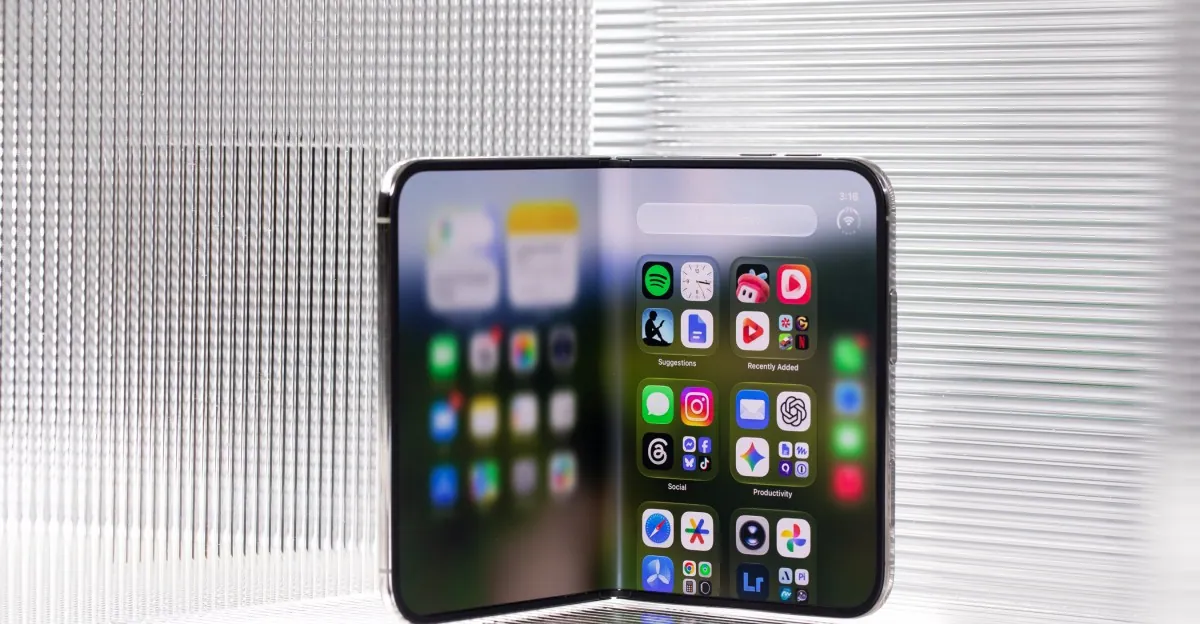
Apple just released its first foldable phone, and it's not the cautious, polished product the company usually ships. According to a hands-on review from The Verge, the iPhone Duo is genuinely risky, occasionally frustrating, and still a lot of fun to use — the kind of first-generation device built for gadget nerds rather than the average upgrader.
That's a notable shift for Apple. The last time the iPhone changed in any major way was the iPhone X, which ditched the home button nearly a decade ago. Since then, the formula has been incremental: better cameras, better chips, same basic shape. Foldables don't allow for that kind of restraint. Apple had to make hard calls about screen sizes, aspect ratios, and how a phone that's also sort of a tablet should actually work. Based on The Verge's testing, some of those calls paid off. Others didn't.
A passport-shaped bet
The biggest decision was shape. The Duo opens into a wide, landscape-oriented display rather than the tall-and-narrow format most foldables have used for the past five years — a layout Apple reportedly helped push the rest of the industry toward, as competitors shifted their own designs to get ahead of Apple's rumored plans. The inner screen measures 7.6 inches, the outer cover display 5.4 inches, both sharing the same 1.4:1 aspect ratio.
That symmetry is clever on paper but creates a real problem in practice: the cover screen is small. The Verge's testers found that typing a message in Messages often shows only two or three lines of text at a time, and Apple's solution — pushing navigation controls to a strip on the right side of the screen — makes the phone awkward to use left-handed and forces right-handed users to stretch across the display for anything on the left.
The inner display is the clear highlight. It uses a nano-texture matte coating that Apple says makes the fold line "perceptually flat." The review backs that up: the crease is largely invisible in normal use, though it shows up more under certain lighting and more prominently on camera. That's a meaningful upgrade over the visible creases found on phones like the Galaxy Fold 8 or the discontinued Pixel Fold.
Smaller quirks add up, too. There's no Face ID — Touch ID is built into the side button instead — and the volume buttons don't automatically reorient as you rotate the phone, so remembering which button raises volume becomes its own small ritual. None of it is disqualifying, but all of it signals a product still finding its footing.
Software that starts from scratch
Here's the twist most people probably didn't expect: unfolding the Duo doesn't turn it into an iPad. Apple built an entirely new software approach instead of leaning on its existing iPad app ecosystem, according to the review, which means features iPad users have had for years — like pinching the keyboard smaller for one-handed typing — simply aren't there yet.
Multitasking works, but it's unconventional. Running two apps side by side only works in landscape mode. Getting a floating video window in portrait mode requires a specific sequence: open a compatible app, start a video, back out to trigger the floating window, open a second app, then tap a button to snap everything into place. It works, The Verge notes, but it's also not something you'd ever discover without being told — and the feature doesn't even work with the regular YouTube app, only YouTube TV.
App support currently falls into three tiers: unmodified iPhone apps that look stretched and awkward, apps updated with basic layout fixes, and a smaller group of apps built specifically for the Duo's iOS 27.1. The review singles out Instagram's Edits app as an example of the format done right, with a full video timeline that takes real advantage of the extra screen space. Apple will need developers to invest real effort — or get real incentive — for that third category to grow.
Camera, battery, and the price tag
At $2,000, the Duo carries real compromises. Its main camera sensor is smaller than the one in the iPhone 18 Pro, closer to what's found in the iPhone Air, and there's no telephoto lens at all — just 2x optical crop and up to 10x digital zoom. The phone also runs warm, particularly when running video-heavy third-party apps or camera features that use both displays simultaneously, and testers reported it getting noticeably hot during extended camera use.
Battery life varied by tester and usage pattern — one reviewer needed a midday charge during normal workday use, while the other ended a travel day with about 30 percent remaining after roughly six and a half hours of screen time. Apple says the Duo uses the same upgraded thermal system as the iPhone 18 Pro, but the review suggests there's room for improvement on both heat and endurance.
How it stacks up against Samsung
The Duo's most direct rival is the Galaxy Z Fold 8, which beat Apple to market by a few months with a similar wide-fold design. The Verge found Samsung's cover screen more usable day-to-day, since Samsung lets content fill the entire width of the display rather than reserving a control strip, and offers more flexible keyboard options. Apple's version, true to form, insists on a tidier portrait-style experience on the cover screen — fitting with the walled-garden approach Apple takes everywhere else.
Apple does win on a couple of fronts: the Duo has MagSafe, which the Z Fold 8 lacks, and it's rated IP68 for full water and dust resistance, compared to the Z Fold 8's IP48 rating.
The verdict
The review frames the Duo the way The Verge frames every first-generation product: judge what's in the box, not what might come later. And what's in the box is a phone that's exciting to experiment with and genuinely inconvenient to live with — one where switching back to a regular iPhone to get something done can feel like a relief.
The comparison the review reaches for is the original MacBook Air: a product that wasn't right yet, but was interesting enough to show where Apple was headed. Whether the Duo's particular bets — the small cover screen, the decision to skip the iPad app ecosystem, the camera trade-offs — age well is still an open question. For now, it's a phone built for people who want to live inside the mess of a new idea, not for everyone else.