Google's New Fitbit Edge Splits the Difference Between Minimalist and Smart
The $179.99 tracker lands squarely between the screen-free Fitbit Air and the Pixel Watch 5, replacing the aging Charge 6 with a bigger display and smarter workout detection — but it drops NFC payments along the way.
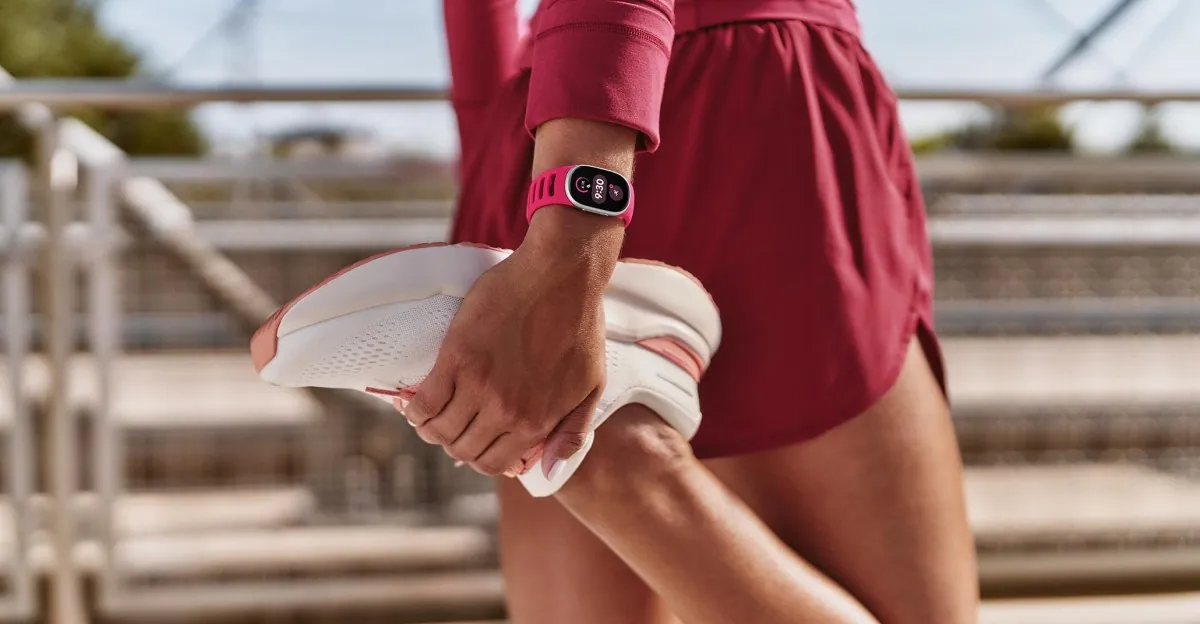
Google has officially unveiled the Fitbit Edge, a fitness tracker that's been floating around the rumor mill for a while and now has a real price tag, real specs, and a real spot in the lineup. That spot is deliberate: the Edge sits right between the screen-free Fitbit Air and the full-featured Pixel Watch 5, aimed at people who want notifications and glanceable info on their wrist but have no interest in a full smartwatch experience.
Think of it as Google's answer to anyone with smartwatch fatigue who still isn't ready to go totally screenless. It's also, more practically, the device that replaces the Fitbit Charge 6, which has been showing its age.
What's actually new
The headline spec is the display — 46 percent larger than the one on the Charge 6, according to Google. The Edge adds a physical side button and is a bit chunkier as a result, measuring 11.5mm thick. Battery life lands around a week on a full charge, though turning on the always-on display cuts that down to about two days. Google says five minutes on the charger buys a full day of use, and a complete charge takes 90 minutes. The Edge uses the same proprietary charging cable as the Air, and its battery is replaceable.
On the health-tracking side, the Edge is stacked: an EKG sensor for atrial fibrillation detection, a skin temperature sensor, SpO2 and optical heart rate sensors, and the usual motion-tracking hardware. It's rated IP68 for dust and water resistance and safe for swimming down to 5ATM.
Not everything carried over from the Charge 6, though. The Edge has no microphone or speaker, so you can see an incoming call on the display but can't actually take it from your wrist. More notably, there's no NFC chip, which means no contactless payments — a feature the Charge 6 had. That's a tougher pill to swallow given the Edge costs $20 more than its predecessor, at $179.99. Google is softening that a bit by bundling three months of Google Health Premium into the price.
Smarter tracking, not just a bigger screen
The more interesting upgrades are under the hood. Google says the Edge ships with a revised motion model for automatic workout tracking — a feature that will eventually make its way to the Air as well. The new model doesn't just read your movement; it cross-references location data and your routines to guess what you're doing. Show up at a tennis court and it'll assume tennis. If you're consistently doing yoga every Tuesday morning, it'll start inferring that pattern too. The model also adds support for racket sports specifically. Google claims this bumps automatic activity-tracking accuracy up to twice what it was before, across more than 100 supported activities.
GPS tracking gets a boost as well — Google puts the improvement at 40 percent more accurate. That gain comes from on-device hardware and software improvements, not the GPS post-processing update Google introduced with the Pixel Watch 5, which corrects location data after the fact using more computing power. The Edge also supports turn-by-turn directions, a feature that's handy for runners and cyclists who don't want to pull out a phone mid-route.
Fitbit OS, not Wear OS
Despite borrowing visual cues from the Pixel Watch — Google says the widget layout and interface design echo it closely — the Edge isn't running Wear OS. It's on a redesigned version of Fitbit's own operating system instead, which keeps things lighter and more battery-friendly than a full smartwatch platform.
That doesn't mean it's bare-bones. The Edge gets the same Google Health software features rolling out across the ecosystem, including blood pressure trend tracking and insulin resistance level estimates. Day-to-day, it covers the basics you'd expect from a smart tracker: a clock, timers, alarms, media playback controls, and push notifications. It can also broadcast heart rate data to compatible gym equipment, a feature gym-goers who train with connected machines will appreciate.
Design leans toward the Air, not the Charge
Even with a screen, Google positioned the Edge's physical design closer to the minimalist Air than to a traditional smartwatch. It launches with multiple strap options, including metal link bands meant to give it a more jewelry-like look rather than a sporty one. The Air is getting in on that trend too, with a new $69.99 metal mesh strap arriving October 27th.
And in keeping with Google's now-familiar playbook for Fitbit and Pixel Watch launches, there's a Stephen Curry edition of the Edge, priced at $219.99 — matching the special editions already available for the Air and Pixel Watch 5.
The Edge's real test will be whether the missing NFC chip matters more to buyers than the bigger screen and smarter tracking. For people who already tap to pay with their phone constantly, it might be a non-issue. For anyone who leaned on the Charge 6 for wallet-free trips to the gym, it's the one clear step backward in an otherwise forward-looking update.