NHTSA Moves to Set New Rules on Flush Door Handles After Tesla Trapping Incidents
The agency stopped short of investigating Tesla directly, opting instead to write new safety standards that would apply to every automaker.
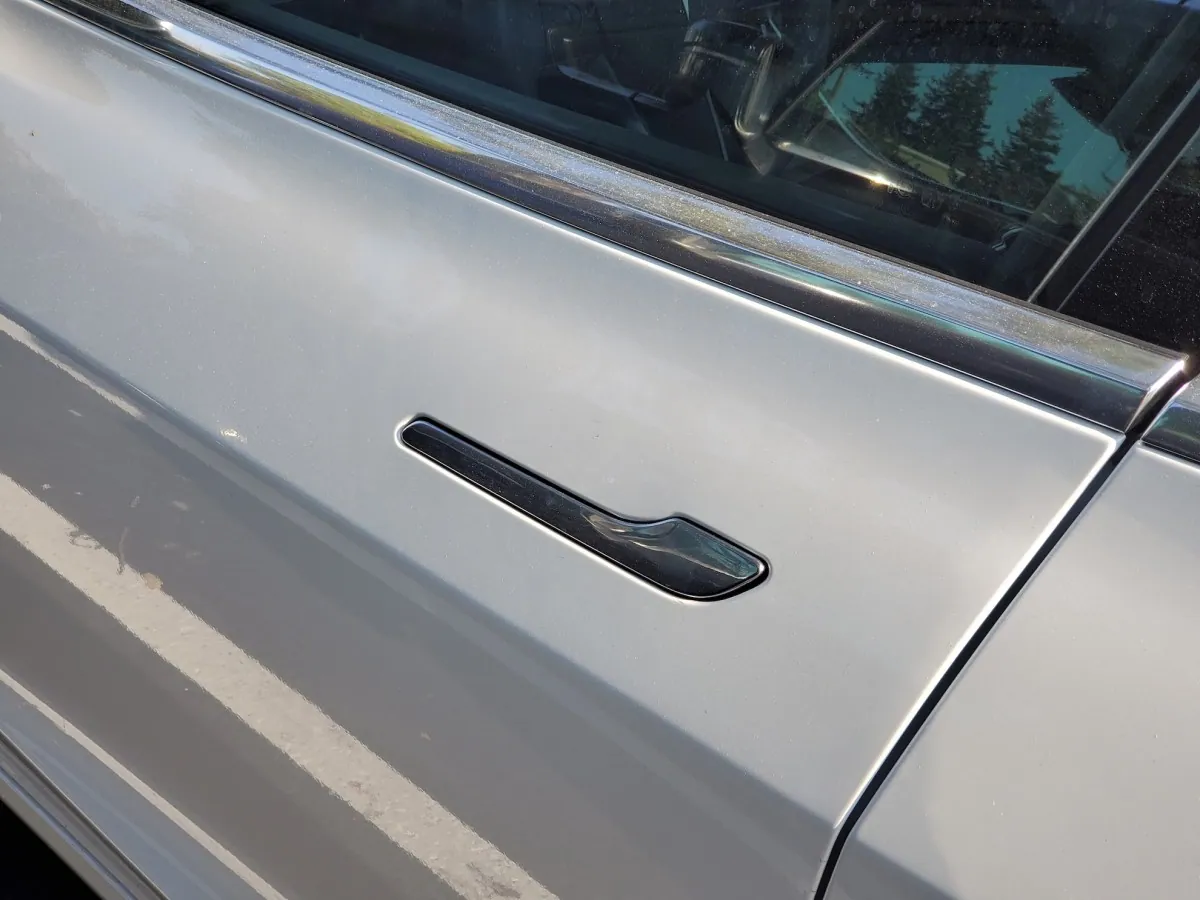
Federal regulators are starting work on new safety requirements to make sure people can actually get out of their cars — a response to a string of incidents in which drivers and passengers got trapped inside vehicles with flush, electronically operated door handles, the kind popularized by Tesla.
The National Highway Traffic Safety Administration disclosed the new rule-making process in a regulatory filing, first reported by Bloomberg. It grew out of a petition asking NHTSA to open a formal defect investigation into the emergency mechanical door release on 2022 Tesla Model 3 vehicles. The petitioners argued that Tesla's design doesn't meet federal motor vehicle safety standards.
NHTSA declined to open that investigation. Instead, the agency said this is a problem better solved through rulemaking — writing new industry-wide rules — rather than going after one automaker's design. If NHTSA follows through, any new standard would apply to every carmaker, not just Tesla. But the agency was careful to note that "commencing" a rulemaking process doesn't guarantee new rules will actually materialize.
That caveat matters, because rulemaking at NHTSA can be slow and doesn't always end in a finished regulation. Still, the decision to move in this direction at all signals the agency sees the flush-handle problem as bigger than one model or one company.
Why regulators are paying attention now
This isn't the first time NHTSA has looked at Tesla's door handles. Less than a year ago, the agency opened an investigation after getting nine reports from owners who couldn't get into their own cars — in some cases with children still inside. That probe followed Bloomberg's own reporting on a pattern of incidents where Tesla drivers and passengers became trapped after crashes.
The mechanical problem, as NHTSA's initial review found, comes down to power. Tesla's door handles do have manual releases, but they're located only on the inside of the car. Those manual releases depend on the electronic door locks getting enough voltage from the vehicle's battery system — and in a crash, that voltage supply can fail, leaving occupants unable to open the doors from inside or out.
Flush handles have become a signature design element for Tesla and a growing number of electric vehicles, prized for their sleek look and aerodynamic edge. But the tradeoff — hidden or non-intuitive manual releases that depend on power systems that can fail in the exact moment they're needed most — is exactly the kind of design mismatch regulators are now trying to get ahead of.
Automakers already adjusting
The scrutiny appears to be pushing at least some changes at the design level, ahead of any formal rule. Tesla designer Franz von Holzhausen said last year that the company was reworking its door handle design. Rivian, meanwhile, said it's changing the interior door handle layout on its upcoming R2 SUV, moving the manual release to a spot closer to the powered handle and making it easier to find under stress.
Those moves suggest automakers aren't waiting around for NHTSA to finish its rule-making before addressing the underlying issue. Whether a formal federal standard follows will determine if design tweaks like Rivian's become the industry norm or just one company's fix.
For now, the takeaway is straightforward: regulators have decided the flush-handle trapping problem is a systemic design question, not a Tesla-specific defect, and they're starting the long process of writing rules to match. What those rules eventually require — and how long it takes to get there — is still an open question.