Tesla Finally Unveils the New Roadster, Nine Years Late and Equipped With Rocket Thrusters
The flying, hovering sports car Elon Musk promised in 2017 showed up in Texas on Thursday, though buyers will have to wait until 2028 to actually drive one.
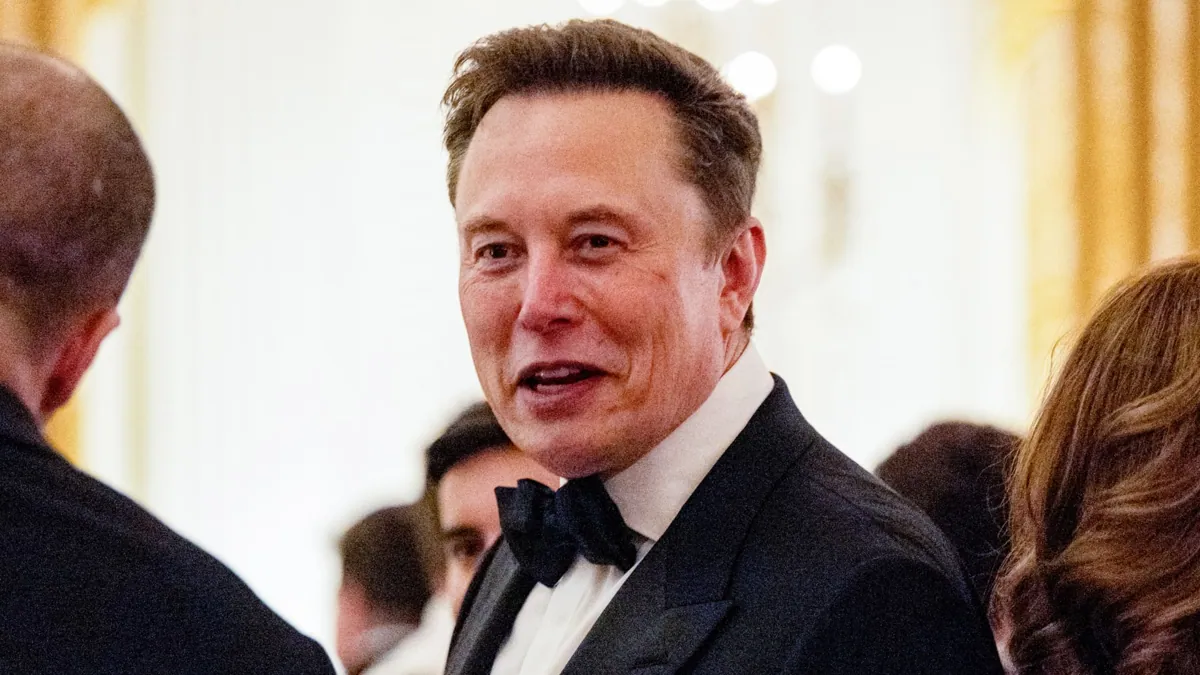
Tesla pulled back the curtain on its next-generation Roadster Thursday night, nearly a decade after the company first started collecting deposits for a car that, for years, looked like it might never arrive.
The reveal happened at a SpaceX test site in McGregor, Texas, near Waco, livestreamed starting at 7:55 p.m. local time. Elon Musk headlined the event alongside Tesla design chief Franz von Holzhausen and Lars Moravy, the company's vice president of vehicle engineering. "You're going to see some crazy stuff tonight," Musk told the crowd, framing the car as proof of what happens "when you have a collaboration with the world's best car company and the world's best rocket company."
That framing wasn't just hype. The new Roadster leans on SpaceX hardware, including cold gas thrusters, the kind of system spacecraft use for fine-tuned maneuvering. At the event, a white Roadster drove up a curved ramp, flipped in midair, hovered briefly, and landed. Moravy also demonstrated the car's acceleration live, with Tesla's own timer clocking zero to 60 mph in under a second.
Musk said the car will enter production in 2028. No pricing was announced, though Tesla has reopened reservations in the U.S., Canada and China, taking $50,000 deposits from buyers willing to get in line again.
A long road to a rocket car
The original Roadster was a different kind of milestone entirely. Designed under founding CEO Martin Eberhard and built on a Lotus Elise chassis, it launched in 2008 at around $100,000 and sold in small numbers through 2012. It was the car that first proved Tesla could build something more than a golf cart with a battery.
The next-generation version has had a far rockier path to market. Musk teased the concept at a November 2017 event and followed up with tweets the next June describing a "SpaceX option package" that would ring the car with roughly ten small rocket thrusters, improving speed and braking and, in his words, possibly letting "a Tesla to fly." Tesla started taking $50,000 deposits that same year.
Then came years of missed deadlines. As recently as October of last year, Musk was pushing for a demo before the end of 2025. That slipped too. Tesla even had to scrap an Oct. 1 demonstration this year due to weather, according to FAA filings that show the company had established a no-fly zone around the SpaceX facility ahead of the event.
The delays became something of a running joke, most notably at Musk's own expense. Sam Altman, the OpenAI co-founder and onetime Musk friend, mocked him on X last year over the wait, posting screenshots of his reservation and refund request. "I really was excited for the car! And I understand delays," Altman wrote, "but 7.5 years has felt like a long time to wait." Altman got his money back. The two later ended up in court this year over a separate dispute tied to OpenAI's governance and ownership structure.
Not everyone bailed. Lawrence O'Connor, founder and CEO of Austin-based Other World Computing, told CNBC he put down a Founder's Edition reservation back in November 2017, which he described as effectively handing Tesla a $250,000 interest-free loan. Ahead of Thursday's reveal, he said he was "excited to see what has been 9 years in the making."
Why this matters less than it looks like it should
For all the spectacle, the new Roadster isn't expected to move Tesla's financial needle. It's shaping up as a high-end, low-volume halo car, the kind of product that generates headlines and reservation deposits more than it generates revenue. Tesla hasn't said what it will cost or how many it plans to build.
The timing is notable too. Tesla reports third-quarter earnings after the bell on Wednesday, and the Roadster reveal gives the company a burst of attention and goodwill heading into that report, independent of whatever the quarterly numbers show.
What happens next is mostly a waiting game, again. Tesla still has to lock in pricing, confirm production targets and, eventually, deliver cars to the people who have now waited the better part of a decade. Given the Roadster's track record, 2028 counts as an optimistic date rather than a guaranteed one.