NTSB: Tesla in Fatal Katy Crash Was Accelerating at Full Throttle, Not Driving Itself
The safety board's preliminary findings back Tesla's version of the June crash, while raising new questions about the driver's actions before it.
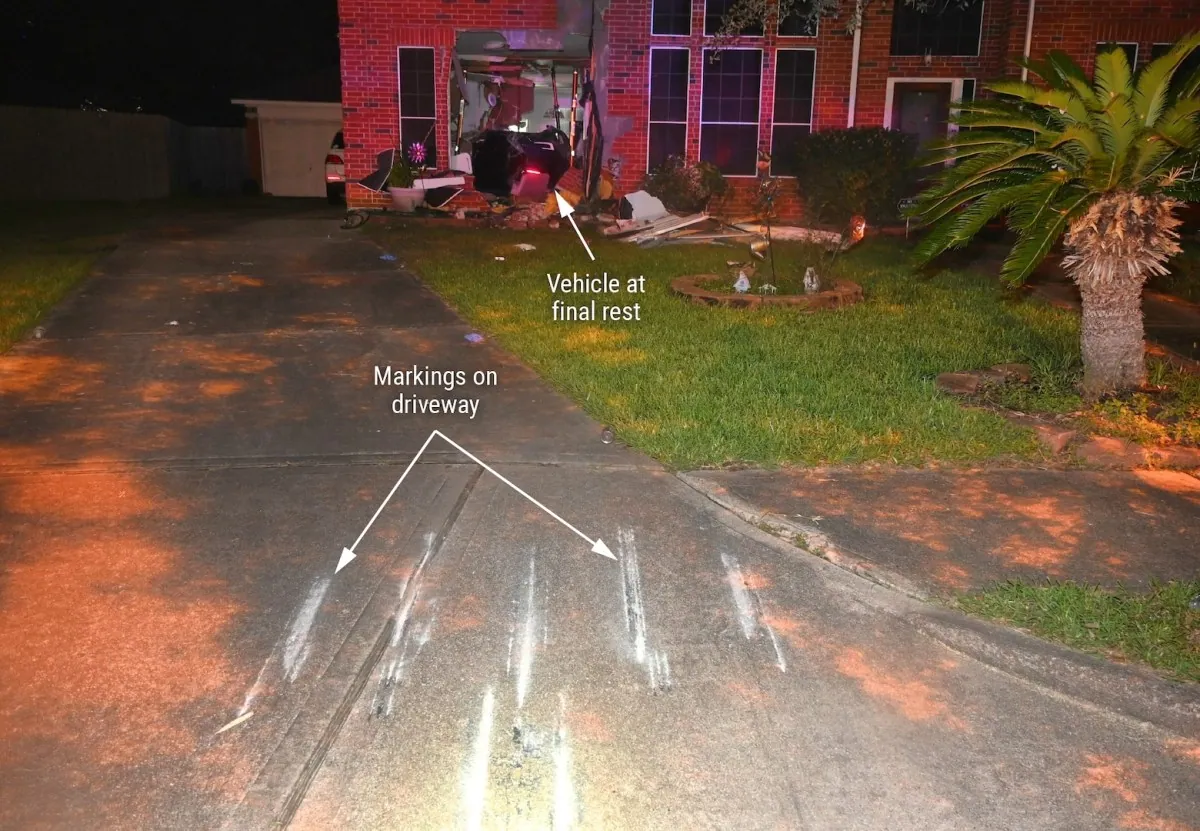
The National Transportation Safety Board said Wednesday that the driver of a Tesla involved in a fatal June crash in Katy, Texas, had the accelerator pedal pressed all the way down at the moment of impact, overriding the car's Full Self-Driving (Supervised) system rather than being controlled by it.
Data pulled from the vehicle showed it was traveling more than 70 miles per hour when it slammed into a house, according to the NTSB's preliminary report. The crash killed 76-year-old Martha Avila, a resident of the home. The victim's family has since filed a negligence lawsuit against both the alleged driver, 44-year-old Michael Butler, and Tesla. Butler has separately been charged with manslaughter. The National Highway Traffic Safety Administration is running its own investigation into the incident alongside the NTSB's.
The new details line up with what Tesla said publicly in the immediate aftermath of the crash, when the company moved quickly to distance its driver assistance software from blame. CEO Elon Musk posted on X at the time that the allegation against FSD "makes no sense," arguing that the system "drives slowly through neighborhood streets" and that this had been "a high speed crash."
The NTSB's findings give that defense some backing. According to the report, Butler was using Full Self-Driving (Supervised) on Rose Hollow Lane, a residential two-lane street posted at 30 miles per hour, before the crash occurred. Security camera footage obtained by investigators shows the car accelerating through an intersection, running off the road, and striking the house. Conditions weren't a factor: the NTSB says the weather was clear, the road was dry, and it happened in daylight.
What the pedal data shows
The most significant piece of the report is the confirmation that the accelerator was pressed to 100%. Tesla's Full Self-Driving (Supervised) is a driver assistance system, not autonomous driving, and the company requires drivers to stay attentive and ready to retake control at any moment. Mashing the accelerator to the floor is a manual input that overrides the software's own speed management, which is why the data point matters so much to how this crash gets understood, legally and mechanically. If a driver floors the pedal, the car is going to speed up regardless of what the assistance system would otherwise have done, and that appears to be what happened here.
That doesn't resolve the more troubling questions raised by Butler's own account. He allegedly told authorities he had "passed out" while using the driver assistance system, an explanation that sits awkwardly next to a vehicle accelerating hard enough to blow through an intersection and leave the road at highway speed on a 30 mph residential street. Investigators also found, per local ABC affiliate KTRK, that Butler's Google search history included queries like "Tesla FSD not aggressive enough 2026," "Tesla not aggressive enough," and "Tesla FSD too timid" — searches that suggest a driver actively trying to make the system drive faster or more assertively, not someone who lost consciousness at the wheel.
Why this matters beyond one crash
Crashes involving Tesla's driver assistance features tend to draw outsized scrutiny, both because of the company's high public profile and because the underlying question, how much control the human retained versus the software, is central to how regulators, courts, and the public assess these systems' safety. Tesla has consistently pushed the message that FSD is not responsible for wrecks where a driver overrides its behavior, and this preliminary report gives that argument concrete data support in at least this case.
But the report is explicitly preliminary. It establishes what the car's own systems recorded and what camera footage showed, not the full narrative of why Butler was pressing the accelerator to the floor on a residential street, or what his mental and physical state was in the moments before the crash. Those questions remain live in both the ongoing criminal case and the civil lawsuit filed by Avila's family, which alleges negligence against Butler and Tesla alike.
The NTSB and NHTSA investigations continue, and further findings could add detail to what's currently a partial picture: a car that accelerated to highway speed on a slow residential road, a driver assistance system that Tesla says was overridden, and a driver whose own explanation doesn't yet square cleanly with the evidence gathered so far.