Google's Xreal Glasses Launch at $1,099, Undercutting Meta on Price
The Android XR glasses got cheaper between preorder and launch, and Xreal says anyone who paid more will get an automatic refund.
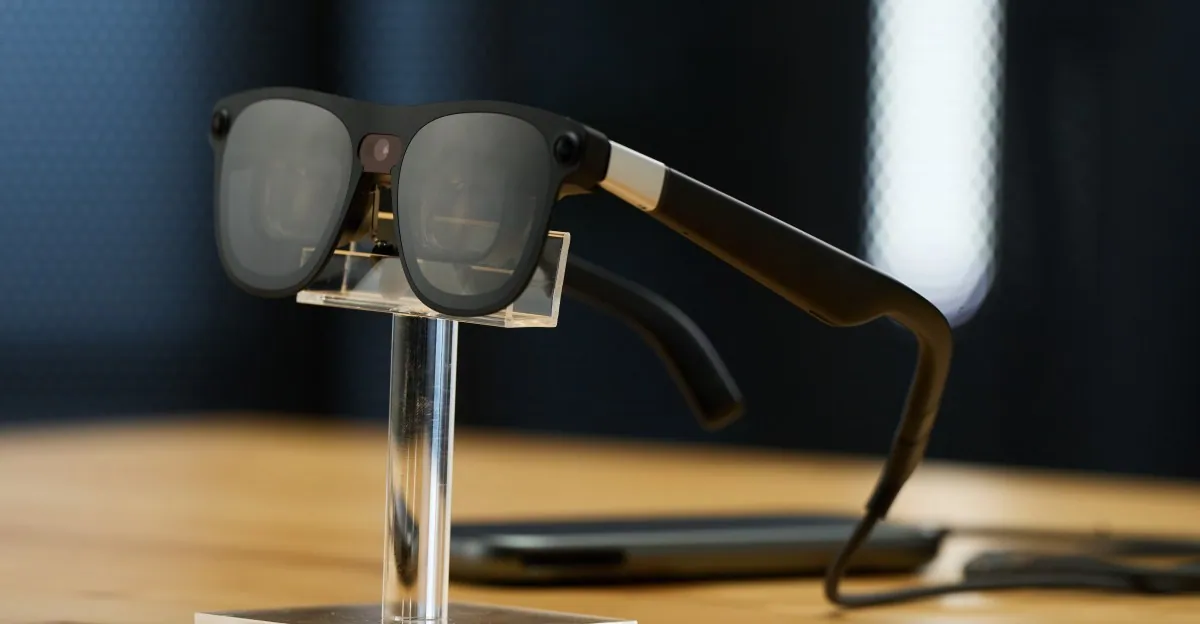
Google and Xreal just launched the Aura, their new Android XR smart glasses, and the price dropped before the thing even went on sale. The glasses, which went live today, cost $1,099 through the end of the year, down from the $1,279 Xreal charged early preorder customers last month, according to The Verge.
That's a $180 cut, and it's not hard to guess why. At $1,279, the Aura would have been priced right up against Meta's VR Glasses, a tough fight for a first-generation product. At $1,099, Google and Xreal get to undercut Meta directly instead.
The Aura is a pair of 95-gram transparent glasses tethered to an Android XR compute puck, projecting multiple virtual screens into your field of view. Xreal says it has one of the widest fields of view among transparent glasses on the market, at 70 degrees diagonal. That's a meaningful spec in this category, though The Verge notes it's still not especially wide, and transparent AR glasses come with their own tradeoffs compared to fully enclosed headsets.
Simpler buying, automatic refunds
Beyond price, Google and Xreal also cleaned up how you actually buy the thing. Instead of the layered preorder, reservation, and "Founder's Edition" system that's become common for this category, customers in launch countries can just order the glasses outright. The base configuration, with 12GB of RAM and 256GB of storage, runs $1,099 in the US, Canada, and South Korea. A beefier 16GB/512GB version is going for a discounted $1,299. Shipping is expected to begin in mid-November, per the companies. Japan gets its launch on November 2nd, with other markets following next year.
For anyone who already paid the original $1,279, Xreal GM and spokesperson Ralph Jodice told The Verge the company will automatically and instantly refund the difference. No forms, no waiting.
What you actually get
Xreal and Google say the Aura launches with more than 150 "made-for-XR" experiences, detailed in Google's and Xreal's respective posts, plus a slate of immersive films that includes Andy Serkis's Nevatars and Galapagos: the Last Eden.
The compute puck connects over USB-C, and you can plug a laptop or handheld game console into it to mirror that screen into your glasses alongside your other virtual windows. Google's Gemini assistant is baked in too, and you can ask it about whatever you're looking at through the lenses.
Google Photos is getting an XR-specific feature as part of the launch: a spatial gallery that, per Google, "wraps your library around you," letting you pan from a full year of photos down to a single day using hand gestures, then pull up a favorite memory in 3D.
Xreal is rounding out the ecosystem with some hardware extras, though details are thin so far. The company is partnering with GameSir on a wireless gamepad built with a dedicated Gemini key, a charging dock, and swappable D-pads. It's also announcing a folding, portable wireless keyboard. Neither has a price or release date attached yet.
For now, the headline is the price cut and the simplified rollout. Google and Xreal built a product clearly meant to compete with Meta's push into smart glasses and AR, and shaving $180 off the launch price before a single unit ships suggests they're serious about winning on cost, not just specs. Whether the field of view, the software lineup, and that Gemini integration are enough to make the Aura stick will depend on how it performs once it's actually on people's faces.