Scalpers Are Already Flipping Apple's First Foldable in Beijing
Lines, markups, and a January 2027 shipping delay suggest the iPhone Duo's launch is testing just how much Chinese buyers will pay to skip the wait.
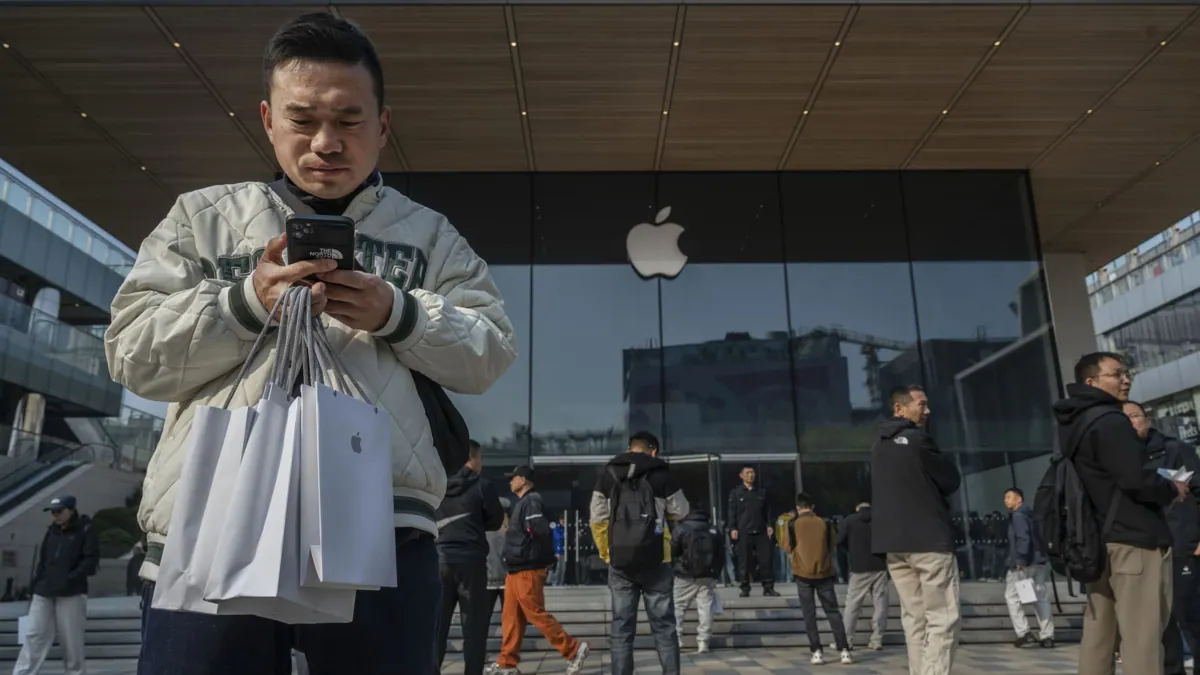
Apple's first foldable phone hit stores Friday, and in Beijing, that meant something very specific: scalpers camped outside the Sanlitun flagship offering cash on the spot for phones people had just bought.
Alex Wang was one of them. He told CNBC he was offering an extra 3,000 Chinese yuan, about $448, to anyone willing to hand over their freshly purchased iPhone Duo. His reasoning was simple. "I feel the Duo can be sold with a higher price for half a month," he said, pointing to tight supply as the driver. Wang stood watching a line of roughly 100 pre-booked customers, confident that scarcity would keep resale prices elevated for weeks.
That scarcity is by design, at least partly. Apple said the Duo would not be available for walk-in purchase on launch day in mainland China, and that supply would be "limited" in other markets too. Online orders were capped at two phones per purchase. Some customers showed up anyway without a reservation, hoping to get lucky.
Mary Tong didn't need luck. She was first in line at Sanlitun, arriving at 6 a.m. to collect her device. Her take on Apple's timing was blunt: "Apple has been the laggard," she said, adding that she believes many Chinese consumers already prefer foldable phones. That preference isn't just anecdotal. China is the largest foldable phone market in the world, according to Counterpoint Research, even though foldables remain a niche category globally.
Which is exactly why Apple is walking into a market where the competition didn't wait around. Huawei, which already sells a wide range of foldable devices, launched a new trifold phone called the Mate XT2 on Sept. 7, priced at roughly $3,000, just two days before Apple even announced the Duo. Xiaomi rolled out its own high-end foldable, the 18 Fold, around the same time. Huawei is also pushing its AI assistant, XiaoYi, as a way to stay ahead of Apple and other domestic rivals on the software side, not just hardware.
Not everyone who wants a Duo is getting one quickly. Zhang Zheng said he tried to order the phone online but backed off when he saw the delivery estimate: January 2027. He still plans to buy one eventually. "I think it will be useful for work and it's cool to look at," he said.
AI is the quiet part of the story
While the foldable hardware generated real buzz on launch day, nobody seemed particularly excited about Apple Intelligence, the company's AI platform, landing on these devices anytime soon. Apple has said a version built for mainland China is set to begin beta testing this month, with features like live translation, a photo cleanup tool, and writing assistance.
Getting there required regulatory maneuvering. Apple received clearance from Chinese regulators over the summer, and on Oct. 14 Beijing approved the use of Alibaba's AI models in the Duo and other Apple devices, clearing a path for the company's AI rollout in the country. Notably absent from that rollout: Siri. Chinese state media quoted former CEO Tim Cook, during a recent trip to China, saying the company's overhauled version of Siri would not be available there yet.
Duo customer John Zhao had already sampled Apple Intelligence while working abroad and came away unimpressed, calling it "nice but not beyond imagination." He expects the China-specific version to underwhelm even more.
What it adds up to
The scene outside Sanlitun suggests Apple's foldable bet is landing with at least some of the audience it was aiming for, people willing to pay a premium, wait in line before dawn, or pay scalpers extra just to skip a months-long backorder. But the launch also exposes where Apple is behind. Huawei and Xiaomi had foldables, including trifolds, on shelves before Apple's announcement even went public, and the AI features meant to differentiate the iPhone lineup are arriving in China later and thinner than elsewhere. The hardware demand is real. Whether Apple's software story catches up is the thing worth watching next.