Samsung's Smart Glasses Finally Show Their Face — Cameras, Gestures, and a Premium Price Fight With Meta
The South Korean giant used its Galaxy Unpacked event to flesh out a device it teased back in May, setting up a direct challenge to Meta's four-year head start in smart eyewear.
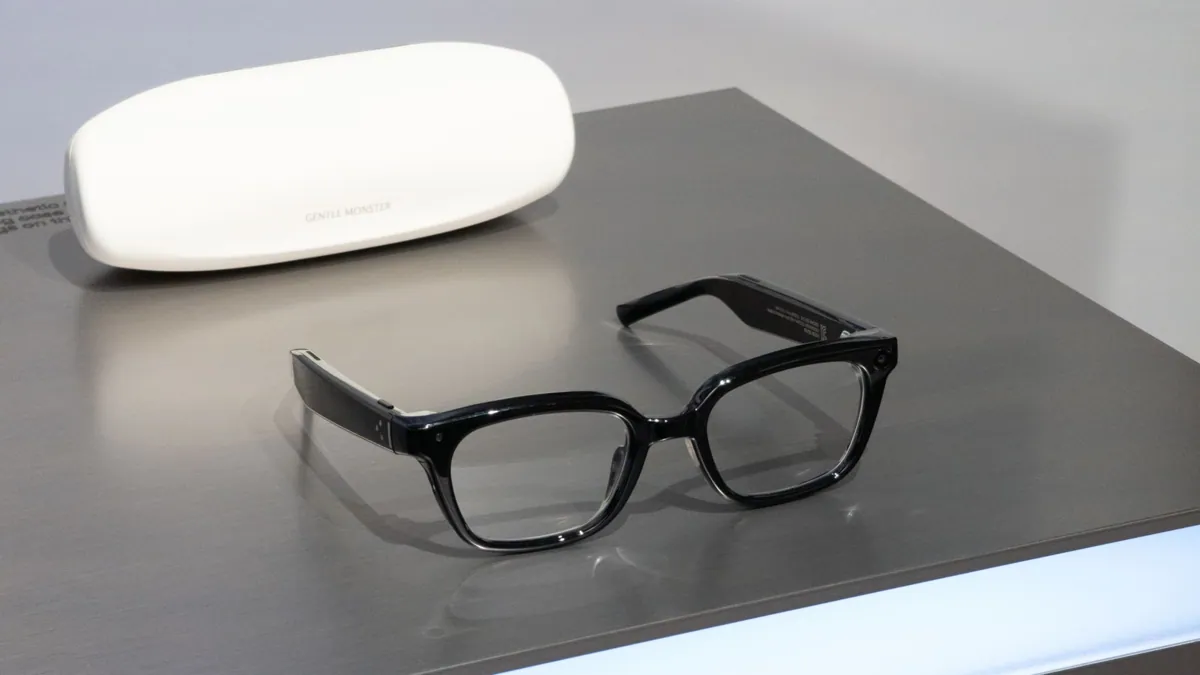
Samsung spent months keeping its smart glasses under wraps, showing off little more than the frames back in May. On Wednesday, at its Galaxy Unpacked event, the company finally filled in the blanks, revealing a device built around a camera, AI-driven note-taking, message summaries, and an early bet on gesture control powered by other Galaxy hardware.
It's Samsung's first real swing at a market Meta has owned since 2021, and the details laid out this week show a company trying to differentiate on software smarts rather than just catching up on hardware.
The glasses were first unveiled at Google I/O in May, where Samsung showed off two designs made with fashion partners Gentle Monster and Warby Parker but said almost nothing about what they'd actually do. CNBC had previously reported the glasses would include a built-in camera, and Samsung confirmed that Wednesday. That camera can record what the wearer is seeing, functioning like a point-of-view video camera, but it also has a more office-friendly trick: it can scan a whiteboard or a presentation slide and turn the key points into organized notes automatically.
The glasses can also handle a distinctly modern annoyance — the wall of unread texts. When long messages come in on a connected phone, the device can summarize them and read the summary aloud through its built-in speakers.
Under the hood, Samsung is running Qualcomm's Snapdragon AR1 Gen1 chip, and the glasses need to stay tethered to a smartphone to work. They come with a portable charging case for topping up on the go.
Gestures across the Galaxy ecosystem
The most forward-looking piece of the announcement involves gesture control, which Samsung is still actively testing rather than shipping as a finished feature. James Choi, executive vice president at Samsung and head of the R&D division behind the glasses, told CNBC the company is experimenting with letting a Samsung smartwatch detect hand gestures and use them to trigger actions on the glasses. He said the company is also looking at whether its Galaxy Ring, which launched in 2024, could serve the same purpose.
The idea is essentially to turn Samsung's existing wearables lineup into a control layer for the glasses, rather than building gesture sensing into the eyewear itself. It's a strategy that only works if you already have people wearing your smartwatches and rings, which is exactly the kind of ecosystem lock-in Samsung is hoping to cash in on.
Choi also said the glasses shown so far aren't the final word on design. When the product ships this fall, buyers should expect more styles and colors than what's been revealed to date.
Walking into Meta's turf
Samsung is not walking into an empty room. Meta has effectively defined the modern smart glasses category since 2021 and, according to IDC, held 69.2% of the market in the first quarter of 2026. The Ray-Ban Meta lineup has been the company's flagship push, and Meta has kept expanding on multiple fronts: a $299 entry-level model launched last month, and the $799 Ray-Ban Display glasses, which add an actual screen, arrived in 2025.
Samsung isn't saying what its glasses will cost. Choi described the positioning as "premium" but pushed back on the idea that premium means outrageous. "We want to make it reasonable, but as I mentioned ... the quality of the product itself, we want to position as premium. It doesn't mean that it's crazy expensive," he said, adding that Samsung's device won't sit at the low end of the market. Sales will run through the channels of its fashion partners rather than Samsung's own storefronts alone.
Analysts see real risk in that pricing puzzle. Francisco Jeronimo of IDC said he "wouldn't be surprised" if Samsung landed somewhere between $600 and $700 to reinforce a premium image, but warned that charging that much without clearly outdoing what Meta already offers would be a tough sell. "That is going to be quite a difficult move to sell that kind of device," he said.
Paolo Pescatore, founder of PP Foresight, framed Samsung's challenge in broader terms. "Samsung's arrival represents a serious challenge to Meta, but success is far from guaranteed. Ray-Ban Meta already enjoys strong awareness and growing adoption, while Samsung has historically struggled to convert its vast smartphone base into users of complementary Galaxy devices," he told CNBC. He added that glasses represent a genuine upsell opportunity for Samsung, but only if the company can nail everyday use cases and convince smartphone owners to buy into a second, connected device.
That last point cuts to the heart of Samsung's track record. It sells more smartphones globally than almost anyone, but turning that base into buyers of Galaxy Watches, Buds, or Rings has been a slower grind than the phone business itself. Smart glasses ask for an even bigger leap, both in habit and in social comfort with wearing a camera on your face in public.
Choi, for his part, is playing down expectations. He described the company as having "just started" in the category and predicted the overall smart glasses market will stay a niche one, well under 100 million units sold. He declined to say what Samsung expects to sell of its own device.
That caution suggests Samsung sees this less as a race to overtake Meta immediately and more as a long-term bet, one where the payoff comes from stitching glasses into the wider Galaxy device family rather than winning on specs or price alone. Whether that's enough to peel share away from Meta's four-year lead is the question the fall launch will start to answer.