Amazon's Echo Show 16 Finally Lets You Customize Your Smart Display — For $500
The biggest Echo Show yet brings real personalization and smarter software, but Amazon's priciest smart display also arrives right as Apple enters the category.
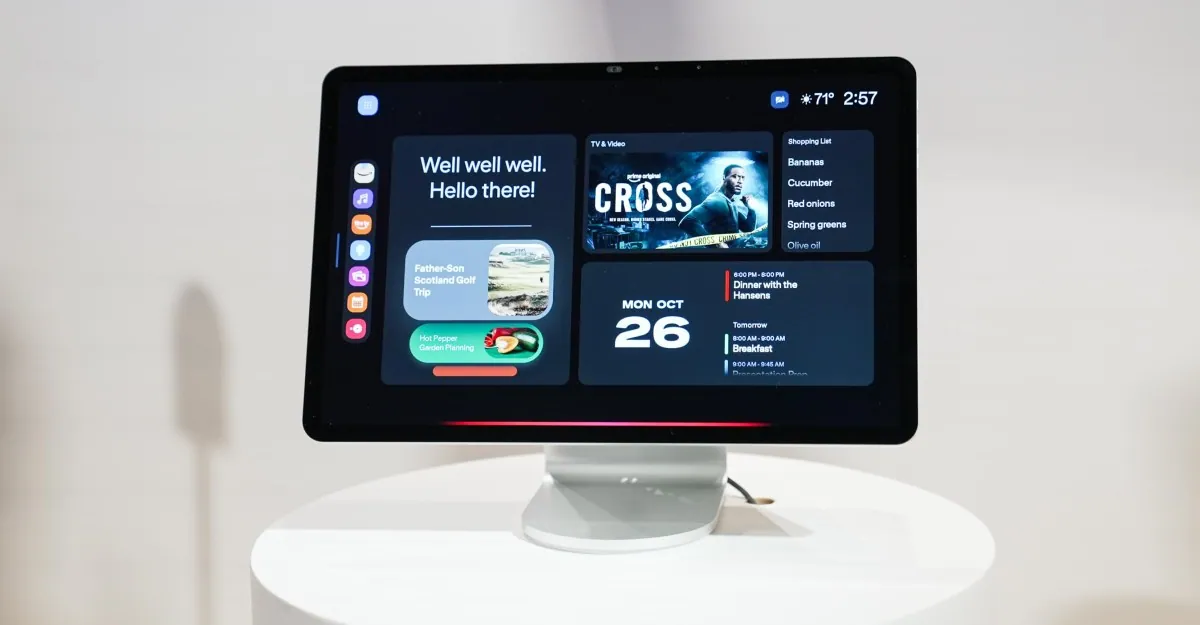
Amazon has a new flagship smart display, and it's the most expensive one it's ever made. The Echo Show 16, announced today, starts at $499.99 with a wall mount included, or $569.99 for a version with an anti-glare Nanomatte screen. Both are available for preorder now with a $100 discount ahead of release later this year, according to The Verge, which got early hands-on time with the device at a media event in New York.
That's double the price of the current Echo Show 11, and $200 more than Apple's newly announced HomeView smart display. For a product category that's struggled to prove it's worth owning at all, that's a steep bet.
What you get for the money is Amazon's most capable Echo Show software to date, built around a feature called Screen Styles. Instead of one fixed home screen, you can now choose between a family organizer, a smart home dashboard, an Alexa widgets screen, or a digital photo frame, and set it to stay on permanently or activate when you walk up. It's a genuine shift for a device category that's historically been voice-first, with the screen acting as a secondary display for whatever Alexa happens to be saying. The Verge notes Amazon has been building toward this kind of touch-first functionality for years, and the Show 16 feels like the payoff.
Hardware that looks more like a tablet than a smart speaker
Physically, the Show 16 doesn't look much like past Echo Shows. With its size and slim bezels, The Verge's hands-on describes it as closer to Amazon's new Alexa Tablet Pro 12 than to a traditional smart display, right down to sharing the optional Nanomatte screen and swapping Amazon's own AZ3 chip for a MediaTek processor. Panos Panay, Amazon's head of devices and services, told The Verge that "a lot of the same work went into this as the tablet."
Mounted on one of two optional stands, the device reportedly starts to resemble a small iMac, though The Verge's reviewer noted it edges toward too large for a typical kitchen counter. It's notably thinner than both the Echo Show 15 and the similarly priced Echo Show 21, with narrower bezels than either.
In the hands-on, the full HD screen came across as bright, responsive, and sharp, with deep blacks. Audio comes from a slim speaker bar running the width of the display, packing eight custom woofers and two tweeters. The Verge's reporter described the sound, tested with a Luke Combs track, as clear and loud, better than a typical tablet and roughly on par with the Echo Show 11, though lacking some depth. The device also adds a fourth microphone and repositions them, though that wasn't tested at the event.
A household hub, not just a speaker with a screen
The real pitch for the Show 16 is as a family command center: a shared calendar, a new meal-planning feature, family photos, smart home controls, and video doorbell alerts, all in one place. It also runs the complete Fire TV interface and ships with a redesigned Alexa remote.
When you step away, the screen can switch to one of two ambient modes: a photo frame, or the existing Alexa Recommendations screen that surfaces weather, news, and other content. Amazon didn't demo the Recommendations screen at the event, but Aidan Marcuss, incoming VP of Alexa and Echo, told The Verge it will "continue to offer the broad variety of content, just as it does now." That includes full-screen ads, Marcuss confirmed, though he said they'll stay confined to that one screen rather than appearing on the customizable home screens, and users can disable Alexa Recommendations entirely.
Navigation gets an upgrade too, with a new favorites bar accessible from most screens that functions as a quick-switch menu for apps and Alexa skills. In The Verge's hands-on, it opened instantly and jumped directly to the selected screen, making the Show 16 noticeably easier to use by touch than earlier models.
Alexa Plus gets sharper, and the screen finally earns its keep
The Show 16 is built around Alexa Plus, Amazon's AI-upgraded assistant, which Daniel Rausch, the outgoing VP of Alexa and Echo, said has gotten a capability boost. According to Rausch, it now has "access to more models and now has more depth of reasoning, is more capable of multitasking, and better at breaking down both complex tasks and vague tasks."
One new feature, called "next best actions," has Alexa proactively suggest follow-ups based on earlier conversations. The Verge's demo included Alexa recommending where to buy hardware cloth after a conversation about building a chicken coop, and suggesting hiking trails and YouTube videos after a conversation about a trip to Scotland. These suggestions live in a new card-based interface that also shows up in the Alexa app and on Alexa.com, functioning as a kind of memory layer you can revisit, and which can be pinned to the Show's widget screen. It's a more visually useful way to interact with Alexa than the current Echo Show setup, which The Verge notes simply fills the screen with white text on a blue background.
The other major software overhaul is the smart home map, rebuilt from the version Amazon launched in 2023. It now renders a 3D, real-time view of your home and surrounding property, letting you tap lights, locks, and cameras directly on the map and watch the display update live, for instance showing a room light up the moment you switch it on. It also pulls in footage from connected Ring cameras, so if someone approaches the house, a figure appears on the map that you can tap for a live camera feed.
The catch: most of this will cost extra on older devices
Amazon says the new interface and features will eventually roll out to existing Echo Show devices, though it hasn't given a timeline. There's a significant catch, though: Marcuss confirmed to The Verge that while the customizable Screen Styles come free on the Show 16, accessing them on older Echo Show models will require a subscription. He didn't specify pricing.
That detail underscores the core tension around the Show 16. The Verge's assessment, after hands-on time, is that Amazon may have finally cracked the smart display's long-running identity problem, a category that's often promised too much and delivered a mediocre version of everything. The software here looks like a real step forward. Whether that's worth $500, especially with Apple now in the smart display market at a lower price point, is the question Amazon hasn't answered yet.