NASA Reopens the Door on a Hubble Rescue Mission
A new industry request signals the agency is seriously weighing whether to boost the aging telescope's orbit rather than let it burn up around 2033.
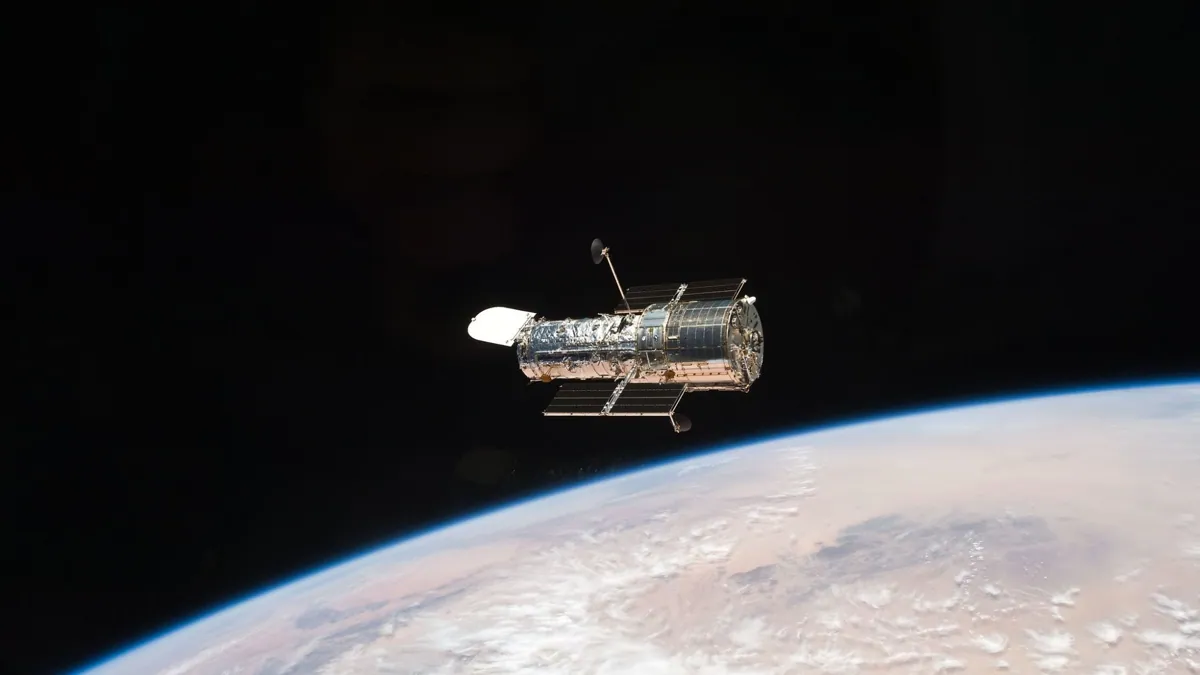
NASA is once again asking whether something can be done to save the Hubble Space Telescope. On October 29, the agency issued a request for information seeking "in-space servicing" capabilities, including options to boost Hubble's orbit or even upgrade its capabilities. The request also leaves room for the opposite outcome: a controlled reentry or orbital disposal once the mission ends.
The timing matters. Hubble's orbit is degrading because of atmospheric drag, and NASA says the telescope will naturally fall back to Earth in 2033 or 2034. Any servicing mission would need to happen by 2032, which gives the agency roughly six years to decide whether, and how, to act.
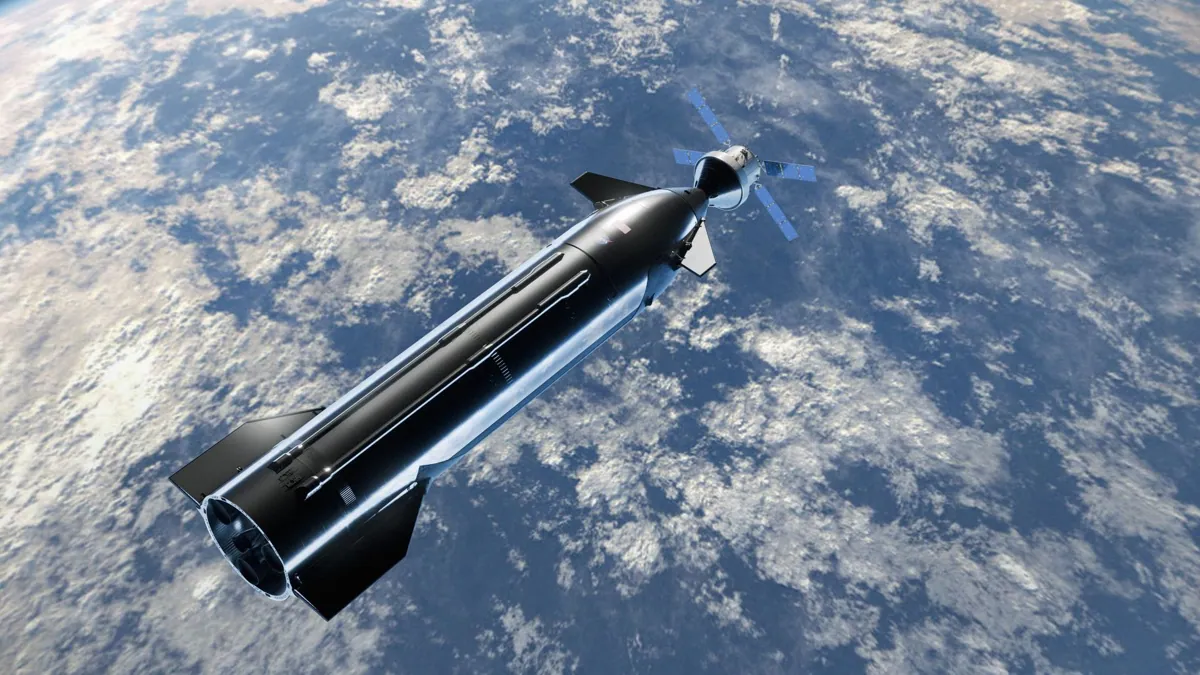
This isn't the first time someone has floated rescuing Hubble. In 2022, SpaceX founder and billionaire Jared Isaacman pitched using SpaceX hardware for a servicing mission. NASA turned it down, citing risk to an observatory that was, and still is, working fine. The difference now is that Isaacman became NASA's administrator in December 2025, and he's publicly reopened the conversation he once started as an outsider.
In an October 30 agency statement, Isaacman said Hubble's scientific output means NASA should "be looking at every reasonable opportunity to keep it delivering for as long as possible," particularly if that proves cheaper than launching a replacement. On X the same day, he added that it's "still worth exploring the options," referencing a previous "far lower-cost solution" the agency had looked at. "That was then," he wrote. "Still worth the effort — Hubble deserves it."
A 35-year-old workhorse
Hubble launched in April 1990 through a partnership with the European Space Agency and was serviced five times by astronauts on space shuttle missions, the last in 2009. Since then, it's had no human touch at all, running on momentum and good engineering.
The science case for keeping it alive is substantial. Hubble's observations helped demonstrate that the universe's expansion is accelerating, a finding that earned a Nobel Prize. Its work spans planets, stars, and galaxies, and NASA says its data has fed at least 23,000 published scientific papers. It also regularly pairs with other telescopes for joint observations. Demand hasn't faded with age either. According to NASA, astronomers currently request about seven times more observing time than the telescope can actually provide each year.
There's also the public's attachment to it. Images like the Eagle Nebula's "Pillars of Creation" have become part of popular culture, revisited and re-released multiple times since Hubble first captured them. That combination of ongoing scientific output and public affection is a big part of why this keeps coming back as a question NASA is willing to entertain.
A cautionary recent example
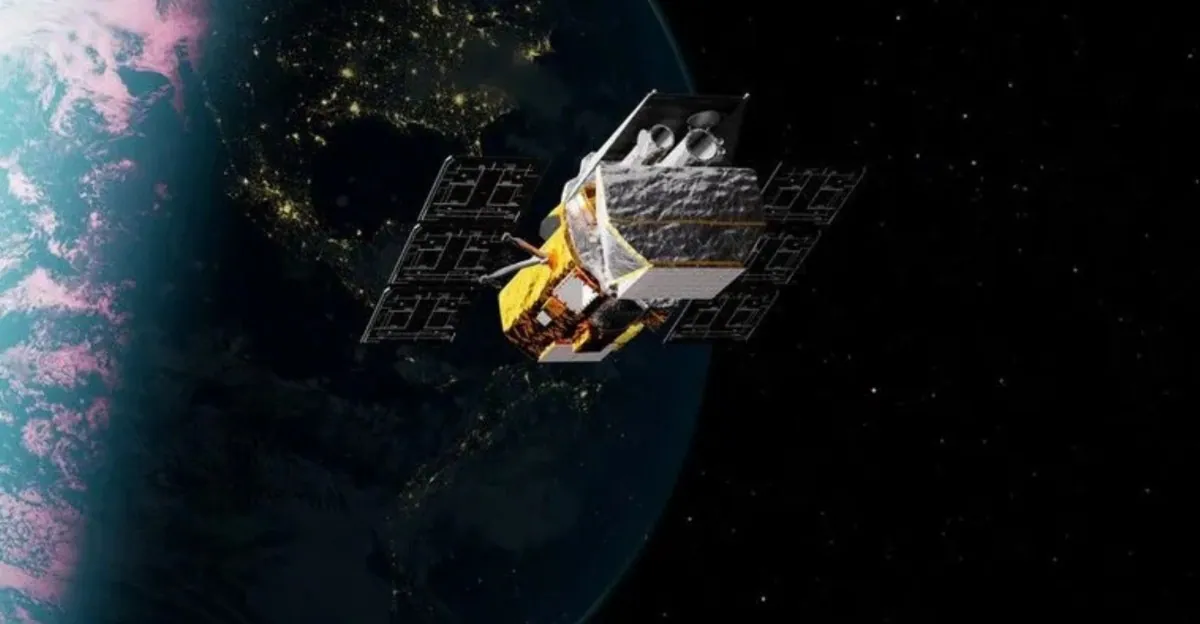
NASA isn't approaching this blind. Earlier this year, the agency worked with Katalyst Space Technologies on a $30 million mission to boost the orbit of the Neil Gehrels Swift Observatory, another aging spacecraft losing altitude to drag. That drag problem was made worse by a spike in solar activity, which swelled Earth's atmosphere and sped up the decay of low-orbit satellites.
The Swift rescue launched successfully this summer, but Katalyst's LINK spacecraft ran into control issues and never managed to rendezvous with the observatory. Swift is expected to reenter the atmosphere Tuesday, after 22 years in operation, well beyond its original two-year design life.
That outcome is a reminder that even a well-funded, fast-tracked servicing attempt can fail at the hardest part: actually catching up to and docking with an uncooperative spacecraft in orbit. It's reasonable to assume that experience will shape how NASA evaluates whatever proposals come in response to the Hubble request.
For now, nothing is decided. The RFI is a fact-finding step, not a commitment to fly a mission, and NASA has explicitly kept a dignified end-of-life option on the table alongside any rescue scenario. But with Isaacman now running the agency and publicly pushing to keep exploring the idea he once pitched as a private citizen, Hubble's path toward 2033 just got a lot more interesting to watch.