Apple's First Smart Home Event Is a Hardware Story With a Software Problem
A new display and refreshed speakers could put Apple back in the smart home conversation, but whether Siri's AI overhaul actually works will decide if any of it matters.
Apple is holding its first event built entirely around the smart home this week, and for a company that has spent a decade treating connected gadgets as a side project, that alone is notable. The "Welcome Home experience" happens Tuesday, October 13th, in New York City, and while Apple hasn't confirmed what's coming, the leaks point to exactly what you'd expect: new hardware, finally, for Apple Home.
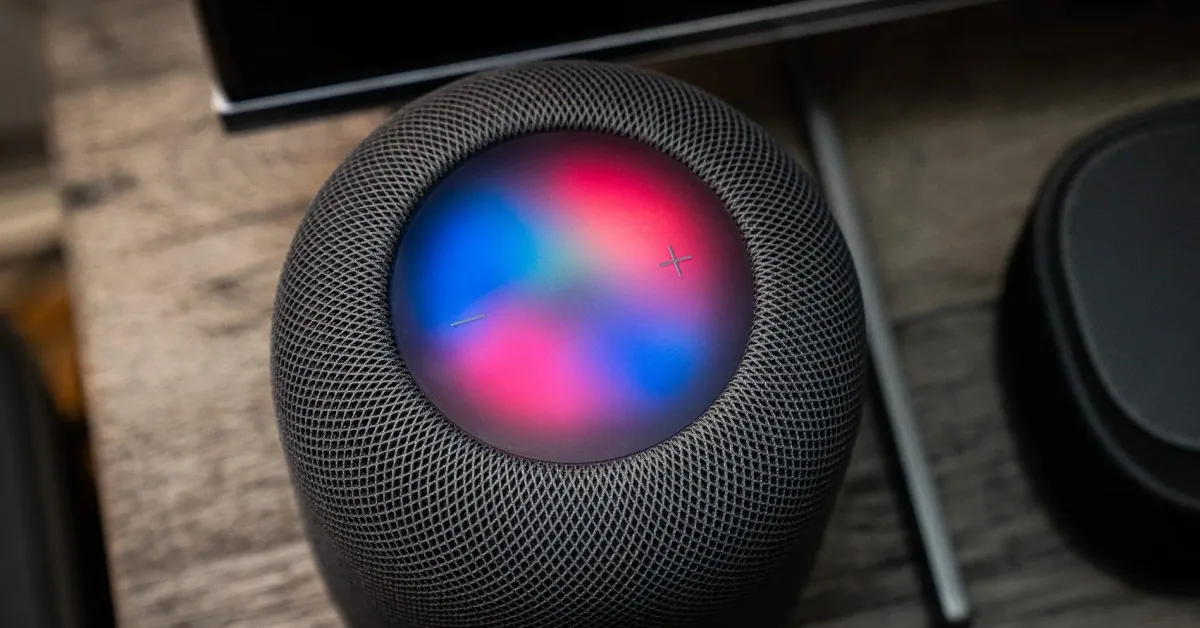
According to Bloomberg, Apple will introduce a dedicated smart home display alongside a refreshed HomePod Mini and a new Apple TV. MacRumors reports the display may carry the name HomeView. If the reporting holds up, it's arguably the first hardware Apple has built specifically for its smart home platform since HomeKit launched back in 2014 — everything since has really been a speaker or a streaming box that happened to also control your lights.
The timing has a bit of symmetry to it. Apple announced the original HomePod Mini on October 13th, 2020, exactly six years before this week's event. The current Apple TV 4K is four years old. Neither of those products was ever meant to be the centerpiece of a smart home; they were content devices with home automation bolted on. The new display, by contrast, is reportedly built to actually be that centerpiece, which is something Apple Home users have been asking for since the platform's early days.
A familiar-looking screen, an unfamiliar price
Smart displays aren't new. Amazon and Google have been shipping touchscreen speakers for years that show camera feeds, make video calls, and let you tap through smart home controls, but the category hasn't evolved much. For most owners, the device's real job ends up being a glorified digital picture frame.
Based on the leaks, Apple's version doesn't sound like a dramatic break from that formula. Bloomberg describes a 6-inch square screen, available either on a speaker base or mounted to a wall, with facial recognition that can surface your personal messages and calendar, a stripped-down touch interface for locks and thermostats, and support for FaceTime and intercom calls. None of that is groundbreaking on its own. What stands out is the rumored price: $350.
That number only makes sense if the software underneath is doing something the competition hasn't managed yet. And according to Bloomberg, that's exactly the plan — the display is said to launch with a new operating system, homeOS, built around Apple's revamped Siri AI.
The real news isn't the screen
Siri's generative AI overhaul has been conspicuously absent from Apple's home gadgets. Talk to a HomePod or Apple TV today and you still get the old, rules-based Siri, the one that can set a timer but fumbles anything more open-ended. If homeOS brings the new Siri into the home for the first time, that's the actual headline here, not the display itself.
Apple is late to this particular party. Amazon and Google both rolled out generative AI versions of their home assistants last year, and neither has nailed it. Alexa Plus, first announced in 2023 but not launched until 2025, is only recently starting to work as intended. Google's Gemini for Home remains in early access and is split in a confusing way — the more capable Gemini Live assistant is walled off from actually controlling your house. Apple's own Siri AI only shipped last month, years after Apple Intelligence was first announced in 2024.
Every company chasing this has hit the same wall, and it's easy to see why. The home is a messy, multi-user space wired into things that matter: HVAC systems, door locks, security cameras. An AI assistant that fumbles a request in your inbox is annoying. One that fumbles a request connected to your front door is a different kind of problem. There's no universal setup, either — every household's needs and device mix are different, which makes a single plug-and-play AI solution much harder to pull off than it sounds.
Where Apple's foundation actually helps
Some of the groundwork for interoperability already exists at the protocol level, thanks to open standards like Matter and Thread, which Apple helped create. But protocols aren't software, and getting devices to speak the same language doesn't automatically make a platform pleasant to use. That's still on the companies building the apps and the assistants.
This is arguably where Apple has an opening. Four years ago, Apple rebuilt HomeKit's underlying architecture and overhauled the Home app, which also loosened the strict approval process that had limited which third-party devices could join the platform. That's a cleaner foundation than it had before, with less legacy baggage to drag into an AI rebuild. And notably, Apple reportedly used Google's own Gemini models to help build Siri AI — which means Apple's real opportunity isn't some secret technical edge, it's execution. Google has had its own AI model struggling to deliver a good home experience through Gemini for Home; there's no guarantee Apple avoids the same stumbles just because the underlying tech overlaps.
If it does work, the upside is real. A smart home that actually understands context — who's home, where they are, what every connected device is currently doing — could start being genuinely proactive: flagging that the oven's on with nobody around, suggesting the AC switch off because a window's open, routing a notification to whichever room you're actually standing in.
What Apple Home is missing today
That's still a ways off. Right now, Apple Home has real gaps. It doesn't support categories like fridges, washing machines, or EV chargers. It can't access every feature on many devices it does support. And its automation tools are thin compared to rivals, notably lacking conditional logic inside the app — the "if this, then that" kind of rules power users rely on. The app is easy to use partly because it's underpowered.
A capable Siri could paper over a lot of that by letting people describe what they want out loud instead of hunting through menus. Alexa Plus already lets users build routines by voice. Gemini for Home has a chatbot that takes natural-language requests to set up automations. The pattern across the industry is clear: AI as a shortcut around clunky interfaces, not just a novelty for small talk.
Does anyone actually want this?
There's a more fundamental question hovering over all of it: does the mainstream actually want a smart home? Plenty of people have been burned by systems that promise convenience and deliver weekend troubleshooting sessions instead — a garage door that won't respond, a routine that silently stopped working. The most committed users have migrated to Home Assistant, a deeply customizable platform that can do almost anything, provided you're willing to put in real effort. For everyone else, beyond a handful of specific fixes, the smart home has often felt like more trouble than it's worth.
Apple is also reportedly working with LG and other manufacturers on an "Apple Home Collection," aimed at bringing Apple's design sensibility to third-party smart home products. It sounds like a step back toward the old closed-garden HomeKit approach, but Matter is supposed to keep those products talking to other platforms too. Apple doesn't need to manufacture every smart home gadget. It just needs to make sure whatever you buy works reliably inside its ecosystem.
Privacy will matter as much as capability here. Apple has built its brand on keeping data close to the device, and extending Apple Intelligence's cloud-based features into the home raises the stakes on that promise in a way a phone camera roll never did.
A $350 price tag on a new display is a lot to ask people to swallow on specs that, on paper, mirror products Amazon and Google have sold for years. The hardware is catching up. Whether it was worth the wait depends entirely on whether Siri can finally make a smart home feel smart.