Tesla's "Flying" Roadster Demo Leaves the Internet Equally Awed and Unconvinced
A rocket-powered stunt reel outside a SpaceX facility reignited the old flying-car fantasy, but the skepticism was just as loud as the applause.
Elon Musk stood on a stage outside a SpaceX test facility in Texas last night and showed the world a Tesla that flies. Or at least a Tesla that can jump, flip, and briefly leave the ground using rocket thrusters borrowed from SpaceX. The reaction online was immediate and split roughly down the middle: people who think they just watched the future arrive, and people who think they just watched an elaborate magic trick for a car that won't exist as advertised.
The vehicle in question is the long-promised Tesla Roadster, and the demonstration was built to be unmissable. Musk opened by telling the live audience why he needed them there in person at all: "We need an audience to prove it's not AI or SI, so you guys can tell people you saw it with your eyes." He framed the whole thing as proof of concept for what happens, in his words, when "the world's best car company" teams up with "the world's best rocket company."
The car itself was piloted remotely for the demo, which Musk said was done to "make sure we don't kill anyone" — a telling admission for a company about to sell this thing to regular drivers. The stunt sequence started with the Roadster facing a steep ramp, where it used suction to drive up and park upside down. Then it reversed course, raced up the ramp, launched off the end, fired its thrusters to right itself mid-air, and landed upright.
Rockets, Not Wings
This isn't a flying car in the Jetsons sense. There's no sustained flight, no hovering commute above traffic. The thrusters, mounted in the rear and along the bottom of the vehicle, are designed to let the Roadster "basically fly like a rocket" for short, controlled bursts — enough for the kind of acrobatics shown in the demo, not enough to replace an airplane or even a drone.
Musk was candid that this version of the car trades off practicality for spectacle. He called it "not necessarily a safety-optimized car," and said earlier in the event that it would likely become "the only manually driven car that Tesla makes" over the long term — an odd distinction for a company that has built its brand on autonomous driving ambitions. He also put a date on it: 2028 for production. Given Tesla's track record with self-imposed deadlines, that number is worth filing under aspirational rather than certain.
The Internet Reacts
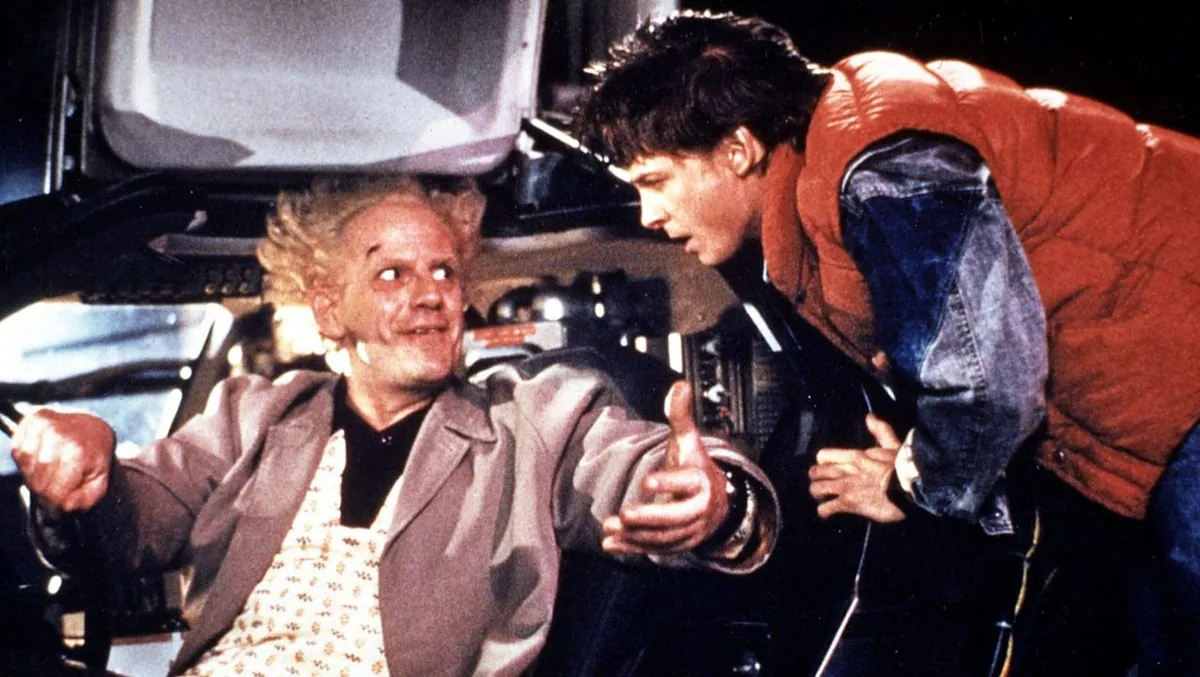
The spectacle landed exactly where Musk probably hoped it would: everywhere. Christopher Lloyd, who played Doc Brown in the Back to the Future films, posted a simple reaction on X: "Finally...flying cars." Other users circulated highlight clips of all four stunts from the demo, and the car's acrobatics drew enough comparisons to the video game Rocket League that it became a running joke online, with one user noting that Tesla's engineers had apparently taken the comparison as inspiration rather than insult.
But the skepticism was just as sharp. Tech reviewer MKBHD summed up the disbelief many felt watching a company claim a roughly 4,000-pound vehicle could perform flips and hit speeds over 380 mph — close to half the speed of sound — while also promising it would ship to customers in 2028. His response: "This is a prank, right?"
Even people inclined to be impressed hedged their enthusiasm. NASA administrator Jared Isaacman called it one of the wildest product unveilings he could remember, but added that he wasn't sure "how quickly drivers are going to be leaping over each other in traffic" to get one — a nod to the gap between a flashy stage demo and a car that regular people can actually buy, insure, and legally drive.
That gap is the real story here. A remotely piloted prototype doing choreographed stunts at a controlled test site is a very different thing from a production vehicle that's street legal, safe without a professional pilot, and available at scale by 2028. Tesla has a history of announcing ambitious timelines for the Roadster specifically and missing them by years. Whether this flying version ever reaches customers, or whether regulators in most places would even allow it on public roads, remains completely unanswered.
For now, what Tesla has delivered is a viral moment: a car that genuinely left the ground on command, in front of witnesses, doing something no production vehicle has done before. Whether that moment becomes a product or just the internet's latest "Elon said what?" clip is going to take years to find out.