China Lays Out a Four-Mission Roadmap to Put Astronauts on the Moon by 2030
New details shared at a Beijing spaceflight conference show how Beijing plans to land crew on the lunar surface without a rocket as powerful as NASA's.
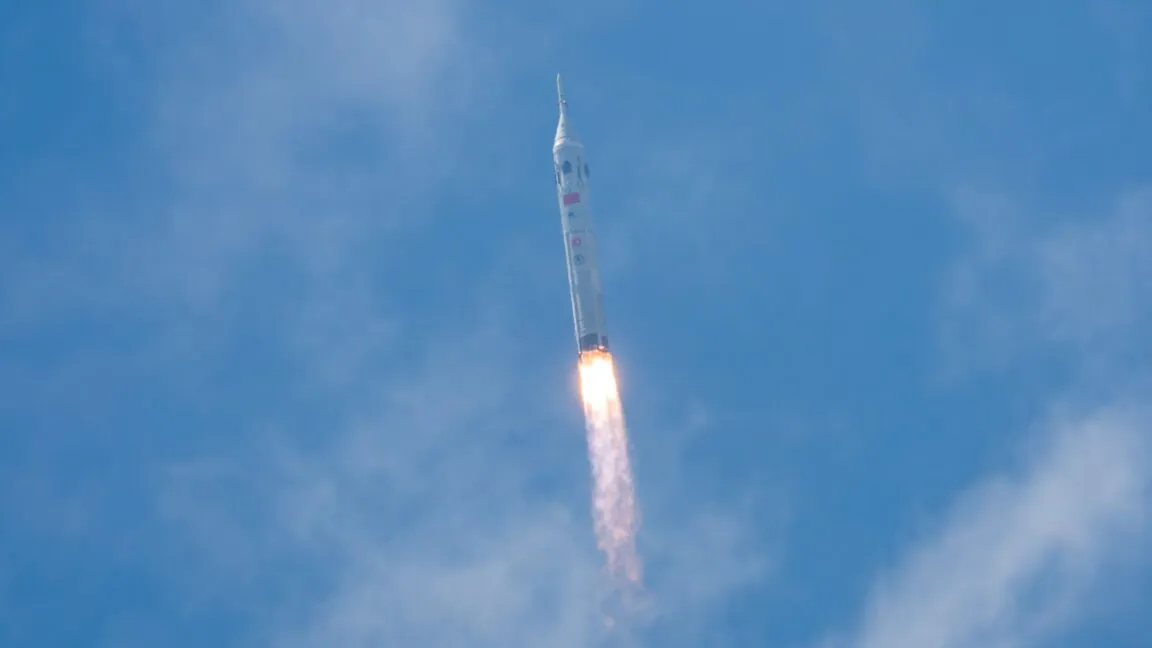
China has finally put real dates on its race to the Moon. At the Seventh Manned Spaceflight Conference in Beijing this weekend, officials — including Wang Xiang, chief designer for the lunar exploration program — presented the country's most detailed public timeline yet for landing astronauts on the lunar surface "before 2030."
The plan unfolds across four missions over roughly three years, according to slides shared at the conference. It starts with an uncrewed test, expected in early 2027, of the Long March 10A rocket paired with the Mengzhou spacecraft in low-Earth orbit. The Long March 10A is a single-stick variant, meaning it flies without the side boosters that will show up in later missions.
In 2028, China plans to test the larger booster-equipped Long March 10 alongside the Lanyue lunar lander, including a full descent to and ascent from the Moon's surface, without a crew aboard. The real choreography starts in 2029, when two Long March 10 rockets are set to launch around the same time, one carrying an uncrewed Mengzhou and the other the Lanyue lander, with the two vehicles meeting up and docking in lunar orbit. If that works, the final step — targeted for "before 2030" — repeats that dual launch with astronauts riding on Mengzhou, culminating in a crewed landing.
That architecture tells you something about where China's rocket program stands relative to the US. NASA's Apollo missions in the 1960s and '70s sent crew and lander to the Moon together, riding a single Saturn V powerful enough to carry both. China doesn't have an equivalent heavy-lift vehicle yet, so it's splitting the job: one rocket launches the crew, a separate one launches the lander, and the two rendezvous in lunar orbit before anyone sets foot on the surface. It's a more complex sequence, requiring precise orbital rendezvous and docking around the Moon rather than just at launch.
One mission type is conspicuously absent from the current plan, at least for now: there's no equivalent of NASA's Artemis II or the old Apollo 8, flights where a crew travels out to the Moon and either loops into orbit or swings past it before heading home, as a dry run before attempting a landing. China does intend to fly Mengzhou with astronauts aboard before the lunar missions, but that will happen on trips to Tiangong, the country's space station in low-Earth orbit, rather than out toward the Moon.
A rare window into a secretive program
China's human spaceflight program has historically kept its cards close, so a public, dated roadmap like this is notable on its own. It gives outside observers, including NASA, a concrete set of milestones to track China's actual progress against, rather than relying on vague statements of intent.
That matters because the timing puts China and the United States on a near-collision course for the headline that matters most in this new space race: who gets a crew back on the Moon first. NASA has targeted a crewed lunar landing by 2028, which would put the US roughly a year ahead of China's "before 2030" goal, at least on paper. The US effort rests on hardware that's been in development far longer: the Space Launch System rocket, underway for about 15 years, and the Orion crew capsule, which predates even that.
Both countries are racing toward the same deadline, but the paths look different. NASA is counting on launch vehicles and spacecraft that have already flown, with heritage going back over a decade, while China is still working through a staged sequence of first-ever tests for the Long March 10, Mengzhou, and Lanyue hardware, each one a prerequisite for the next. Whether China's newly disclosed schedule holds will now be something the rest of the world can actually watch play out, mission by mission, starting with that first uncrewed Long March 10A test expected in early 2027.