Apple's Budget MacBook Neo Is Getting a Chip and Memory Bump — But Probably Not a Lower Price
New reporting points to an A19 Pro chip and more RAM for Apple's entry-level laptop, part of a broader Mac refresh that includes OLED screens for iMacs and eventually MacBook Pros.
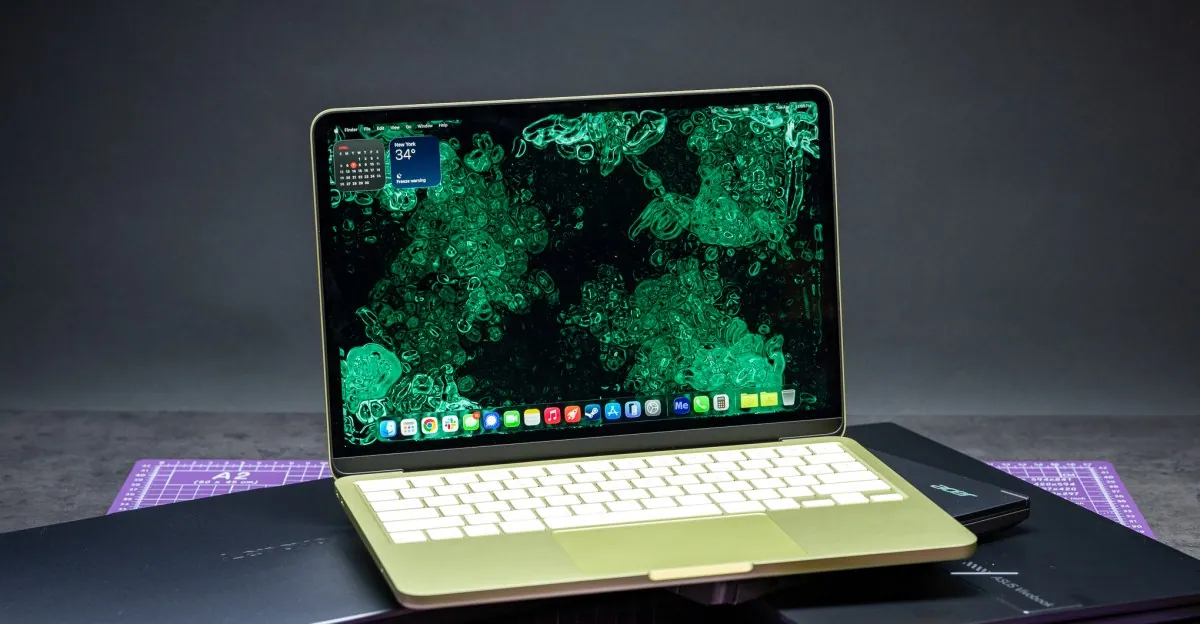
Apple's cheap laptop just found an audience, and now the company is reportedly working on making it better rather than cheaper.
According to Bloomberg's Mark Gurman, Apple is testing an updated MacBook Neo built around the A19 Pro chip, the same processor currently running the iPhone 17 Pro, iPhone 17 Pro Max, and iPhone Air. That's a notable jump from the current Neo, which uses the A18 Pro, a chip that first debuted in the iPhone 16 Pro. The upgrade tracks with an earlier report from analyst Tim Culpan, who flagged similar plans earlier this year.
The chip swap brings a practical benefit: more memory. Gurman reports the new Neo will likely ship with 12GB of RAM instead of the 8GB in the original model. For a laptop pitched as Apple's affordable option, that's a meaningful bump, since RAM has been one of the more obvious ways Apple has kept costs down on its entry-level hardware.
A cheaper laptop that may not stay cheap
Here's the catch. Component shortages across the industry are pushing hardware costs up everywhere, and Apple has already signaled where this is headed. The company raised prices across nearly its entire device lineup last month, and there's little reason to expect the next Neo to escape that trend. A pricier chip and more memory don't come free, and neither does whatever premium suppliers are charging right now for the components inside it.
There's another wrinkle that could push the entry price higher still: Gurman's reporting raises the possibility that Apple could kill off the base 256GB storage configuration, which is currently the cheapest way to buy a Neo. If that happens, the laptop's starting price could climb even without Apple touching the sticker price on any single configuration, simply by removing the low end from the lineup.
That's a tricky needle to thread for a laptop whose whole appeal has been its price. The Neo has apparently sold well specifically because it undercuts the rest of Apple's laptop lineup, so any moves that erode that gap are worth watching. Whether Apple manages to keep the new Neo close to its predecessor's starting price, or lets costs drift upward as the specs improve, will say a lot about how much the Neo's popularity depends on being genuinely cheap versus just being a genuinely useful Mac.
OLED comes to the rest of the Mac lineup
The Neo update is part of a much bigger wave of Mac changes Gurman is tracking. He reports Apple is also planning new iMacs with OLED displays, the desktop's first refresh since 2024. OLED panels, which produce deeper blacks and richer contrast than the LCD screens Apple currently uses across most of its Macs, would be a real upgrade for a machine whose display is basically the entire point.
Beyond the iMac, Gurman's reporting points to a longer runway of Mac hardware still in the pipeline: an M6 MacBook Pro, and OLED touchscreen MacBooks, both previously rumored and apparently still on track. Those OLED laptop models are expected sometime in late this year or early next year. Further out, Apple is reportedly planning a redesigned base 14-inch MacBook Pro running an M7 chip, targeted for next year.
Taken together, it's a picture of Apple methodically working OLED technology down through its Mac lineup, starting at the high end and eventually reaching more mainstream machines, while simultaneously trying to keep its budget laptop competitive on specs even as costs rise industry-wide. The Neo update is the near-term piece of that puzzle. The OLED iMac and MacBook Pro changes are the longer arc.
None of this is officially confirmed by Apple, and timelines on unreleased hardware have a way of shifting. But the pattern across Gurman's and Culpan's reporting is consistent enough to take seriously: Apple's laptop lineup is due for a broad refresh, and the cheapest Mac in the family isn't getting left behind. What buyers will actually pay for that upgrade is the open question.