Apple Finally Builds the Touchscreen MacBook It Spent 15 Years Mocking
After a decade of executives calling the idea fatiguing, pointless, or a bad compromise, Apple's new MacBook Pro has a touchscreen — and the explanation for the reversal is almost as interesting as the hardware.
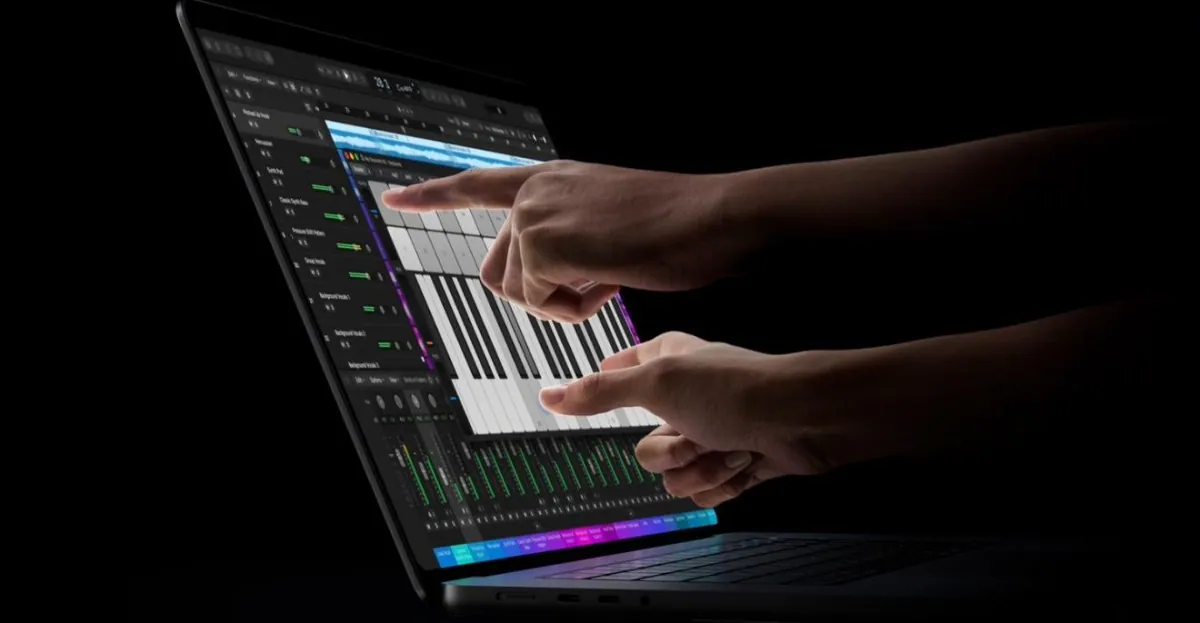
Apple just did the thing it spent 15 years telling everyone it would never do. The company has announced a touchscreen MacBook Pro, and if you want a sense of how big a reversal that is, consider the string of Apple executives who spent the last decade and a half explaining why it was a bad idea.
Steve Jobs set the tone in 2010, calling touchscreen laptops "ergonomically terrible." His argument was that touch surfaces aren't meant to be vertical, and that reaching up to poke a screen repeatedly makes "your arm want to fall off." Tim Cook picked up the theme in 2012, dismissing hybrid touchscreen-and-laptop devices as a forced compromise: "You can converge a toaster and a refrigerator, but those things are probably not going to be pleasing to the user." Software chief Craig Federighi called the Mac a "sit-down experience" in 2014 and said touch wasn't "the right interface" for it, adding that Apple wasn't "all that interested in building one." Four years later, he was still making the fatigue argument.
That's three separate Apple executives, over most of a decade, converging on the same no. Yesterday, the company reversed course anyway. Apple marketing chief Greg Joswiak offered the closest thing to an explanation in an interview with Wired, acknowledging that touch was overdue on the Mac: "There's a generation of young creators and young people using our MacBook Pros that expect to touch." CEO John Ternus, demonstrating the new machine, put it more simply: "You've gotta touch it to believe it."
What Apple actually built
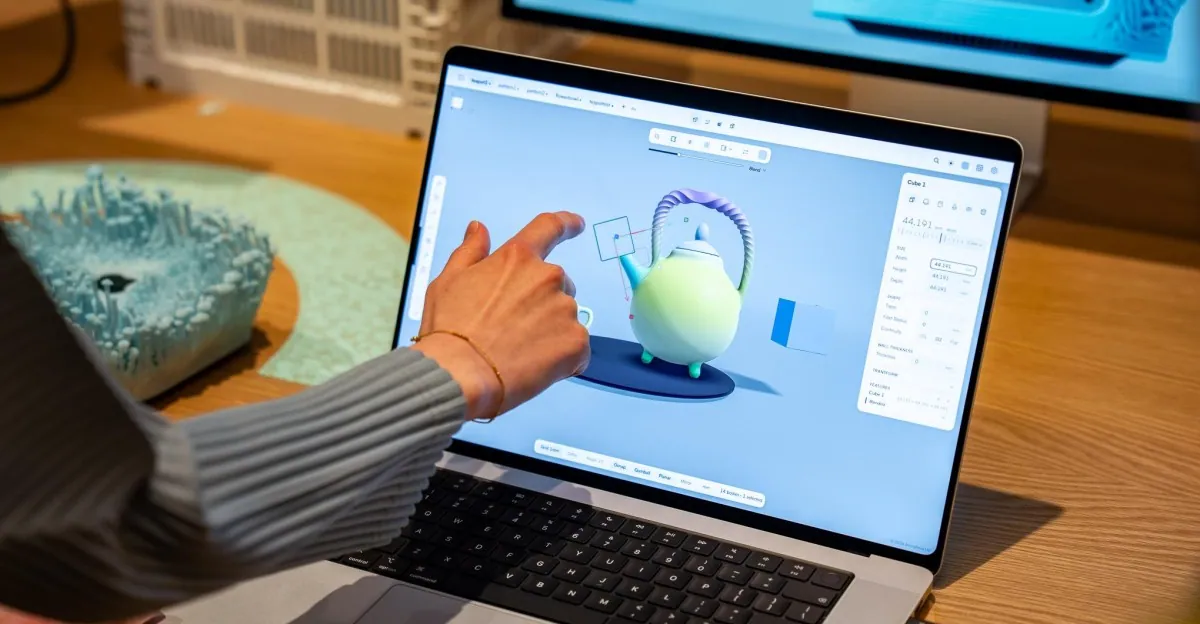
This isn't Apple reinventing the laptop. It's not a folding Surface-style convertible, and it's not the touch-first redesign Microsoft attempted with Windows 8. It's a MacBook Pro — still a clamshell, still opened like every other MacBook — with an OLED touchscreen bolted onto the existing form factor.
Getting there apparently required real engineering work. Apple told Wired's Steven Levy that it redesigned the laptop's hinge specifically to stabilize the screen and cut down on wobble, since a vertical display that flexes every time you poke it is a problem a conventional laptop screen never has to solve. Early hands-on demos suggest Apple hasn't eliminated the wobble entirely, but it looks sturdier than you'd expect.
The software side got just as much attention. Apple redesigned the menu bar so its targets expand and become easier to hit with a finger instead of a precise cursor. The red, yellow, and green traffic-light buttons used to close and minimize windows grow larger when you reach for them with touch. There's a set of touch gestures for swiping between desktop spaces, pulling up Mission Control or app exposé, and accessing the notification center — gestures that largely mirror what the trackpad already does, rather than introducing something new to learn.
The most notable addition is the Dynamic Island, the pill-shaped notification and status element that debuted on the iPhone 14 Pro four years ago. It's now on macOS, where tapping it brings up quick controls and volume or brightness changes surface in it directly. That's a meaningful signal on its own: Apple has already been folding iPadOS ideas like Stage Manager and Control Center into the Mac in recent years, and moving the Dynamic Island over continues that pattern. It raises the question of how much further Apple is willing to blur the line between macOS, iPadOS, and iOS.
Price, positioning, and the ghost of the Touch Bar
For now, touch is a premium feature. The touchscreen MacBook Pro starts at $2,899, close to $1,000 more than the standard MacBook Pro. That's a steep gate for the "young creators" Joswiak cited as the reason touch was overdue, and it suggests this is a first step rather than a full lineup rollout. If Apple follows its usual playbook, touch likely trickles down to cheaper MacBooks over time.
Apple has tried a version of this before and watched it fail. A decade ago, almost to the same week, Apple introduced the Touch Bar, the touch-sensitive strip that replaced function keys on the 2016 MacBook Pro and was pitched at the time as "revolutionary." App support never caught up, users found it inconsistent, and Apple quietly killed it in 2023. That history is the obvious shadow hanging over this launch: Apple now needs developers to build real touch support into their Mac apps, and getting third parties to commit to an Apple touch feature is exactly where the Touch Bar fell apart.
There's reason to think this time plays out differently. Windows developers have had more than a decade to get comfortable designing for touchscreens, so the muscle memory already exists in a way it didn't in 2016. Apple has also built in baseline touch behavior — scrolling, pinch-to-zoom — that works without any developer effort at all, which lowers the bar for apps to feel usable even before anyone updates them specifically.
Microsoft's long wait for vindication
Somewhere inside Microsoft, this is a very satisfying week. Cook's toaster-and-refrigerator line became a minor legend in the Windows and Surface teams; when Microsoft unveiled the Surface Pro 4 in 2015, former Windows chief Terry Myerson surprised former Surface chief Panos Panay on stage with a 3D render of a toaster fused to a refrigerator, a direct jab back at Cook.
The irony is that Microsoft earned the right to needle Apple the hard way. Windows got limited touch support as far back as Vista two decades ago, expanded to full multi-touch in Windows 7, and then went all-in with Windows 8's touch-first overhaul of the entire OS, aimed at a new generation of touchscreen and hybrid devices. Windows 8 overcorrected and alienated plenty of mouse-and-keyboard users in the process, but the Surface Pro that grew out of that era proved touch could genuinely add something to a PC, not just gesture at a tablet trend. It even pushed Apple to rethink what the iPad should be.
Apple is arriving at touch-on-a-laptop roughly a decade after Microsoft made its case for it, and with a far more conservative implementation than Windows 8 ever attempted. The more interesting question isn't whether touch belongs on a MacBook now. It's whether this is Apple quietly preparing to let macOS and iPadOS grow closer together, after years of insisting they're better off kept apart.