Apple's 'Pro and Tell' Event Could Finally Deliver a Touchscreen MacBook Pro
The company already spent the week refreshing the iMac and entry-level MacBook Pro with new chips, apparently to clear the stage for a bigger reveal in Los Angeles.
Apple kicks off its "Pro and tell" event today at 1PM ET in Los Angeles, and if the rumors hold up, the company is about to do something it has never done before: put a touchscreen on a MacBook.
The event caps an unusually busy stretch for Apple. It comes just weeks after the company unveiled HomeView, its first smart display, and a little over a month after the iPhone Duo introduced Apple's first foldable phone. All of it falls under the tenure of John Ternus, who became Apple's CEO on September 1st and has since presided over a steady drumbeat of releases: the iPhone 18 Pro, new Apple Watches, AirPods 5, and the HomePod Mini 2. A touchscreen MacBook Pro would be the latest entry in that run of firsts.
Apple spent the days leading up to the event quietly clearing its throat. On Monday, it introduced an updated iPad Mini with a larger OLED display. On Tuesday, it refreshed both the iMac and the entry-level MacBook Pro with its new M6 chip. Those announcements landed outside the keynote, which suggests Apple wanted the spotlight at Wednesday's event trained squarely on something else — most likely that touchscreen laptop.
What's already confirmed
The iMac update is the more significant of the two Tuesday refreshes. Apple's all-in-one desktop now runs on the M6 chip, the same silicon that debuted in the Mac Mini back in August, with pricing starting at $1,499. The design is otherwise unchanged. What makes this upgrade notable is the gap it closes: the iMac's last chip refresh came with the M4 two years ago, meaning Apple skipped the M5 generation on this machine entirely. The M6 is also Apple's first chip built on a 2nm process and includes a dual 16-core Neural Engine for on-device AI work. According to Apple's press release, the change gives the M6 iMac "up to 5x faster on-device AI performance" compared with the outgoing M4 model.
The entry-level MacBook Pro got a smaller bump. Apple moved it from last year's M5 chip to the new M6, following the same upgrade path the Mac Mini took in August. The jump from M4 to M5 a year ago had been a modest one, keeping the same design, port layout, webcam, and speakers, with the main changes being faster storage and the option to spring for a 4TB configuration at an extra $1,200. Nothing in Apple's announcement suggests this year's M6 refresh changes that formula beyond the chip itself.
Both of those machines are expected to make another appearance at the event, but having already been announced, they're unlikely to be the headline act.
The main event
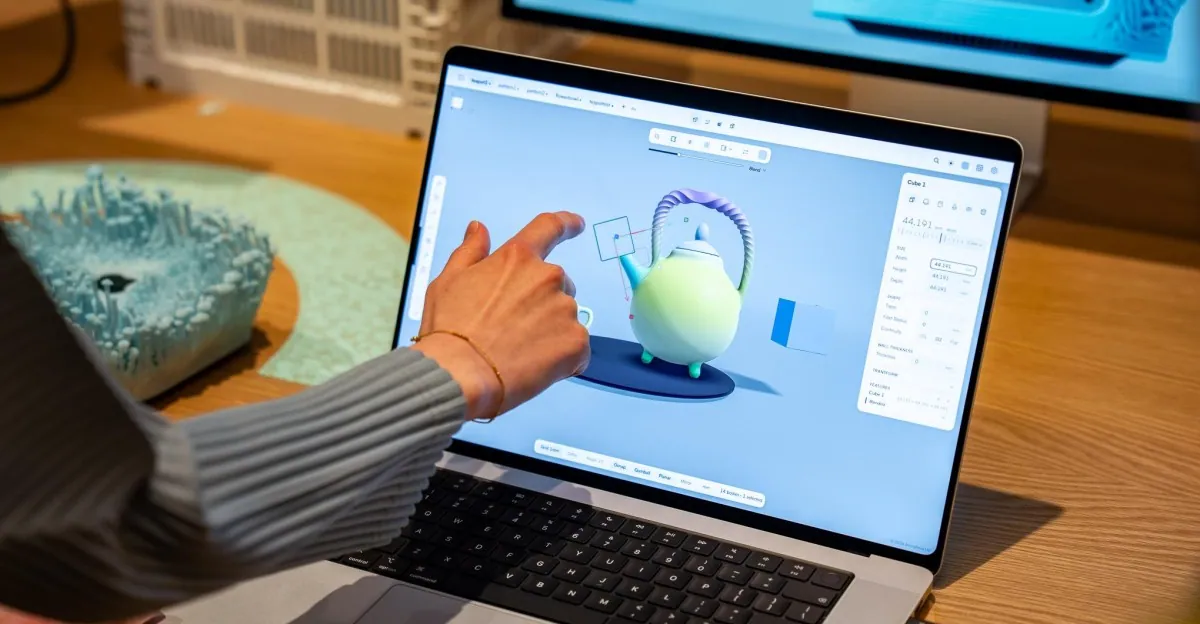
That role, according to Bloomberg's reporting ahead of the show, belongs to a new MacBook Pro built around an OLED touchscreen. Bloomberg's sourcing points to a laptop that's also lighter than the current model and borrows a design cue straight from the iPhone: a Dynamic Island–style cutout built into the display. Apple is also expected to show a 14-inch MacBook Pro at the event, alongside the newly updated iMac.
A touchscreen Mac would mark a real departure for Apple, which has resisted the idea for years even as touchscreen Windows laptops became common. Pairing it with a Dynamic Island treatment would also be the clearest sign yet of Apple folding iPhone-era design language into its Mac lineup.
The iPad Mini refresh that arrived Monday fits the same pattern. Alongside the larger OLED display, Bloomberg reported the new Mini also repositions its selfie camera onto the landscape edge of the device, a layout change that should make video calls look more natural when the tablet is held horizontally.
Apple's SVP of Marketing, Greg Joswiak, teased the week on X, calling it an "exciting week" that started with the iPad Mini's debut. It's a modest tease by Apple's usual standards, but it lines up with a week that's already delivered three hardware updates before the keynote even started.
What to watch
The real question Wednesday isn't whether Apple updates its Macs — that's already happened. It's whether the company finally commits to touch input on a MacBook Pro after years of speculation, and how it handles the transition from trackpad-and-keyboard computing to something that borrows more directly from the iPhone and iPad. If the Dynamic Island detail holds up, it would also signal that Apple sees its phone design language as the connective tissue running across every category it sells, from phones to foldables to smart displays and now, possibly, laptops.