Inside Samsung's Bet on a Memory-Chip Comeback
At a sprawling construction site south of Seoul, Samsung is racing to build the fabs it needs to catch up in the AI memory market.
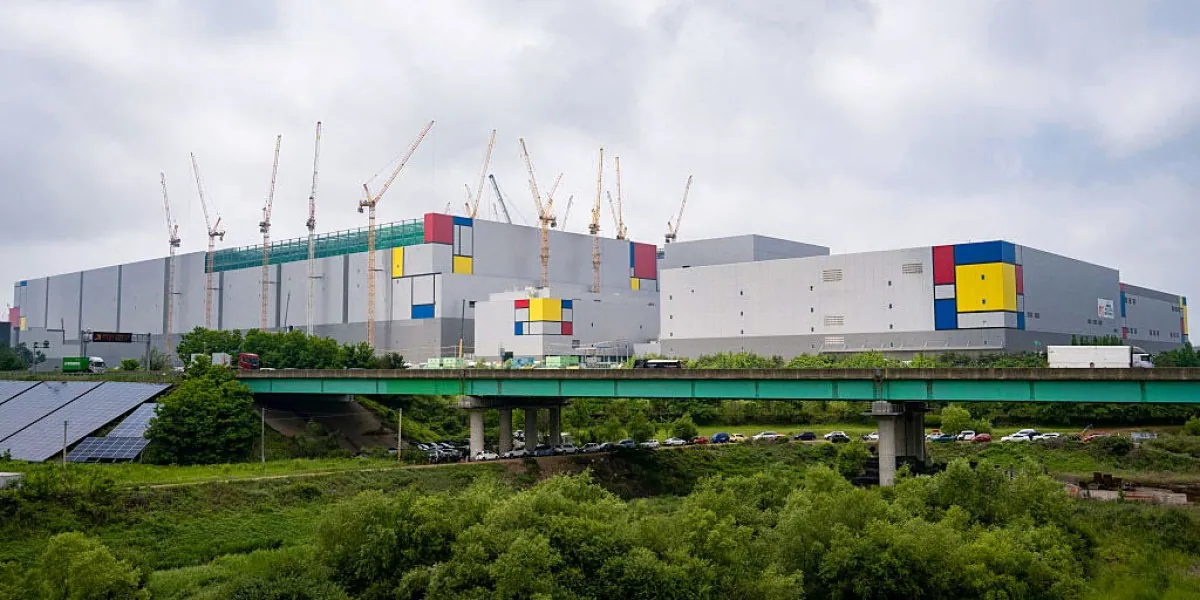
South of Seoul, in the farming city of Pyeongtaek, Samsung is running one of the largest chipmaking buildouts in the world, and the pace shows no sign of slowing. Three fabs on the site already operate around the clock. A fourth is coming online. A fifth, whose construction was paused during a 2024 downturn in memory chip demand, is back underway now that AI-driven demand has returned with force.
The scale is hard to overstate: the campus covers roughly the same footprint as Central Park in New York City. Rice paddies sit right up against the fab buildings. Thousands of construction workers, dressed in black with sky-blue safety vests, move through the site in shifts, breaking for lunch at nearby buffets, diners, and beef stew restaurants before heading back to work.
The urgency comes down to one thing: generative AI runs on GPUs, and GPUs need stacks of specialized memory chips packaged alongside them. As demand for that AI hardware has climbed, so has demand for the memory that feeds it. Samsung expects that demand to keep surging through 2028, according to the company.
That timeline matters because Samsung has ground to make up. For years, its domestic rival SK Hynix has led the global market for the high-bandwidth memory chips that power Nvidia's AI accelerators, pulling ahead of Samsung in a segment Samsung used to dominate. Separately, Taiwan's TSMC continues to control the foundry business, manufacturing chips designed by other companies. The Pyeongtaek expansion is Samsung's attempt to reassert itself in memory, the category most directly tied to the AI boom's hardware needs.
The human scale of the project is just as striking as its physical footprint. Choi Hye-rin, a 35-year-old safety officer on site, boards a shuttle bus at dawn from Songtan, an older district near the complex, to oversee the safety of a crew building cable ducts. Her work includes writing reports, inspecting equipment, and checking the chemicals handled on site. She's one of hundreds of women working at the complex, many employed as spotters who walk ahead of heavy machinery to keep it from colliding with workers or structures.
Safety messaging is everywhere. Banners strung from the tower cranes read "Even if the work runs late, don't rush." Helmets carry stickers pledging "I will not work if it's not safe." A giant LED scoreboard even displays winners of a contest for writing poems about workplace safety. It's an unusual mix of heavy industry and morale-building, all wrapped around a construction timeline that can't afford to slip given how fast AI memory demand is moving.
The pay reflects the demand for labor, too. Hye-rin earns 140,000 won, or about $97, a day, which she says is higher than other construction sites offer, and she expects the current building boom to keep her employed for a long stretch. As she put it, "You just keep coming back."
What's happening in Pyeongtaek is really a physical manifestation of a chip-industry scramble playing out across the global AI supply chain. Every company building AI accelerators needs the memory to go with them, and the companies that can supply that memory at scale stand to capture an outsized share of a market that's still growing. Samsung's bet is that enough new fab capacity, built fast enough, can close the gap SK Hynix opened up in high-bandwidth memory, the category Nvidia's AI chips depend on most.
Whether that bet pays off will depend on execution as much as capacity. Fabs that come online late or produce chips that don't meet the exacting standards AI customers demand won't help Samsung catch up. But for now, the construction cranes over Pyeongtaek are a visible sign of how seriously the company is taking the race, and how much the AI boom has reshaped the economics of an industry that just two years ago was dealing with a demand slump severe enough to pause construction altogether.