Amazon's Zoox Gets Federal Green Light to Charge for Robotaxi Rides
A temporary safety exemption clears the last major regulatory obstacle standing between Zoox and a paying customer base.
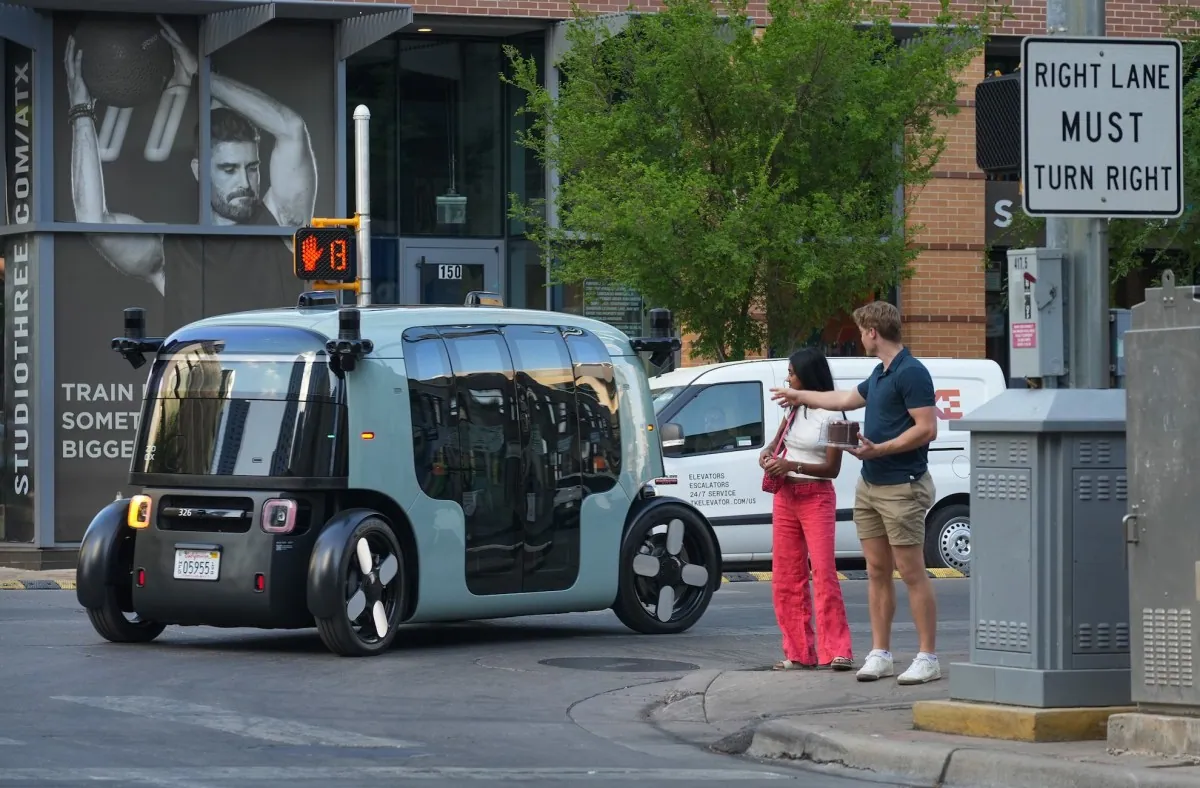
Zoox can finally ask riders to pay. The National Highway Traffic Safety Administration announced Thursday that it has granted the Amazon-owned autonomous vehicle company a temporary exemption from certain federal motor vehicle safety standards, clearing what appeared to be the final regulatory obstacle before Zoox can launch a commercial robotaxi service. The decision was also published in the federal register.
The exemption matters because Zoox's vehicles don't look or function like ordinary cars retrofitted with self-driving software. The company built its robotaxi from scratch, and the result has no steering wheel and no pedals — features that federal law generally assumes every vehicle will have. To operate legally, Zoox needed Washington to waive eight specific federal motor vehicle safety standards, covering things like windshield defrosting and light vehicle braking systems, that were written with human drivers and conventional controls in mind.
This isn't Zoox's first brush with NHTSA leniency. Almost a year ago, the agency gave the company an exemption that let it test its robotaxis on public streets and even carry passengers in cities including San Francisco and Las Vegas. The catch was that Zoox couldn't charge for any of it. Thursday's decision removes that restriction, effectively converting a demonstration project into a business.
Guardrails come with the green light
NHTSA isn't handing Zoox a blank check. The new exemption caps the company's commercial fleet at 2,500 vehicles per year, and it only lasts two years. The agency is also subjecting Zoox to what it calls an "enhanced, adaptable oversight structure that can evolve as Zoox's technology advances" — language that suggests regulators expect to keep adjusting their scrutiny as the technology and the fleet size grow, rather than setting rules once and walking away.
That combination — real commercial permission paired with a ceiling and active oversight — reflects the awkward position federal regulators are in with driverless vehicles generally. The rules on the books were written for cars with human drivers behind a wheel. Companies building vehicles without one need case-by-case waivers, and NHTSA is trying to give the industry room to operate while it works out something more permanent.
A broader policy push, not just a Zoox story
The Zoox exemption was one piece of a larger set of autonomous vehicle announcements NHTSA made Thursday. The agency said it's updating its exemption process more broadly, making it easier for automakers to temporarily sell a limited number of non-compliant vehicles, mainly so they can test new technology in the real world rather than only on closed courses or in demonstration programs.
NHTSA also announced a partnership with SAE Industry Technologies Consortia, which will fund a three-year, $5 million effort to collect data and speed up the development of performance standards for autonomous vehicles. The stated goal, per NHTSA, is to eventually land on a single national standard for AV safety — something that doesn't exist yet and has forced companies like Zoox to seek individual, negotiated exemptions instead of following one clear rulebook.
NHTSA Administrator Jonathan Morrison framed the moves as part of a deliberate strategy. "By removing unnecessary barriers to innovation, developing industry guidance, and providing strong enforcement oversight while we create performance requirements, NHTSA is taking a balanced approach to AV regulation," he said in a statement. "These advancements will ensure that the United States continues to lead the world in AV technology in a safe and responsible manner."
Zoox wasn't the only company in the mix Thursday. NHTSA also disclosed that it's reviewing an exemption application from Robomart, a Los Angeles startup building a low-speed, driverless delivery vehicle capable of hauling up to 500 pounds of cargo. The agency said it will open a separate public comment period on that application once its initial review is finished.
A Zoox spokesperson had not responded to a request for comment by the time of the report, outside California working hours.
What comes next
For Zoox, the exemption is the regulatory piece it needed to start generating revenue from a business it's been building toward for years under Amazon's ownership. The two-year, 2,500-vehicle cap means this isn't an overnight scaling event — it's a controlled rollout that NHTSA can watch closely and adjust if problems surface. How Zoox performs within those limits, and whether the oversight structure proves flexible enough to keep pace with the company's technology, will likely shape how quickly that fleet cap gets revisited.
The bigger story is the direction NHTSA is signaling for the industry as a whole: fewer one-off waivers, more structured pathways for testing and limited sales, and an actual push toward a unified national standard rather than a patchwork of company-specific deals. Robotaxi operators have spent years navigating exemptions granted piecemeal. If the SAE partnership and the updated exemption process deliver what NHTSA is promising, that patchwork could start to look more like an actual framework.


