Amazon Has All the AI Chips It Needs. It Doesn't Have the Power to Turn Them On.
AWS is stockpiling billions of dollars in Nvidia hardware every month, but a growing backlog of unpowered data center gear is dragging the cloud giant's cash flow into the red.
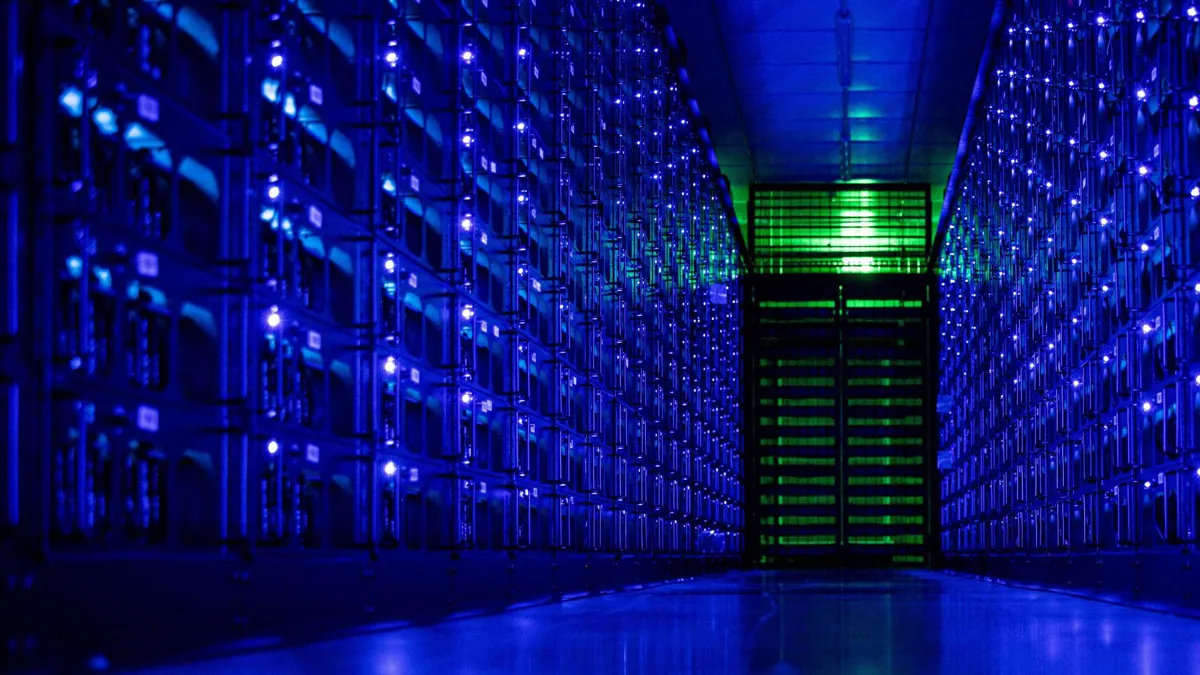
Amazon Web Services has a problem most companies would envy: it's getting more cutting-edge Nvidia hardware than it knows what to do with. The catch is that AWS can't actually turn much of it on.
According to an email reviewed by Business Insider, AWS took delivery of roughly $5 billion worth of Nvidia's GB300 server racks in August alone, and has reportedly kept accepting about $3 billion in additional hardware every month since. That's an enormous, sustained influx of some of the most sought-after computing equipment on the planet. The problem is energy. AWS doesn't have enough electricity available to power and run all of the gear it's bought, so a chunk of that investment is sitting idle in its data centers.
The financial fallout is already showing up in Amazon's books. AWS's free cash flow fell from $53 billion in the second quarter of 2024 to just $7.6 billion in the second quarter of 2026, and according to a leaked recording of an internal staff meeting last month, it has now actually gone negative. The moment got awkward enough that AWS CFO John Felton reportedly joked to Prasad Kalyanaraman, the executive who runs the company's AI infrastructure buildout, "You've taken us free cash flow negative as a company, so congratulations."
The joke points to a real structural shift in how AWS pays for infrastructure. Normally, Amazon wouldn't pay for Nvidia's GPU racks until they were actually installed and running. But with installation timelines now uncertain thanks to the power shortfall, AWS has had to adopt what it calls an "Early Rack Receipt" process, essentially paying for hardware up front even though it may sit unused for a while. That's cash locked into equipment that isn't yet generating any return, which helps explain why free cash flow has cratered even as the company keeps growing.
Why Amazon keeps buying anyway
None of this has slowed AWS's appetite for more hardware. The financial case for pushing ahead is straightforward: AWS's revenue grew 37% year-over-year in the second quarter, its fastest growth in 18 quarters, bringing in $42.2 billion by the end of July. When growth is that strong, it's hard to argue for pumping the brakes on infrastructure spending, even if some of that infrastructure is temporarily stranded.
Amazon CEO Andy Jassy has framed the AI buildout as a "once-in-a-lifetime opportunity" to investors, and the company is reportedly planning to spend close to $200 billion on infrastructure to chase it. On a recent earnings call, Jassy said he's confident the company has a "clear line of sight to strong financial returns" on that spending. The bet is that today's negative cash flow and idle server racks are a short-term bottleneck on the way to a much bigger payoff, not a sign the strategy is broken.
Still, the power problem underscores something that's easy to lose sight of amid all the talk of GPU shortages: buying chips is only half the battle. Data centers need enormous and reliable electricity supplies to actually run them, and that kind of power capacity, tied to grid infrastructure, permitting, and new generation, can't be scaled up as fast as a purchase order. AWS appears to be out ahead of its own ability to plug things in.
There's a strange symmetry here with what's happening on the consumer side of Nvidia's business. The same AI boom that's left AWS drowning in unpowered server racks has also been blamed for squeezing supply of Nvidia's RTX 5090, the company's flagship gaming GPU, which remains hard to find at list price from reputable retailers and has been spotted on Newegg's third-party marketplace for prices approaching $9,000. Nvidia has reportedly been redirecting production capacity toward the kind of enterprise hardware AWS is buying, leaving gamers stuck competing for scraps. Even Amazon, with all its money and all its chips, is finding out that having the hardware is no guarantee you can actually use it.


