Waze Adds Gemini-Powered Voice Commands, a Quieter Mode, and Motorcycle Routing
Google is threading its AI assistant into Waze's reporting and search tools while also giving drivers more control over how much the app talks.
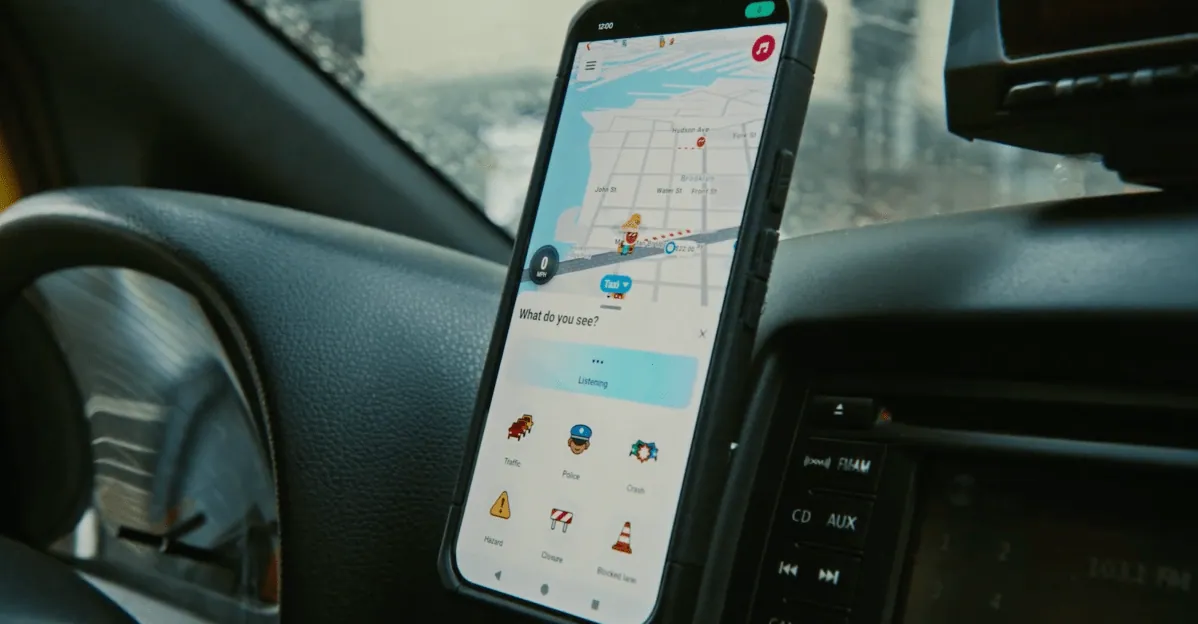
Google is bringing Gemini into Waze, giving the driving app a set of upgrades built around natural voice commands, personalized routing, and — for anyone tired of the app talking over their podcast — a way to tone it down.
Of the four updates Google announced, two lean on Gemini directly. The first touches Waze's conversation reporting feature, which debuted in 2024 and lets drivers flag traffic incidents by talking to the app instead of tapping through menus. With Gemini now powering that feature, drivers can use more natural, conversational phrasing to report things like a road closure or an incorrect house number on the map, rather than sticking to rigid commands.
The second Gemini-driven addition is called Destination Search. It lets drivers ask for a destination the way they'd ask a person, with examples like "Find me a coffee shop that's open right now" or "Find me a gas station nearby with the lowest prices." Instead of typing a search term and sorting through results, the app interprets the request and surfaces a match on the fly.
Both features reflect how far conversational AI has come in a short time. Voice commands in car apps used to mean memorizing a short list of exact phrases. Gemini's language-understanding capabilities let Waze accept looser, more natural requests and still figure out what the driver actually wants.
The other two updates aren't tied to Gemini but round out the release in ways that matter for everyday driving. Waze is introducing a "less chatty" mode that scales back the app's voice prompts, so drivers who are deep into a podcast or an album don't have navigation cues constantly cutting in. It's a small change, but one that addresses a real annoyance for anyone who uses Waze primarily for background driving directions rather than active turn-by-turn guidance.
Waze is also rolling out a dedicated Motorcycle Mode. It factors in shortcuts specific to two-wheeled vehicles and adjusts ETAs to better reflect how motorcycles actually move through traffic, aiming for routing that's more accurate for riders than the standard car-focused calculations.
Rounding out the update, Waze will start tailoring route suggestions based on a driver's own trip history combined with the app's traffic pattern data. If someone consistently favors highways over surface streets, for instance, Waze will prioritize showing those highway-based routes rather than defaulting to whatever the algorithm considers fastest on paper.
A measured rollout, not a full overhaul
Notably, this isn't Waze getting the kind of sweeping AI transformation Google has been giving its other products. Google Maps, Waze's sibling app, has been steadily accumulating AI-driven capabilities as Google appears to be consolidating more control and more advanced features into that flagship tool. Waze's update, by comparison, is targeted: two Gemini-powered voice features, plus two quality-of-life changes that don't require any AI model at all.
That distinction is worth sitting with. Waze has long occupied a different niche than Google Maps, built around crowdsourced, driver-reported data and a more community-driven approach to traffic information. Folding Gemini into its reporting and search tools extends that community-data model rather than replacing it. Drivers are still the ones flagging road closures and traffic incidents. Gemini just makes it easier to do that by talking instead of navigating menus while trying to keep their eyes on the road.
For users, the practical upshot is an app that should feel a little more conversational and a little more tailored to individual habits, whether that means quieter prompts, motorcycle-specific routing, or directions that match a driver's established road preferences. None of it reinvents what Waze does. It refines how drivers interact with a tool many already use every day, which may end up mattering more in practice than a flashier redesign would.
Google hasn't said whether more Gemini integration is coming to Waze down the line. Given how aggressively the company has been pushing AI features into Maps, it seems likely this is a first step rather than the finish line.


