Waymo's Next Robotaxi Is a Toyota, Built for Japan and the U.K.
The self-driving company is turning to Toyota's bZ4X to crack right-hand-drive markets where its current fleet doesn't fit.
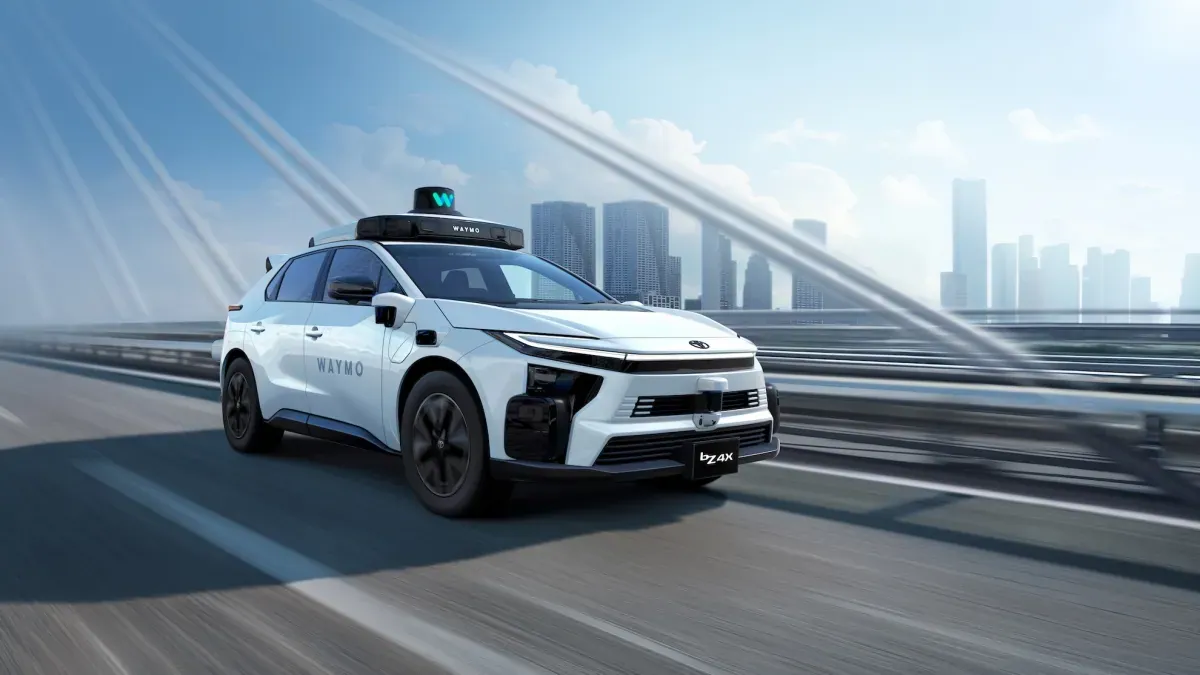
Waymo is getting a new robotaxi, and this time it's coming straight from an automaker's factory floor rather than a retrofit shop. The company announced Friday that it will begin testing autonomous Toyota bZ4X vehicles in Japan next year, the first concrete product of a partnership aimed at supplying electric vehicles for Waymo's robotaxi operations outside the U.S.
The deal has Toyota building 2027 bZ4X models and integrating Waymo's self-driving system directly at its Takaoka factory in Japan. In North America, this same EV is sold under the name BZ, but the Japan-built version will carry the bZ4X badge.
Testing starts in Japan, where Waymo has said it eventually wants to run a full robotaxi service. But Japan isn't the only destination. Because the bZ4X is built for right-hand-drive markets, Waymo plans to also deploy it in the U.K., where it's been road-testing autonomous Jaguar I-Pace vehicles in London for months while it waits on regulatory approval to launch commercially there.
That's the practical logic behind this deal: Waymo's existing robotaxi fleet, built around vehicles designed for U.S. roads, doesn't translate cleanly to countries where cars drive on the left side of the road. Rather than re-engineer its current vehicles, Waymo is adding a model built for exactly that market.
A slow-cooked partnership
Friday's announcement didn't come out of nowhere. Toyota and Waymo signed a preliminary agreement roughly 18 months ago to explore building and deploying an autonomous vehicle platform together, according to TechCrunch. That early deal was light on specifics, the kind of loosely worded agreement that leaves room for things to go in almost any direction, or nowhere at all.
This is the first sign of where it's actually going, and for now, it reads less like a grand alliance and more like a standard supplier arrangement. Toyota builds the cars; Waymo supplies the self-driving software and sensors; the result fills a geographic gap in Waymo's robotaxi lineup.
Beyond the robotaxi
The companies are signaling there's more on the table, though nothing concrete yet. Toyota and Waymo said they'll keep exploring whether Waymo's autonomous driving technology could eventually make its way into personally owned Toyota vehicles, not just the ride-hailing fleet.
They also pointed to unspecified future "initiatives" that would apply lessons from Waymo's real-world driving operations toward making roads safer for everyone, not just robotaxi passengers. Details on what that actually looks like weren't provided.
Hiroki Nakajima, Toyota's executive vice president and a board member, offered a bit of framing in a statement: "This collaboration will help scale that technology and bring it to customers in Japan and beyond through Waymo's ride-hailing service, and in parallel, Toyota will continue to explore how integrating vehicles with traffic infrastructure can make those roads safer still."
That last part, about linking vehicles with traffic infrastructure, hints at ambitions beyond just building more robotaxis, but Toyota hasn't spelled out what form that would take.
For now, the headline news is narrower and more tangible: a specific car, built in a specific factory, headed to two specific markets where Waymo currently has no vehicle that fits. Whether this relationship grows into something bigger, like autonomous tech riding in cars that regular people actually own, is the part worth watching.


