Waymo Adds San Diego, Las Vegas, Tampa and Denver to Its Robotaxi Map
The expansion widens Waymo's lead over Tesla and Amazon's Zoox even as the company works through some public stumbles with its self-driving fleet.
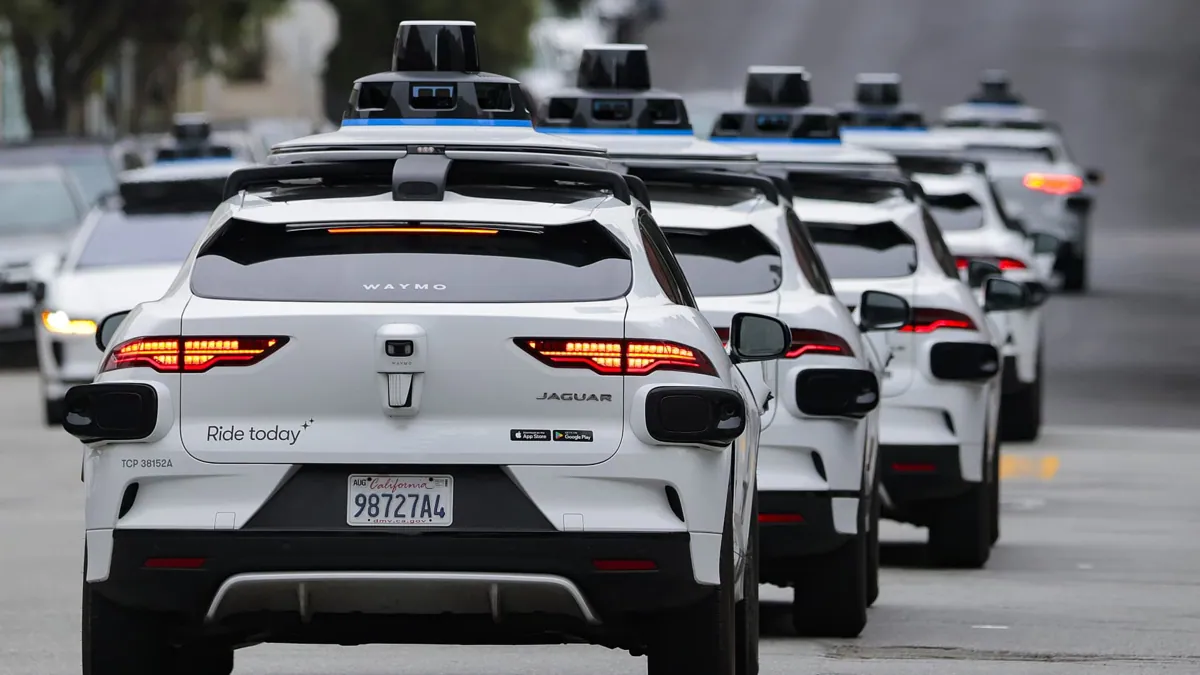
Waymo is bringing driverless rides to four more American cities, pushing its footprint deeper into a market where it still holds a commanding lead over Tesla and Amazon-owned Zoox. The Alphabet subsidiary said Wednesday it will begin operating in San Diego, Las Vegas, Tampa and Denver in the coming weeks, expanding a service that already runs fully autonomous cars in more than 10 U.S. cities.
The rollout follows a familiar playbook: Alphabet employees get access first, then the service opens up to the general public. Waymo flagged these four markets as expansion targets last year, so Wednesday's announcement is less a surprise than a confirmation that the timeline is moving forward.
The scale of what Waymo is building becomes clearer when you look at the fleet numbers. As of May, the company had roughly 4,000 robotaxis on U.S. roads, according to filings with federal auto safety regulators, running on its fifth- and sixth-generation self-driving hardware. That's a substantial lead over the competition. Zoox, Amazon's robotaxi arm, is preparing to let some members of the public in Austin and Miami try its service later this year. Tesla, meanwhile, is extending its robotaxi push beyond Austin into other parts of Texas and into Miami. Both companies are still in the early, limited stages that Waymo passed through years ago.
Growth comes with growing pains
The expansion isn't happening without friction. As more Waymo vehicles hit the streets, the company has had to answer for a string of public incidents. Some of its cars drove into flooded roadways during extreme weather. Over the Fourth of July, several Waymo vehicles in San Francisco got stuck in gridlock for so long their batteries ran out, and one was recorded driving toward fireworks. None of this has slowed the expansion plans, but it underscores the reality that autonomous vehicle systems are still being tested against situations that are easy for a human driver to handle intuitively — heavy rain, chaotic holiday traffic, fireworks going off in the street — and harder to encode into a self-driving system's rulebook.
The bigger picture
None of this seems to be denting investor confidence. Waymo raised $16 billion from Alphabet and other backers back in February, capital that's presumably funding exactly this kind of city-by-city buildout. The company says it has now completed more than 20 million autonomous rides total, and it's aiming for 1 million weekly trips by the end of the year — a benchmark that would mark a serious jump in how normalized driverless rides have become in daily American life.
Waymo is also looking past U.S. borders. London is set to become its first international market later this year, a move that would test whether the company's technology and regulatory approach can translate to a market with narrower streets, different traffic norms and its own patchwork of rules for autonomous vehicles.
For now, though, the story is domestic momentum. Adding San Diego, Las Vegas, Tampa and Denver gives Waymo a broader geographic spread — coastal, desert, Southern and mountain markets all at once — at a moment when its two most visible U.S. rivals are still confined to small pilot programs. The gap between "operating in over 10 cities with thousands of vehicles" and "preparing to launch to some members of the public" is significant, and it's the clearest sign yet of how far ahead Waymo has pulled in the race to make driverless rides a routine part of getting around.
What happens next will hinge on whether Waymo can keep scaling without the incident count scaling with it. Flooded roads and dead batteries in traffic are the kind of stories that stick in the public imagination, even if they're rare relative to 20 million rides. As the fleet grows and the company chases that million-trips-a-week target, how it handles those edge cases may matter as much as how many new cities it adds.


