Waymo Sets Its Sights on Toronto, Its Coldest Market Yet
The robotaxi company has cleared a key regulatory hurdle in Ontario, but Canadians won't be hailing a driverless ride anytime soon.
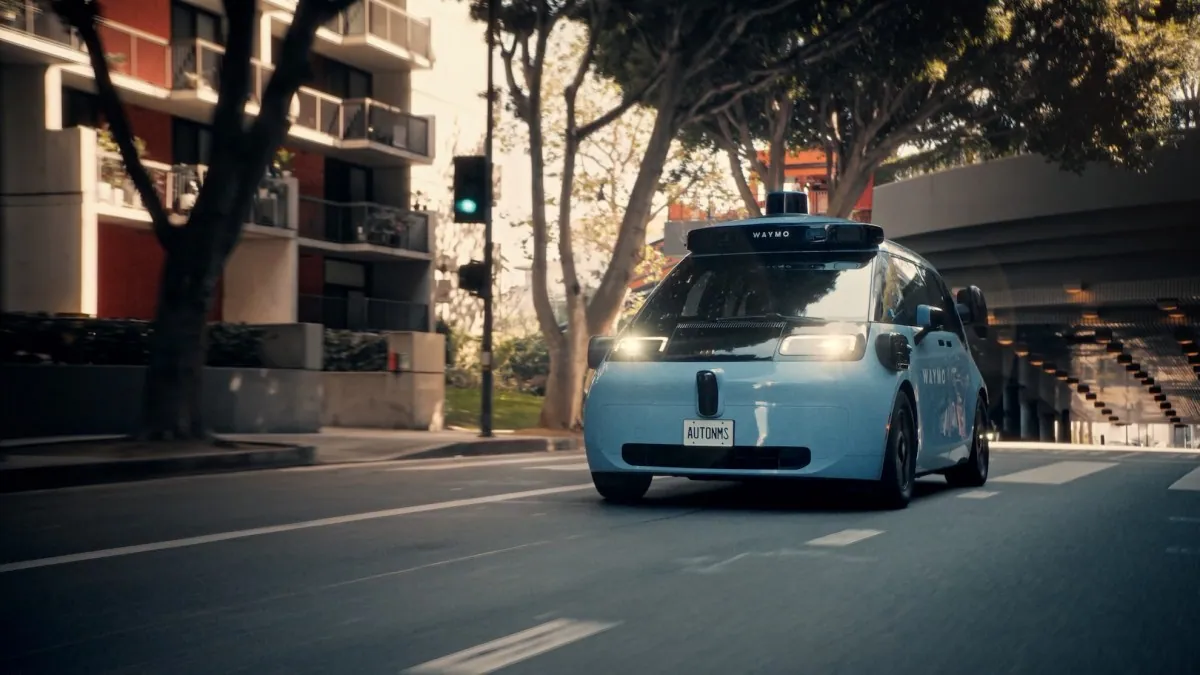
Waymo is coming to Canada. The Alphabet-owned self-driving car company has been approved to join Ontario's automated vehicle pilot program, clearing the way for its robotaxis to begin operating in Toronto, according to a blog post the company published Friday.
Don't expect to hail one just yet. Waymo has a well-worn process for breaking into a new city, and it starts nowhere near a paying customer. First, human drivers pilot the company's vehicles manually around Toronto to build detailed, high-resolution maps of the street network. Only after that does Waymo put its autonomous systems behind the wheel on public roads, with a trained safety operator riding along as a backstop. Eventually that operator gets pulled from the driver's seat entirely, and the company opens things up to public rides. Toronto is now at the start of that sequence, not the end of it.
What makes this expansion notable isn't the timeline. It's the geography. Toronto will be the northernmost city Waymo has attempted to operate in, and likely the snowiest. That's a real test for a technology that depends heavily on cameras, lidar and radar reading the road accurately. Winter weather, ice, slush and reduced visibility are the kinds of conditions that have historically given autonomous vehicle developers the most trouble. Waymo co-CEO Tekedra Mawakana called the move into Canada an important milestone in the company's global trajectory, framing Toronto's climate as a genuine proving ground for both the technology and the company's ability to run operations in tougher conditions.
From Three Cities to a Global Footprint
The Toronto news is also a data point in a much bigger story: Waymo's expansion has gone from cautious to aggressive in a short window of time. Two years ago, the company ran commercial service in just three U.S. markets, and its cars weren't yet cleared to drive on freeways. That changed fast. The current growth phase effectively kicked off in March 2025 with a deployment in Austin, followed by Atlanta. From there, the map filled in quickly. Waymo now runs robotaxi service in 15 U.S. cities and has active testing programs underway in London and Tokyo. Canada is the next frontier, and the company's pace suggests it isn't slowing down.
To manage that growth without building an entire logistics operation from scratch in every new city, Waymo has started leaning on local partners to run its vehicle fleets. Toronto will follow the same model: Waymo is partnering with Toronto-based Element Fleet Management to handle fleet operations there. According to the company, that partnership is expected to support hundreds of local jobs across fleet maintenance, validation driving, customer service and general operations.
That partnership strategy matters beyond just Toronto. Robotaxi services are often framed purely as a software and sensor problem, but running a fleet of self-driving cars at scale is also a logistics and labor problem, one that involves cleaning cars, charging or fueling them, repairing damage, and keeping a human support staff on call. Outsourcing that layer to established fleet management companies lets Waymo scale into new cities faster than if it tried to build out that infrastructure itself every time, and it's a pattern worth watching as the company continues adding markets.
What to Watch
For now, Toronto commuters will just see Waymo-branded vehicles with human drivers mapping the city's streets, not autonomous cars picking up passengers. The real test comes later, once those human-driven mapping runs give way to autonomous testing with a safety operator, and then to driverless public rides. Given how aggressively Waymo has moved in other markets over the past year and a half, that progression may not take long. Whether Toronto's winters change that timeline is the open question.


