Starlink Connectivity to Ukraine's Military Restored After Musk, Kyiv Clash Over Misuse Claims
Nearly two weeks of satellite disruptions that hampered drone interception and frontline logistics ended as officials disputed Elon Musk's accusation that Ukraine broke Starlink's rules.
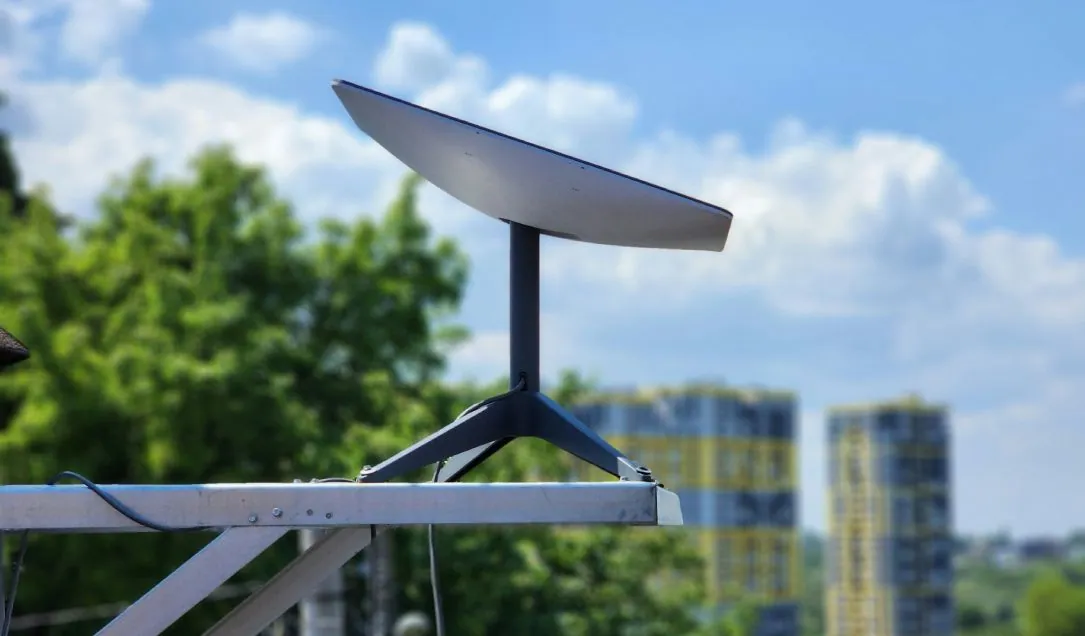
Ukraine's military says its Starlink and Starshield satellite connections are back to normal after a near two-week disruption that forced troops to scrap missions and strained drone operations at the front. The fix arrived at the same time Elon Musk and Ukrainian officials traded accusations over whether Kyiv had broken the rules governing the service in the first place.
Defense Minister Yevhen Khmara said Saturday that monitoring systems were recording stable connections on equipment moving faster than 400 kilometers per hour, a sign the speed caps that had throttled the network were gone. President Volodymyr Zelensky confirmed the restrictions had been lifted and that connectivity was back to what the military needs. "This matters: for our frontline logistics, for defending Ukraine against jet-powered Shahed drones," he said, thanking the United States and other partners for helping resolve it.
The disruption had been serious enough to complicate reconnaissance, logistics and drone missions across the front for roughly two weeks. It struck right as Musk accused Ukraine's military of using commercial Starlink terminals for offensive drone strikes, something he said violated the company's terms of service. "Ukraine's military violated Starlink terms of service and used it for offensive drone strikes to kill people," Musk wrote on X. He drew a line between commercial Starlink and Starshield, the military-grade version of the network, which he said is controlled by the U.S. government rather than SpaceX. "Starshield, a different system, is controlled by the US government. What they decide to do is up to them," he wrote.
Ukrainian officials and advisers pushed back hard on the claim. Serhii Sternenko, an activist who has advised the defense minister, said a registration system rolled out in February required every satellite terminal on a moving platform to run through the military Starshield service, not commercial Starlink. In his telling, that made it technically impossible to use civilian terminals for the kind of drone missions Musk described. "Using civilian Starlink for drone missions was technically impossible," Sternenko said, adding that Ukraine hadn't broken the terms of service.
Presidential adviser Serhii Beskrestnov, who goes by "Flash," offered a similar rebuttal, saying commercial Starlink terminals in Ukraine are capped at 70 to 90 kilometers per hour and don't function on Russian territory at all. Those limits, he argued, rule out using commercial terminals for medium- or long-range strikes.
What actually broke
The restrictions trace back to mid-October, when new Starshield speed limits were introduced without warning. The effect was immediate: terminals on moving vehicles and drones started losing connection at higher speeds. That's a particular problem for Ukraine's effort to intercept Russian jet-powered Shahed attack drones, since the Ukrainian interceptor drones chasing them need to fly fast while staying connected.
The numbers back up the concern, though with a caveat. The Institute for the Study of War reported Sunday that Ukraine's interception rate against Russian jet-powered drones slipped from 77% to roughly 74% between October 14 and 24, the window when Starshield was degraded. The researchers noted Ukraine still held a comparatively high success rate through the disruption, and they stopped short of saying the connectivity problems directly caused the dip.
Who actually ordered the speed caps is still unclear. Musk has said Starshield is owned and controlled by the U.S. government, meaning decisions on speed limits and permitted uses sit with the U.S. military and, ultimately, President Donald Trump rather than with him or SpaceX. The Wall Street Journal reported Friday that Trump told Musk on October 21 to lift the restrictions after growing frustrated that connectivity remained capped at around 160 kilometers per hour. Trump has denied discussing the matter with Musk directly but said he might step in if the problems continued.
The bigger backdrop
The timing lines up with a rockier stretch in U.S.-Ukraine relations, including friction over Ukrainian strikes on Russian oil infrastructure and the Trump administration's push for a diesel trade arrangement with Moscow. Zelensky, in an interview with Piers Morgan earlier in the week, said he felt personally betrayed by Trump over the Starlink restrictions, framing it as Washington walking away from a key partner more than four years into Russia's full-scale invasion.
Musk, for his part, has continued to emphasize SpaceX's broader contribution, saying Starlink has been critical to Ukraine's defense since the war's early days. He's also warned that the country's reliance on the network runs deep, going so far as to suggest Ukraine's frontline defenses would collapse if the service were shut off.
For now, the connections are back up and both sides say the immediate crisis has passed. But the dispute leaves an open question hanging over the relationship: with the speed caps apparently set by a government decision rather than a SpaceX one, Ukraine's military communications remain subject to a chain of command it doesn't fully control.


